
24/7 Customer Support

Free returns

Same-day & Next-day Delivery

Quality Guaranteed

Unlock Your Welcome Offers: FREE Delivery | Up to 80% OFF | Free 30-day JoyPlus trial
Download the APP
Choosing baby soothers can seem straightforward until you compare teat shapes, age ranges, materials and cleaning methods. A dummy that suits a newborn may be too small for a toddler, while a convenient feature such as glow-in-the-dark plastic may not help if the soother is difficult to sterilise.
This guide highlights the practical details that matter when comparing baby dummies and pacifiers for babies, helping UK parents, grandparents and carers avoid common buying mistakes.
Colours and designs can be appealing, but the recommended age range should come first. A newborn soother is usually designed with a smaller shield and teat, while a toddler soother is made for a larger mouth. Always check whether the product is suitable for 0–2 months, 0–3 months, 6–18 months, 16+ months or 18–36 months.
Using the wrong size may result in an uncomfortable fit and means the product is not being used according to its instructions.
A natural latex soother tends to feel soft and flexible, but natural rubber can deteriorate more quickly when exposed to heat, sunlight or unsuitable cleaning methods. Latex may also cause an allergic reaction in some children.
A silicone soother is generally easier to clean and is compatible with more sterilisation methods, depending on the product instructions. However, silicone and latex have different textures, so a baby who rejects one material may accept another.
A glow-in-the-dark button can make night-time searches easier, but it needs to be charged according to the manufacturer’s instructions. A self-sterilising soother case may be useful for travel, but it requires a microwave, water and the correct heating time.
Likewise, a baby soother 2 pack offers a spare for the changing bag, nursery or night-time use, but it does not remove the need for regular inspection and replacement.
Age labels are one of the most important specifications. For example:
Do not select a larger soother early simply because it appears more durable. Follow the stated age guidance and move up a size as your child grows.
Round cherry-shaped teats are designed to provide a familiar, breast-like shape. Symmetrical and flat teats can be placed either way up and are often described as orthodontic soothers. These designs may be more convenient during night-time use because there is less need to check orientation.
An orthodontic label describes the shape and intended positioning of the teat. It should not be treated as a guarantee of a particular dental outcome. For individual concerns about teeth, jaw development or prolonged dummy use, speak to a dentist or health visitor.
Look for a shield that sits away from the nose and mouth, with ventilation holes that allow air to circulate around the skin. This can be especially practical when searching for soothers for sensitive skin, although no design can guarantee that irritation will not occur.
Also check the materials. Products described as BPA-free soothers may use silicone, polypropylene or natural rubber latex. Look for clear material information and relevant safety guidance, including EN 1400 where stated. Inspect every teat before use, particularly once a child has teeth, and discard it at the first sign of damage.
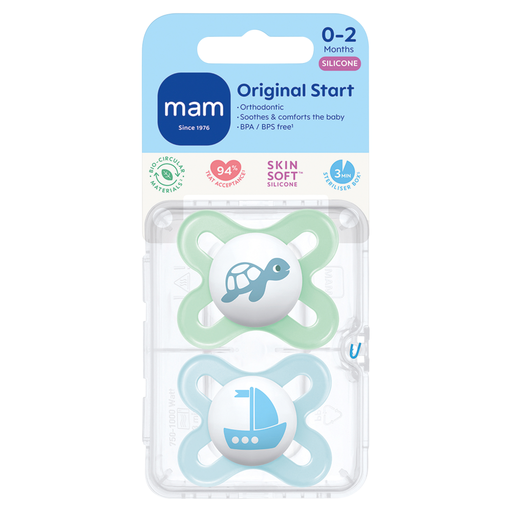
Why This Fits Their Persona: A practical twin pack for new parents preparing for the early weeks, with a small shield designed for newborns and a spare for the changing bag.
The clearly stated 0–2-month range avoids guessing based on appearance, while the 2 pack reduces the temptation to keep using a dropped soother without cleaning it.
Includes a self-sterilising travel box and a SkinSoft silicone teat; the shield and teat are BPA-free.
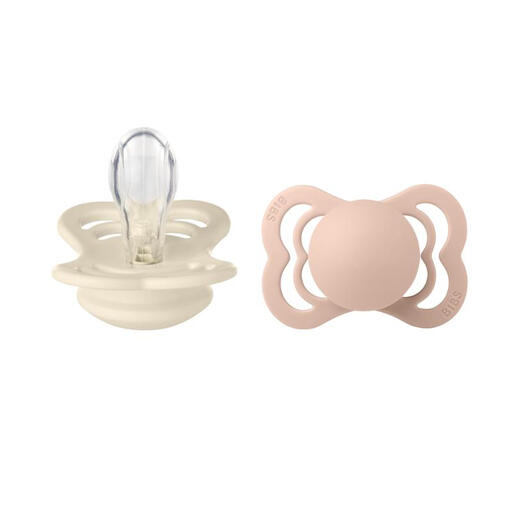
Why This Fits Their Persona: Suits parents who prioritise a silicone teat, a modern shield and clearly specified material information for a newborn or young infant.
The Size 1, 0+ months guidance helps prevent an unsuitable size choice, while large shield ventilation holes address the common problem of moisture collecting around the mouth.
Symmetrical flat-drop silicone teat; materials are listed as BPA-, PVC- and phthalate-free.
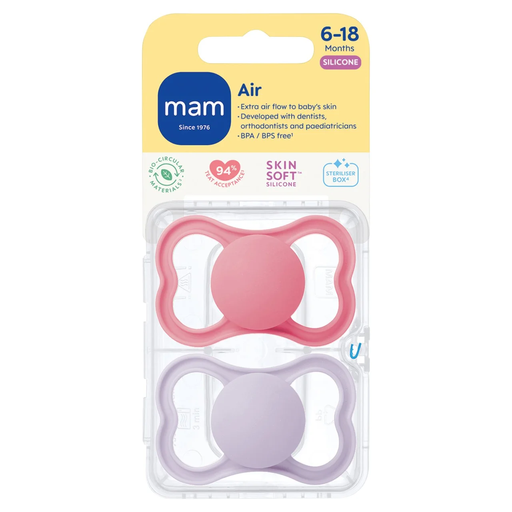
Why This Fits Their Persona: A useful option for older babies who frequently use a soother during nursery trips, car journeys, naps or overnight routines.
The extra-large air holes are designed for airflow, while the 6–18-month range avoids using a newborn design beyond its intended stage.
Twin pack with SkinSoft silicone teats and a case designed for microwave sterilisation using 25ml of water.
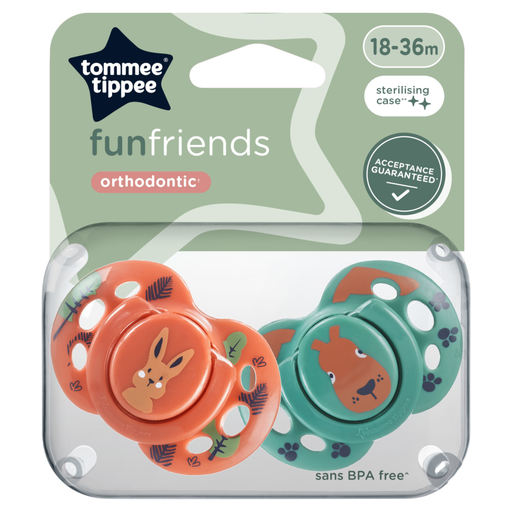
Why This Fits Their Persona: Designed for parents of older toddlers who want a symmetrical teat and a compact cleaning solution for home or travel.
The 18–36-month specification prevents an early size mismatch, and the reusable pod provides a defined two-minute microwave cleaning process.
100% silicone teat, BPA-free materials, skin-kind ventilation and a pod that holds both soothers.
We have compiled a complete, real-time list of products that fully satisfy these strict selection criteria and UK safety regulations.
Two or more is practical for most families. A baby soother 2 pack provides a clean spare for the changing bag, nursery or overnight use. It is still important to wash or sterilise each soother as directed rather than relying on the spare indefinitely.
There is no single lifespan for every product. Latex soothers commonly require replacement every four to six weeks, while many silicone soothers advise replacement every one to two months. Teething, biting, heat and cleaning methods can shorten this period. Always follow the packaging and discard a soother as soon as damage appears.
Glow-in-the-dark soothers can be convenient for locating a dummy at night when used according to the instructions. Some charge in daylight, while others may require exposure to a household light source. The glow feature does not replace inspection, age guidance, cleaning or adult supervision.