
24/7 Customer Support

Free returns

Same-day & Next-day Delivery

Quality Guaranteed

Unlock Your Welcome Offers: FREE Delivery | Up to 80% OFF | Free 30-day JoyPlus trial
Download the APP
Choosing baby soothers for newborns can look simple until you compare teat shapes, materials, age ranges and sterilisation instructions. A soother that suits one baby may be rejected by another, while a product that appears convenient may be unsuitable for your cleaning routine or family’s material preferences.
The most sensible approach is to treat newborn soothers as a trial-and-observation purchase rather than relying on fashionable colours or broad marketing claims.
A large shield or teat may be uncomfortable for a newborn, particularly during the first weeks. Check whether the product is specifically marked 0+ months, 0–2 months, 0–3 months or 0–6 months. Age guidance is not the only consideration, but it is a useful starting point.
Round, symmetrical and anatomical teats create different sensations in the mouth. Some babies appear to prefer round natural rubber latex soothers, while others settle more readily with a flat symmetrical silicone teat. Buying a large 2-pack in one unfamiliar style can be wasteful if your baby refuses both.
A 4-pack soother trial set can reduce this risk by offering several shapes and materials in one purchase.
Natural rubber latex and silicone do not always have identical care instructions. Latex soothers can be affected by heat, sunlight and prolonged exposure to cleaning equipment. Some silicone baby soothers are compatible with microwave sterilisation, while latex versions may require scalding instead.
Always follow the instructions supplied with the specific product rather than applying one cleaning method to every soother.
For babies aged 0–6 months, look for a clearly stated size such as Size 1 or 0–6 months. Newborn-focused designs often have a lightweight shield and a compact teat. Ventilation holes around the shield are also useful because they allow air to circulate around the mouth.
A curved or outward-facing shield can reduce the amount of material resting directly against the skin. This does not guarantee that irritation will not occur, so monitor your baby’s skin and stop using any product that appears to cause a reaction.
Terms such as “orthodontic” describe the design intention, not a promise of a particular dental outcome. If you are concerned about feeding, oral development or your baby’s response to a soother, ask your health visitor, midwife or GP for individual advice.
Families combining breastfeeding and bottle feeding may wish to compare breastfeeding-friendly dummies with different teat profiles. Product descriptions can indicate the shape and feel, but your baby’s acceptance remains the practical test.
Look for clearly stated materials and avoid products with incomplete specifications. The options in this guide include food-grade polypropylene shields and teats made from either natural rubber latex or silicone. Many are advertised as BPA-free baby dummies, but check the product information for the exact model.
Natural rubber latex is soft and flexible, but it is not suitable for every family. If latex sensitivity is a concern, choose a silicone option and follow the relevant care instructions. Silicone is also useful for parents who prefer a material without the natural variation associated with latex.
All soothers should be inspected before each use. Pull the teat gently in different directions and discard it at the first sign of weakness, cracking, stickiness, enlargement or other damage. Never attach a cord, ribbon or chain around a baby’s neck.
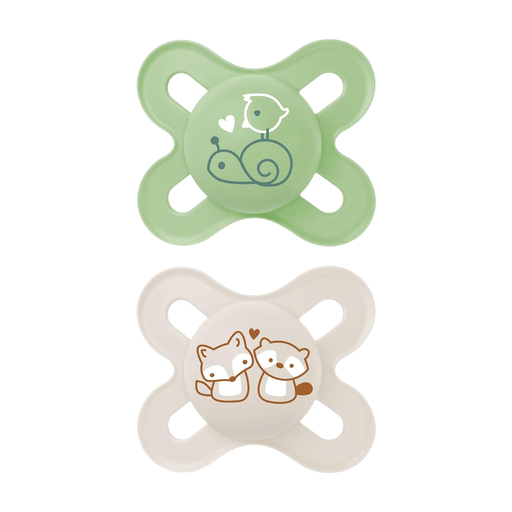
Why This Fits Their Persona: A compact twin pack gives new parents a spare for the changing bag, pram or overnight use, while the supplied case adds a practical storage and sterilisation option.
It is clearly sized for 0–2 months rather than relying on a generic newborn label, and the symmetrical teat avoids the need to find a particular top-and-bottom orientation.
Two soothers, BPA- and BPS-free SkinSoft silicone teat, ventilated shield and self-sterilising carry case.
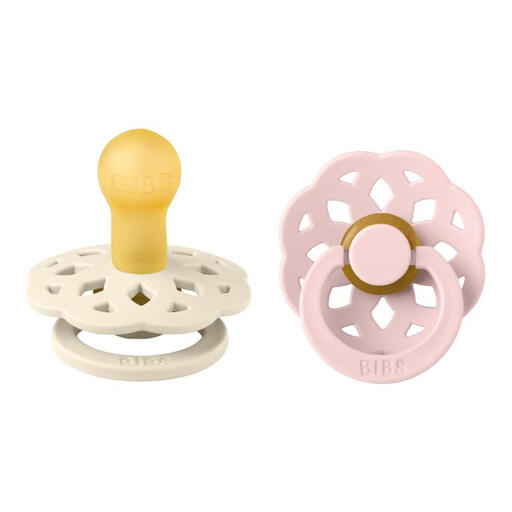
Why This Fits Their Persona: Suitable for parents who prefer a traditional round teat and natural rubber latex, with two colours for home and travel rotation.
The product specifies Size 1 and natural rubber latex, helping buyers avoid confusing a classic shape with an unspecified age range or material.
Round latex teat, polypropylene shield and stated BPA-, PVC- and phthalate-free construction.
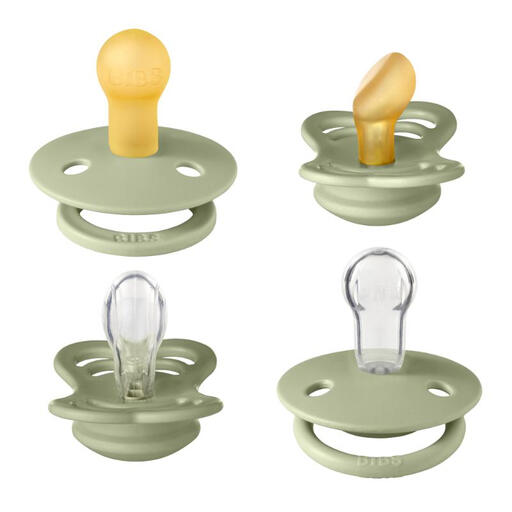
Why This Fits Their Persona: Useful for families who have not yet discovered whether their baby prefers latex, silicone, round, symmetrical or anatomical designs.
Rather than committing to four identical soothers, the collection provides four different options, reducing the chance of unused rejects.
Four Size 1 soothers covering three teat shapes and two materials, with ventilated polypropylene shields.
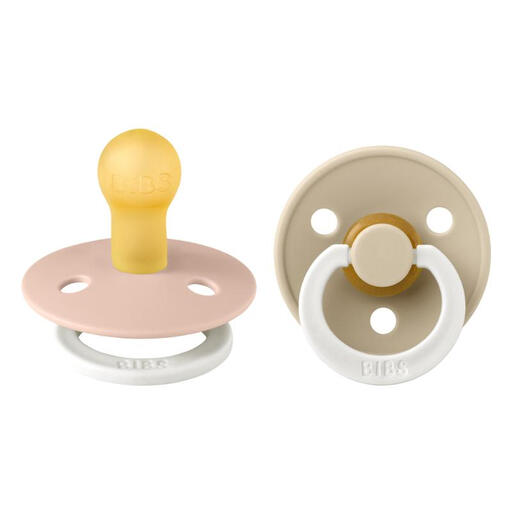
Why This Fits Their Persona: A useful choice for parents who want a traditional latex teat but regularly search for a soother during night feeds or settling.
The glow feature is a practical locating aid rather than a claim about soothing performance. The product still states its material and newborn size clearly.
Glow-in-the-dark handle, round natural rubber latex teat and outward-curved shield with air holes.
We have compiled a complete, real-time list of products that fully satisfy these strict selection criteria and UK safety regulations.
Before first use, sterilise the soother according to its instructions. Many products recommend scalding or boiling water for around five minutes, while some MAM newborn soothers include a self-sterilising case for microwave use.
For daily care:
Some products are specifically labelled 0+ months or designed for newborns, while others begin at 0–2 or 0–3 months. Check the stated age range, shield size and teat dimensions before buying. If your baby was premature or has feeding difficulties, ask your maternity or health professional for individual guidance.
Silicone is often selected for its consistent texture and compatibility with several sterilisation methods, depending on the product. Latex is flexible and soft but can deteriorate sooner when exposed to heat, sunlight or wear. Neither material is automatically suitable for every baby, so consider care instructions and any known sensitivities.
A 2-pack baby soothers is a practical starting point if you already know which teat style you want. If you are uncertain, a 4-pack trial set can provide different shapes and materials before you purchase more of one design. Always replace worn soothers rather than keeping them as emergency spares.