
24/7 Customer Support

Free returns

Same-day & Next-day Delivery

Quality Guaranteed

Unlock Your Welcome Offers: FREE Delivery | Up to 80% OFF | Free 30-day JoyPlus trial
Download the APP
Choosing baby soothers can seem straightforward until you compare teat shapes, materials, age ranges and sterilisation methods. Marketing language can also make small design differences sound more important than they are.
For UK parents and carers, the practical priorities are simpler: the soother should be suitable for the child’s age, comfortable against the skin, easy to clean and checked regularly for damage. The following guide explains the main buying pitfalls and highlights options for different routines.
A stylish design does not compensate for an unsuitable teat or shield size. Newborn soothers usually have smaller, lighter shields, while toddler soothers are made for larger mouths. Always check the manufacturer’s stated age range, such as 0–6 months, 6–18 months or 18+ months.
Do not assume that a larger size will last longer or provide better value. A poorly fitting soother may be rejected or feel uncomfortable.
Orthodontic soothers generally use a symmetrical or flatter teat shape. This can make positioning easier because there is less concern about which way up the soother sits. However, the term does not guarantee a particular dental outcome.
Look for objective design details, including teat thickness, flexibility and shield ventilation. If you have concerns about oral development, ask a health professional for individual advice rather than relying on packaging language.
Silicone soothers are generally consistent in shape and easy to clean, while natural rubber latex soothers feel soft and flexible but can change colour or texture with use. Latex may also be unsuitable for children with a known latex allergy.
Cleaning instructions differ considerably. Some silicone soothers are dishwasher-safe or suitable for microwave sterilisation, whereas certain natural rubber latex soothers should not be placed in a microwave or dishwasher. Following the product instructions is essential.
Match the product to the child’s current age, not an anticipated future stage. Useful categories include:
A round cherry-shaped teat, as found on selected BIBS soothers, offers a different feel from a thin, symmetrical silicone teat. Baby preference can vary, so buying a small number first may avoid unnecessary waste.
Silicone soothers are smooth, odour-neutral and usually straightforward to wash. They are available in one-piece newborn designs and styles with separate shields.
Natural rubber latex soothers are soft and flexible, but they require closer inspection because latex can expand, darken or weaken over time. Do not use latex products for a child with a known latex allergy.
For everyday reassurance, check whether the product is described as BPA-free, and review the full material information. Some products also specify that they are free from PVC, phthalates or BPS.
The shield should curve away from the face and include ventilation holes. This helps reduce moisture build-up around the mouth, which can be useful when choosing soothers for sensitive skin or for a dribbly baby.
Self-sterilising soothers can be convenient for travel, but check the exact water quantity, microwave wattage and cooling time. For example, several MAM designs use a case with 25ml of water and a three-minute microwave cycle. Tommee Tippee options in this selection use a reusable steriliser pod with a two-minute cycle.
A glow-in-the-dark button can make glow-in-the-dark soothers easier to locate at night. The button normally needs exposure to daylight to charge; it is not a substitute for safe handling or supervision.
Inspect the teat before every use by pulling it gently in all directions. Replace the soother immediately if it shows cracks, tears, weakness or unusual changes. Replacement guidance varies: many silicone designs recommend replacing every one to two months, while some latex products recommend four to six weeks of regular use.
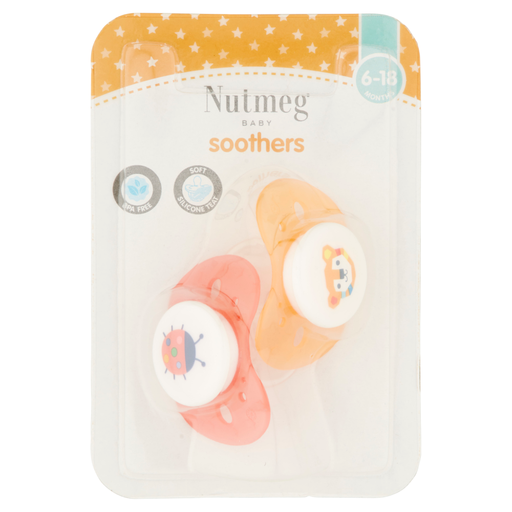
Why This Fits Their Persona: A two-pack gives parents a spare for the changing bag, nursery or night-time use, while the 6–18-month age range suits a common transition stage.
The stated age range, BPA-free silicone construction and EN 1400 compliance information make the key selection details clear.
Two soothers per pack; top-rack dishwasher suitability and compatibility with sterilisation methods.
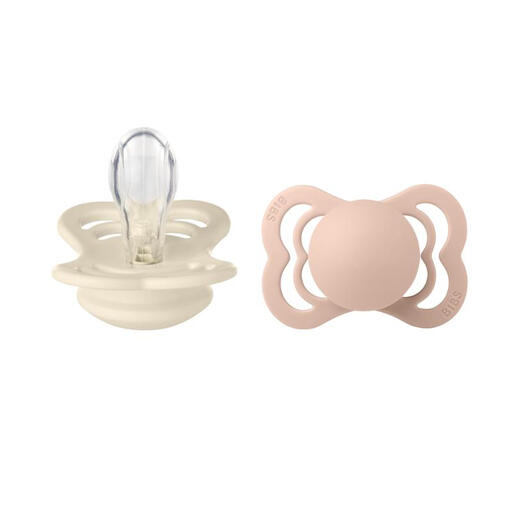
Why This Fits Their Persona: Suitable for newborns, this option suits parents who value a flat-drop teat, a matte shield and clearly specified food-grade materials.
It avoids vague material descriptions by specifying silicone, polypropylene and the absence of BPA, PVC and phthalates.
Symmetrical flat-drop teat; large ventilation holes; two-pack format for rotation.
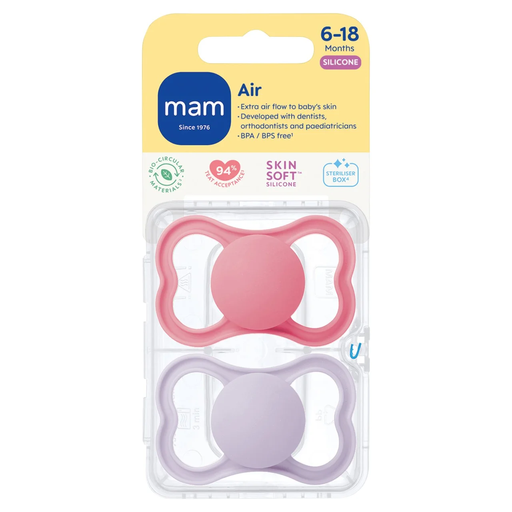
Why This Fits Their Persona: The open shield and glow-in-the-dark button suit dribbly babies, sensitive skin and parents managing repeated night-time searches.
The ventilation-focused shield addresses moisture build-up, while the product instructions explain how to charge the glow feature and sterilise the soothers.
Extra-large air holes; glow-in-the-dark button; included self-sterilising travel box.
We have compiled a complete, real-time list of products that fully satisfy these strict selection criteria and UK safety regulations.
Follow the individual product guidance. Silicone soothers commonly require replacement every one to two months, while natural rubber latex soothers may need replacing every four to six weeks. Always replace one sooner if the teat is torn, sticky, stretched or weakened.
Only when the manufacturer specifically allows it and provides suitable instructions. Some MAM newborn soothers include self-sterilising cases, while certain latex designs should be scalded with boiling water and must not be microwaved. Check the product directions before cleaning.
A glow feature can help you locate the soother, but it does not change the normal safety requirements. Charge it as directed, inspect it before use and never attach unsafe cords or clips. Choose a dedicated holder compliant with EN 12586 if one is needed.