
24/7 Customer Support

Free returns

Same-day & Next-day Delivery

Quality Guaranteed

Unlock Your Welcome Offers: FREE Delivery | Up to 80% OFF | Free 30-day JoyPlus trial
Download the APP
Choosing baby soothers and pacifier clips can seem straightforward until you compare teat shapes, age ranges, materials, cleaning instructions and safety warnings. A low-cost dummy may not suit your baby’s stage, while an attractive soother clip may be unsuitable for sleep or difficult to clean.
This guide focuses on the details that matter when choosing baby dummies, pacifiers for babies, soother clips and early-development toys for children aged 0 to 36 months.
A newborn soother and a toddler soother are not interchangeable. Age bands usually relate to teat size, shield proportions and the child’s stage of development. For example, a size 1 dummy may be intended for babies from birth, while a size 3 product may be designed for children aged 18 months and over.
Always check the age printed on the packaging and product page. Do not move up a size solely because your child is chewing the teat or dropping the soother frequently.
A silicone soother is generally easy to clean and is often suitable for several sterilisation methods, depending on the manufacturer’s instructions. A natural rubber latex pacifier, however, may be more sensitive to heat, sunlight and prolonged exposure to disinfectant. Latex can also cause irritation in some children.
Cleaning instructions are therefore more important than colour or shape. A glow-in-the-dark soother may be convenient at night, but it still needs the correct daytime light exposure and regular inspection.
A soother clip or pacifier holder helps keep a dummy off the floor when your baby is awake, but it is not a sleep accessory. Do not attach clips to bedding, cots, cords or anything around a child’s neck. Remove the clip before naps and overnight sleep, and use it only under direct adult supervision.
Look for a clearly stated age range, such as 0+ months, 6+ months or 18+ months. Symmetrical, orthodontic-style teats can be useful for parents who prefer a design that does not require a particular orientation in the mouth. However, no teat shape suits every baby, so acceptance may depend on the child’s preference.
A round cherry-shaped teat, such as those found on some natural rubber latex pacifiers, may feel familiar to babies accustomed to breastfeeding. A flat, symmetrical silicone teat may appeal to babies who prefer a different mouthfeel.
Check whether the teat is made from silicone or natural rubber latex, and look for clear information about the shield and ring. Products in this guide include BPA-free materials, while some specify freedom from PVC and phthalates.
If your baby develops redness, swelling or irritation after using a soother, stop use and seek appropriate medical advice. Do not assume that a natural material is automatically suitable for every child.
A shield with ventilation holes allows air movement around the mouth and may help reduce moisture build-up. It should be large enough to remain outside the child’s mouth and free from detachable parts.
For UK shoppers, EN 1400 is the relevant European standard commonly associated with safety requirements for soothers, while EN 12586 covers soother holders. Product instructions remain essential even where a standard is listed. Inspect the teat before each use, pull it gently in all directions and discard it at the first sign of damage or weakness.
Most soothers require replacement at regular intervals. The products below advise replacement between approximately four weeks and two months, depending on material and use.
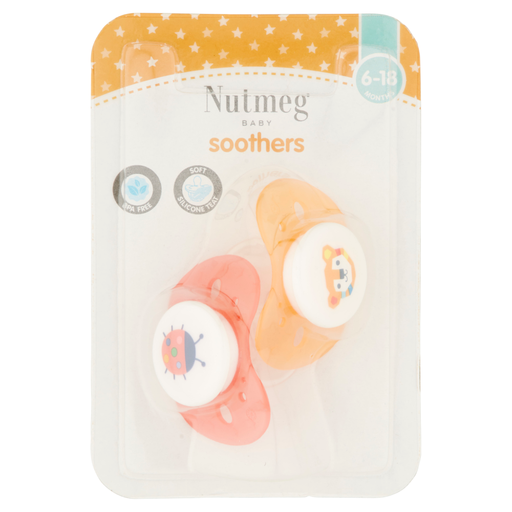
Why This Fits Their Persona: A practical two-pack for families wanting an everyday option for babies aged 6 to 18 months, with a spare available for changing bags or nursery use.
The age range is clearly stated, and the product instructions specify inspection, cleaning and replacement guidance rather than relying on appearance alone.
BPA-free silicone; dishwasher safe on the top shelf and suitable for stated sterilisation methods.
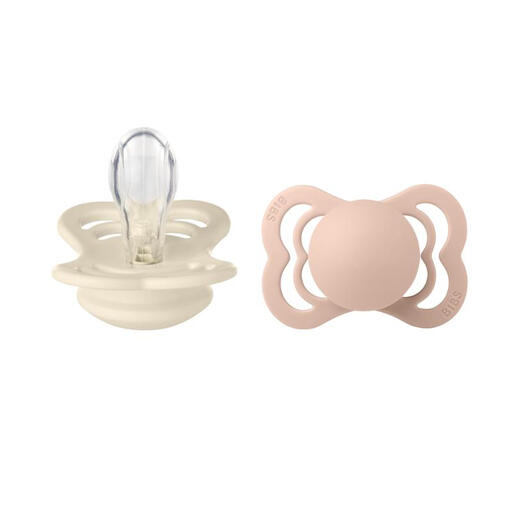
Why This Fits Their Persona: Suitable for parents who prioritise a symmetrical silicone teat, ventilation and clearly listed material specifications for a newborn or young baby.
The product identifies its teat and shield materials, age suitability and cleaning process, helping shoppers avoid vague “natural” material claims.
Food-grade silicone; large ventilation holes and EN 1400+A2 information supplied in the product details.
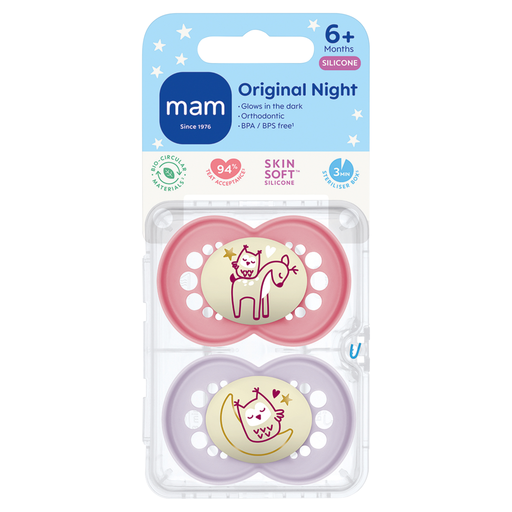
Why This Fits Their Persona: Designed for parents who regularly search for a dummy in a dark bedroom and want a travel box that also supports sterilisation.
The glow feature is paired with practical instructions: expose the button to daylight and follow the stated microwave sterilisation method.
Suitable from 6+ months; supplied with a self-sterilising travel box and SkinSoft silicone teat.
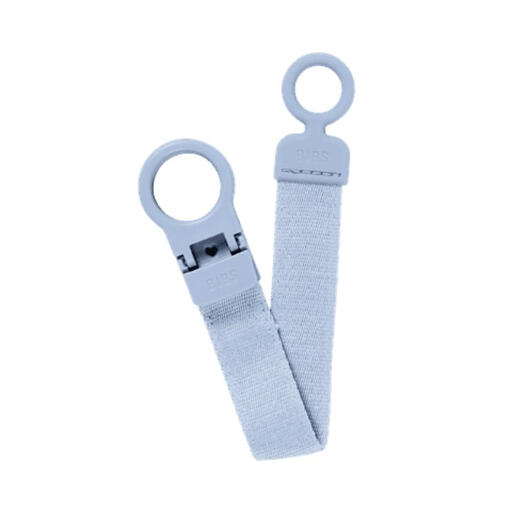
Why This Fits Their Persona: Useful for walks, pram journeys and changing-bag routines where keeping a soother attached to clothing can reduce drops and replacements.
Its instructions clearly restrict use to awake, supervised periods and prohibit attachment to bedding, loose clothing or long cords.
One-handed snap design; machine washable at up to 30°C according to the supplied instructions.
We have compiled a complete, real-time list of products that fully satisfy these strict selection criteria and UK safety regulations.
Soothers and clips are practical presents, but a suitable toy can make a gift more useful as a child grows. For babies from around six months, consider baby sensory toys with simple cause-and-effect actions, such as buttons, movement, lights or textures.
The VTech suction-cup flamingo is designed for 6 to 24 months and attaches to smooth surfaces such as a high-chair tray. It includes rotating movement, sounds and lights, but requires two AA batteries and adult supervision because of small-part and battery warnings.
For active floor play, musical toys such as the baby drum or crawling penguin are listed for 6 to 36 months. Check that batteries are secured, the toy has no accessible loose parts and play takes place under supervision. These infant musical toys should complement, rather than replace, shared interaction with a parent or carer.
A pacifier clip may be suitable from 0+ months when used exactly as instructed, attached only to clothing and supervised while the baby is awake. Never place a clipped dummy in a cot or use the strap around the neck.
Follow the product instructions and replace immediately if the teat becomes sticky, cracked, stretched, cloudy or otherwise damaged. Several products in this guide recommend replacement every four to eight weeks, depending on the material and frequency of use.
Neither material is universally suitable for every baby. Silicone is often straightforward to clean, while latex is soft and flexible but can be affected by heat, sunlight and disinfectant. Check the care instructions and stop using any product if irritation appears.