
24/7 Customer Support

Free returns

Same-day & Next-day Delivery

Quality Guaranteed

Unlock Your Welcome Offers: FREE Delivery | Up to 80% OFF | Free 30-day JoyPlus trial
Download the APP
For UK parents, baby soothers can be useful at bedtime, during travel or when a baby needs help settling. However, choosing between dummies, pacifiers, orthodontic soothers and teething products is not simply a matter of colour or price.
The wrong design may rub delicate cheeks, be difficult to clean or become unsuitable as your child grows. Before buying, check the age range, teat material, shield design and cleaning instructions rather than relying on broad marketing claims.
A soother labelled for newborns is not automatically suitable for a toddler. Teat size, shield proportions and recommended use can vary significantly between age groups. Using a 0–6-month soother for an older child may provide a poor fit, while a larger toddler soother may be unsuitable for a young baby.
Always match the product to the stated age range, such as:
An orthodontic or symmetrical teat describes its shape and intended positioning in the mouth. It does not guarantee a particular dental outcome. Look for a teat that is appropriate for your child’s age, made from a suitable material and replaced when worn.
If you have concerns about prolonged dummy use or your child’s teeth, speak with a health visitor or dentist rather than relying on product labels alone.
A low-priced single soother may cost more over time if it lacks a spare or is difficult to sterilise. Silicone soothers should be inspected regularly and replaced according to the manufacturer’s guidance. Several products recommend replacement after one to two months, or immediately if the teat becomes damaged.
A self-sterilising case can also be useful, but microwave instructions must be followed precisely. Incorrect water levels, wattage or cooling times may damage the product or cause burns.
The most important specification is the stated age range. Check the packaging and product page before purchase, particularly when moving from newborn soothers to 6–18-month or toddler designs.
The shield should sit comfortably against the face without covering the nose or restricting breathing. Larger ventilation holes can be a practical feature for dribbly babies or children with sensitive skin, as they reduce the amount of shield surface touching the cheeks.
Medical-grade or food-grade silicone is commonly selected because it is smooth, flexible and easy to wash. Check whether the product is described as BPA-free or BPA/BPS-free, and follow the stated sterilisation method.
Latex and natural rubber products have different care requirements. For example, natural rubber teethers should not usually be boiled or steam sterilised unless the instructions specifically allow it.
A symmetrical teat can be easier to position consistently, while a thinner, flexible teat may feel less bulky. These are design characteristics, not guarantees of dental or medical results.
In the UK, look for clear safety information and dedicated accessories. Soother clips should be intended for use with dummies and, where stated, tested to EN 12586. Never attach ribbons, cords or homemade holders around a baby’s neck.
A soother clip should only be attached to firm clothing while the child is awake and under direct adult supervision. It is not suitable for use in a cot, bed or crib and should never be treated as a toy or teether.
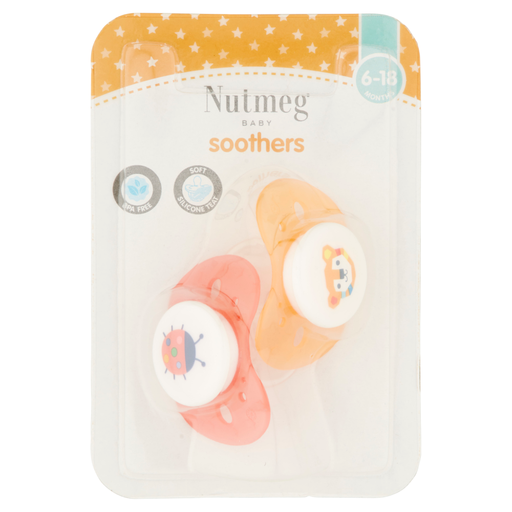
Why This Fits Their Persona: A straightforward two-pack for parents who want age-specific baby dummies without prioritising additional features.
The stated 6–18-month range helps avoid buying a newborn or toddler size too early. The product information also identifies BPA-free silicone and EN 1400 compliance.
Two soothers in the pack; suitable for top-rack dishwasher cleaning and common sterilisation methods.
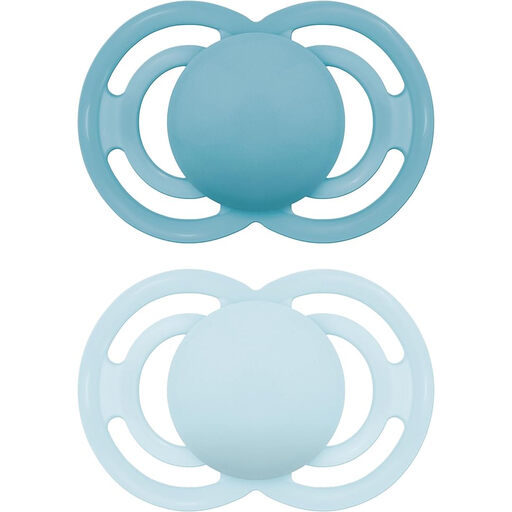
Why This Fits Their Persona: Suitable for parents comparing thin, flexible orthodontic soothers with convenient hygiene storage for home and travel.
Its advertised teat specification is 60% thinner and four times more flexible than the manufacturer’s standard comparison, so buyers can assess the design rather than relying only on the word “orthodontic”.
SkinSoft silicone teat; included self-sterilising travel case; BPA/BPS-free materials.
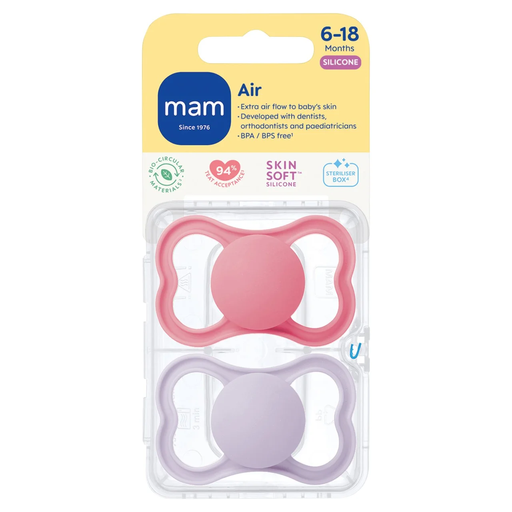
Why This Fits Their Persona: A practical match for dribbly babies, frequent night-time searches and families who want a breathable shield.
The extra-large air holes offer a clearly described airflow feature instead of an unsupported skin-care promise. The age range is stated as 6–18 months.
BPA/BPS-free silicone; two-pack; self-sterilising case using 25ml of water and a three-minute microwave cycle.

Why This Fits Their Persona: Designed for families wanting one product that combines a soother, comforter and teething surface from 0+ months.
The detachable comforter can be washed separately, while the silicone soother and teething plate can be inspected independently for damage.
100% organic cotton comforter; BPA-free, PVC-free and phthalate-free components; silicone plate may be chilled in the fridge.
Before first use, sterilise according to the instructions. For daily cleaning, warm soapy water is suitable for many silicone soothers, but always check whether the product is dishwasher-safe or compatible with steam, boiling or cold-water sterilisation.
Inspect the teat by gently pulling it in different directions before every use. Discard it immediately if you notice:
For outings, a dedicated soother clip can reduce drops onto pavements or supermarket floors. It does not remove the need for cleaning, and it must be removed during sleep. Never use a clip as a replacement for adult supervision.
We have compiled a complete, real-time list of products that fully satisfy these strict selection criteria and UK safety regulations.
Many manufacturers recommend replacing soothers every one to two months, while some toddler products advise a shorter four-to-six-week period. Replace one sooner if it shows any damage, weakness or wear, especially once your child has teeth.
Many silicone soothers can be boiled, steam sterilised or cleaned in a microwave case, but methods vary. Follow the product’s instructions for water quantity, microwave wattage and cooling time. Natural rubber teethers may require wiping only and should not automatically be boiled.
They can make a dummy easier to locate during night-time settling without switching on a bright light. Check how the button charges: some glow-in-the-dark soothers require daylight and may not charge under LED lighting. This feature should be treated as a convenience, not a substitute for checking the soother’s condition and age suitability.