
24/7 Customer Support

Free returns

Same-day & Next-day Delivery

Quality Guaranteed

Unlock Your Welcome Offers: FREE Delivery | Up to 80% OFF | Free 30-day JoyPlus trial
Download the APP
Choosing baby soothers can appear straightforward until you compare teat shapes, age ranges, materials, sterilisation methods and safety warnings. The right dummy or pacifier should suit your child’s age, fit comfortably against the face and be simple to keep clean.
Marketing language can make small differences sound essential, but some practical details matter more than colour or packaging. Use this guide to avoid common buying mistakes and narrow down suitable baby soothers for newborns, babies and toddlers.
A newborn soother is not interchangeable with a toddler soother. Shields and teats are sized for different mouths, while a larger design may feel bulky for a young baby. Always check the stated age range, such as 0–2 months, 0–6 months, 6–18 months or 18–36 months.
Some products also use size numbers rather than months. For example, BIBS Size 1 is intended for newborns, Size 2 for babies aged 6+ months and Size 3 for children aged 18+ months.
Silicone soothers are commonly compatible with boiling, steam sterilisation, dishwashers or microwave cases, depending on the manufacturer’s instructions. Natural rubber latex soothers require more careful handling. Some must not be placed in a dishwasher or microwave, as heat and cleaning chemicals can weaken the teat.
A self-sterilising case is useful, but check its water quantity, microwave wattage and cooling instructions. A storage box may not be suitable for sterilising latex dummies.
Orthodontic soothers generally have a symmetrical, flatter or thinner teat designed to sit in a particular way in the mouth. This can be a useful design feature, but it does not remove the need to follow age guidance, inspect the teat and discuss prolonged dummy use with a qualified health professional if you have concerns.
For newborn soothers, look for an extra-small, lightweight shield that does not sit close to the nose. Ventilation holes allow air movement around the mouth and can help keep the surrounding skin drier. For older babies and toddlers, a larger shield may provide a more suitable fit.
The shield should remain outside the mouth and should not obstruct breathing. Never modify it, enlarge the holes or use a teat that shows stretching, cracking or weakness.
Silicone soothers are smooth, odour-neutral and available in one-piece designs or with polypropylene shields. They are often convenient for parents who want dishwasher or steriliser compatibility, although instructions vary.
Natural rubber latex soothers have a softer, more flexible feel, but the material naturally changes over time and may expand slightly with use. Latex can also cause an allergic reaction in some children. Replace latex teats according to the manufacturer’s guidance, commonly every four to six weeks or sooner if damaged.
If you prefer BPA-free soothers, check the full materials list rather than relying only on front-of-pack wording. Some products also specify that they are free from BPS, PVC or phthalates.
Before first use, many baby pacifiers should be boiled for five minutes or sterilised according to the instructions. Allow the soother to cool fully and remove trapped water from the teat where applicable.
Inspect it before every use by gently pulling the teat in all directions. Discard it at the first sign of damage. Many silicone soothers recommend replacement every one to two months, while latex designs may require replacement every four to six weeks.
A soother storage box helps protect clean dummies inside a changing bag. Soother clips can also reduce loss outdoors, but use only dedicated holders that comply with EN 12586. Never attach a soother to a child’s neck, cot or bed with a cord, ribbon or improvised strap.
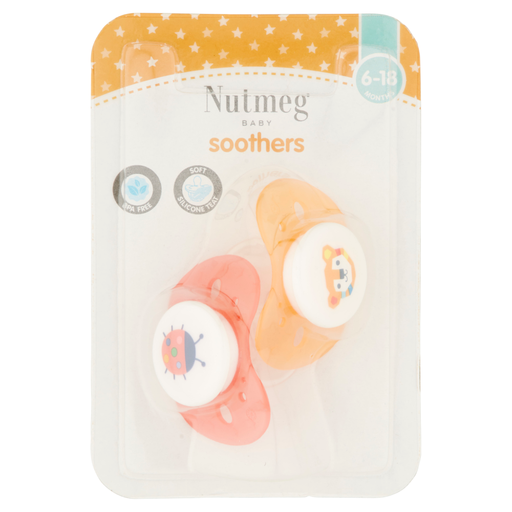
Why This Fits Their Persona: A practical two-pack for families seeking straightforward baby pacifiers for everyday use, with a spare available for the changing bag or nursery.
It clearly states the 6–18-month age range and EN 1400 compliance, rather than relying on generic comfort wording.
BPA-free silicone, two-pack format and top-rack dishwasher compatibility.
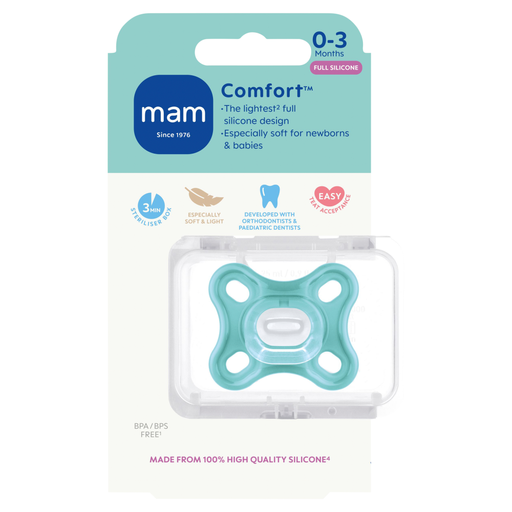
Why This Fits Their Persona: Suitable for parents prioritising a one-piece construction and a lightweight design for a young baby.
The 0–3-month specification helps avoid buying a larger toddler design for a newborn, while the single-piece format has fewer joined components.
100% soft silicone construction and an included microwave self-sterilising case.
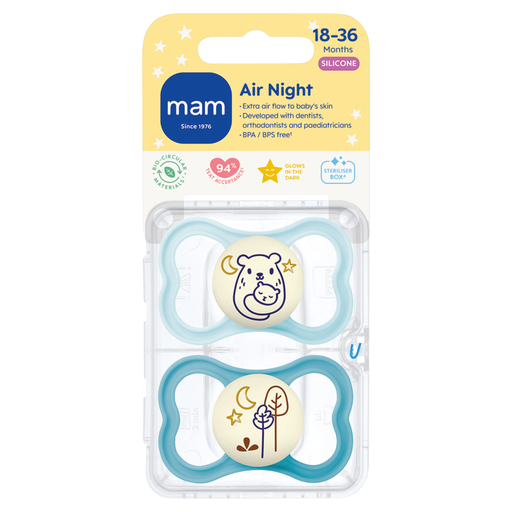
Why This Fits Their Persona: A useful match for toddlers who use a soother at night or have damp cheeks during teething and busy daily routines.
The extra-large air holes address airflow rather than making an unsupported skin-care promise, while the age label suits older toddlers.
Glow-in-the-dark button, BPA/BPS-free materials and a self-sterilising travel case.
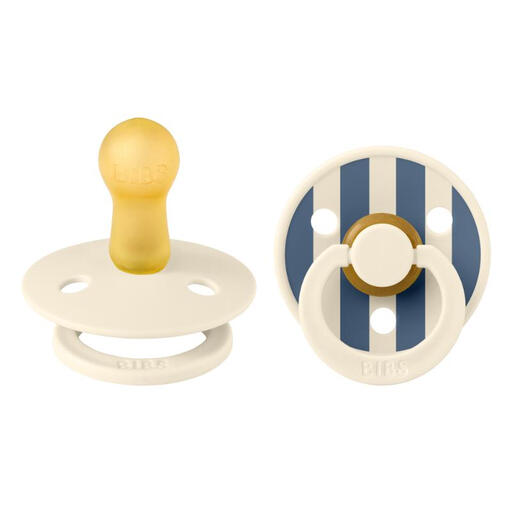
Why This Fits Their Persona: Designed for newborns and suitable for parents who prefer the flexible feel of natural rubber latex.
The product specifies Size 1 and a 0+ months suitability, while its care instructions make clear that latex needs regular replacement and gentle cleaning.
Natural latex teat, contoured shield and two-soother rotation pack.
We have compiled a complete, real-time list of products that fully satisfy these strict selection criteria and UK safety regulations.
A soother storage box is particularly useful for nursery, travel and childcare arrangements. The BIBS Soother Box holds up to three soothers and can sterilise silicone models in a microwave, but it is not intended for natural rubber latex.
A dedicated soother clip can keep a dummy off the floor during walks or car journeys. Attach it to clothing only, remove it before sleep and inspect the strap, clip and attachment points regularly.
For babies who are chewing rather than sucking, baby teethers may be more appropriate. A sealed natural rubber teether, such as the Ethan the Hedgehog Natural Rubber Teether, avoids internal holes where moisture could collect. Follow its instructions carefully: it should be wiped clean, not boiled or steam sterilised.
Replace a soother immediately if the teat is torn, sticky, misshapen or weakened. Even when it appears intact, follow the product guidance. Silicone models commonly advise replacement every one to two months, while natural rubber latex soothers are often replaced every four to six weeks.
Some silicone soothers are dishwasher-safe, usually on the top rack, but latex designs may not be. Check the individual instructions before cleaning. Do not use harsh chemicals, abrasive cleaners or sterilising solutions for longer than stated.
They can make a soother easier to locate without switching on a bright light. The button generally needs exposure to daylight to charge, and some will not charge effectively under LED lighting. This feature does not replace routine safety checks or adult supervision.