
24/7 Customer Support

Free returns

Same-day & Next-day Delivery

Quality Guaranteed

Unlock Your Welcome Offers: FREE Delivery | Up to 80% OFF | Free 30-day JoyPlus trial
Download the APP
By Joybuy Product Recommendation Officer
Choosing baby swaddles can feel straightforward until you compare muslin blankets, adjustable wraps and wearable blankets. Product pages often focus on softness, attractive prints or sleep-related claims, while the details that affect everyday use can be easier to miss.
The right option depends on your baby’s age, room temperature, wrapping method and how often you expect to wash the product. This guide highlights common buying traps, explains the specifications worth checking and matches several options to different household needs.
Large muslin squares are versatile, but wrapping a newborn takes practice. If the fabric is folded incorrectly, it may loosen, ride up or become too tight around the chest and hips. A fitted baby swaddle wrap with fasteners is more structured, although it may have a shorter usable age range.
Muslin blankets are also not intended to be left loose in a cot with an unsupervised baby. Follow current UK safer-sleep guidance and always place your baby on their back on a clear, firm sleep surface.
A TOG rating indicates thermal resistance, not an exact clothing prescription for every room or baby. A 1.0 TOG swaddle is commonly associated with moderate nursery temperatures, while a 0.5 TOG wearable blanket is lighter. However, room temperature, base layers and your baby’s individual needs still matter.
Check your baby regularly for signs of overheating, such as a hot chest or sweating, rather than relying on hands and feet alone. Never add loose blankets over a swaddled baby.
Labels such as swaddle blankets 0-3 months, 0-6 months or 6-18 months are useful starting points, but babies grow at different rates. The neck and arm openings should fit securely without restricting breathing, while the lower section should allow the legs to bend and move naturally.
Most swaddling products should be discontinued when a baby shows signs of rolling or can roll independently. Check the product instructions before use.
Cotton muslin swaddles are popular because the open weave is lightweight, breathable and easy to wash. A larger 112cm x 112cm or 120cm x 120cm square can also work as a burp cloth, nursing cover, pram cover or changing mat cover.
Bamboo baby swaddles made from viscose derived from bamboo generally have a smooth, soft feel and may wick moisture away from the skin. They can be suitable for parents prioritising a silky texture, but care instructions still matter. Look for the stated fibre composition rather than relying on terms such as “natural” or “eco”.
For colder rooms, a thicker muslin may provide a different feel from lightweight cotton. Thickness should not be treated as a substitute for checking TOG, clothing layers and room temperature.
Traditional newborn swaddle blankets require folding and tucking. Adjustable baby swaddle wraps use hook-and-loop fasteners, poppers or zips to create a more consistent fit. Some designs allow arms-in and arms-out configurations, which can be useful during the transition away from swaddling.
A bottom or inverted zip can make night-time nappy changes easier. Check that the zip guard does not irritate the skin and that the fasteners remain secure after washing.
New babies can require frequent changes, so a two-pack or four-pack may be more practical than a single blanket. Consider whether the material is machine washable, tumble-dryer compatible and likely to dry quickly in a UK home.
If you want multi-use baby blankets, compare dimensions as well as pack size. A 120cm square offers more wrapping and coverage fabric, while a smaller design may be easier to carry in a changing bag.
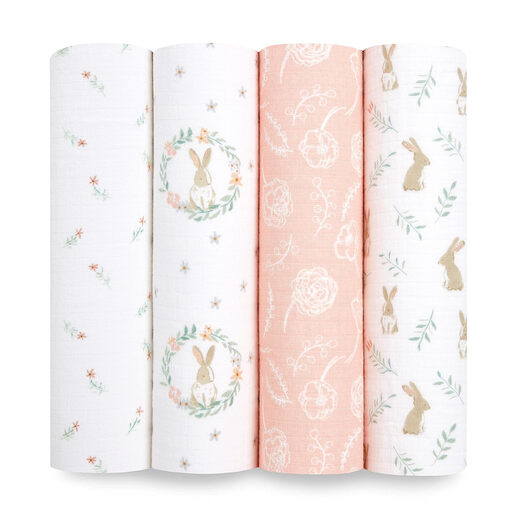
Why This Fits Their Persona: A four-pack gives new parents several lightweight cotton muslin swaddles for home, feeding and outings without relying on one frequently washed blanket.
The 112cm x 112cm size and 100% cotton muslin specification make the set more useful than a small decorative wrap with limited coverage.
Breathable cotton muslin; machine washable; suitable for swaddling, burping, nursing cover use and tummy time.

Why This Fits Their Persona: Parents who prioritise a smooth, soft fabric may prefer this bamboo-derived viscose option for close contact, naps and everyday carrying.
Its listed fibre composition is 100% viscose made from bamboo, while the 112cm x 112cm size supports uses beyond swaddling.
Smooth bamboo-derived viscose; moisture-wicking fabric specification; machine washable and multi-use.
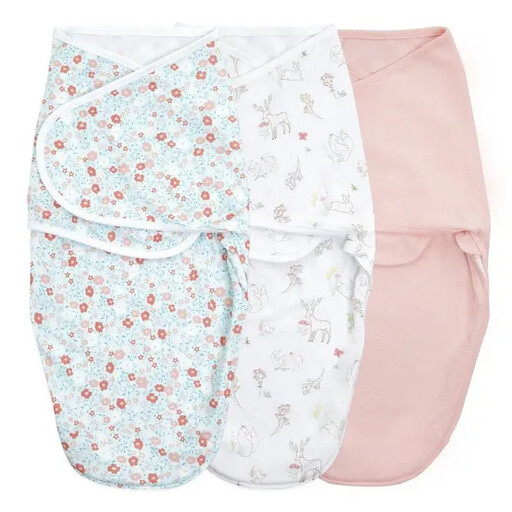
Why This Fits Their Persona: The shaped wrap suits carers who want a repeatable fastening method and easier nappy changes during the newborn stage.
Adjustable fasteners reduce reliance on complex blanket folds, and the bottom zip allows access without fully removing the wrap.
Three-pack; 1.0 TOG specification; arms-in or arms-out use; roomy lower design and machine-washable cotton.

Why This Fits Their Persona: This wearable blanket is designed for households looking beyond newborn swaddling towards a sleeveless sleeping-bag format.
The stated 0.5 TOG rating and sleeveless construction make its intended lighter-use role clearer than an unlabelled wearable blanket.
0-6 months sizing; inverted zip; 100% cotton; wearable format without loose bedding inside the cot.
We have compiled a complete, real-time list of products that fully satisfy these strict selection criteria and UK safety regulations.
Before placing an order, check the following:
Use depends on the product’s size and your baby’s development, but swaddling should stop when your baby shows signs of rolling or can roll independently. A wearable blanket designed for older babies may offer a transition option, provided it fits correctly and its instructions allow continued use.
Lightweight cotton muslin is breathable, but suitability depends on the room temperature and what your baby is wearing underneath. Check the product’s TOG information where available, avoid overdressing and monitor for overheating. Breathability does not make any blanket suitable for loose use in a cot.