
24/7 Customer Support

Free returns

Same-day & Next-day Delivery

Quality Guaranteed

Unlock Your Welcome Offers: FREE Delivery | Up to 80% OFF | Free 30-day JoyPlus trial
Download the APP
For expectant parents, baby swaddles can appear simple: choose a soft blanket, wrap your newborn and settle them down. In practice, the wrong size, fabric or fastening can make a swaddle uncomfortable, difficult to use or unsuitable once your baby becomes more mobile.
The main shopping traps are easy to miss:
Cotton muslin swaddles are popular because the open weave allows air to circulate and the fabric is generally lightweight. Several options in this range use 100% cotton muslin, while the silky soft styles use 100% viscose derived from bamboo.
A breathable fabric can help reduce the risk of overheating, but it does not make a product risk-free. Check the number of layers, the room temperature and the clothing worn underneath. A bamboo baby swaddle may feel smooth and moisture-wicking, while cotton muslin is often chosen for its familiar texture, absorbency and everyday versatility.
For cooler conditions, a thicker muslin or a wearable product with a stated TOG rating may be more suitable. TOG describes thermal resistance; it is not a guarantee that your baby will remain at the right temperature. Follow the garment’s guidance and check your baby regularly.
A newborn swaddle should be snug around the upper body without restricting breathing. There must be room for the legs to move naturally, rather than forcing them straight together. This is particularly important when selecting a newborn swaddle or swaddle wrap.
Large square blankets offer more flexibility. For example, the supplied products measure either 112cm x 112cm or 120cm x 120cm, giving enough fabric for wrapping and later uses such as tummy time, breastfeeding cover or changing mat cover.
Fitted designs should sit securely around the chest and shoulders, with no loose material near the face. Always use the manufacturer’s size and age guidance rather than relying on age alone, since babies grow at different rates.
A safe sleep swaddle should be used with your baby placed on their back, on a firm, flat sleep surface. Keep pillows, cot bumpers, toys and loose blankets out of the cot. Stop swaddling as soon as your baby shows signs of rolling, or sooner if they can escape the wrap.
Look for practical details that affect everyday use:
A wearable baby blanket or baby sleeping bag is not the same as a loose blanket. It should still fit correctly around the neck and armholes, and it should be used according to the label.

Why This Fits Their Persona: A four-pack gives first-time parents several washable squares for frequent changes, night feeds and travel around the UK.
Its 100% cotton muslin construction and 120cm x 120cm size provide practical coverage without relying on a complicated fastening system.
Pre-washed cotton muslin; machine washable; usable as a burp cloth, breastfeeding cover, pram blanket or changing mat cover.

Why This Fits Their Persona: Suitable for parents who want a more substantial muslin for home use, pram outings and repeated everyday washing.
The product description states that the fabric is 25% thicker than standard muslin, while retaining an open-weave design for airflow.
120cm x 120cm size; higher thread count; pre-washed finish; designed for swaddling, spills and use as a pram cover.
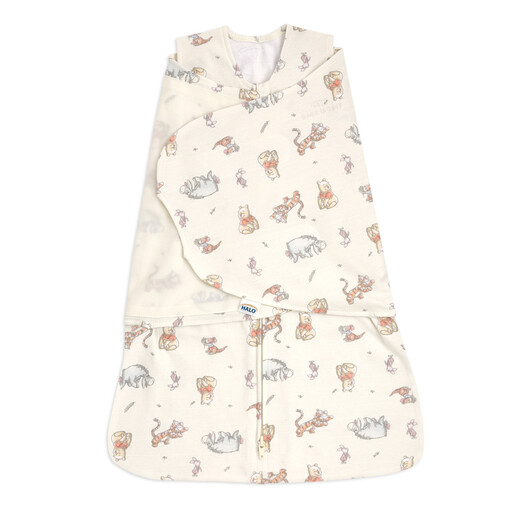
Why This Fits Their Persona: A useful choice for carers who prefer a structured swaddle with adjustable arm positions and simpler nappy changes.
Its three-way adjustment supports arms-in, hands-to-face or arms-out positions, helping avoid buying a new style immediately when preferences change.
100% cotton; 1.5 TOG; inverted zip; roomy sack design; suitable for 0–3 months according to the listing.

Why This Fits Their Persona: Families moving away from arms-in swaddling may prefer a sleeveless wearable baby blanket for warmer indoor conditions.
It is listed as a transition sleeping bag for 6–18 months, helping families choose a product designed for a later stage rather than continuing newborn swaddling.
100% cotton; 0.5 TOG; inverted zip; sleeveless design; product listing states conformity with BS EN 16781:2018.
We have compiled a complete, real-time list of products that fully satisfy these strict selection criteria and UK safety regulations.
Use depends on your baby’s development, not just their age. Stop using a traditional swaddle when your baby shows signs of rolling, attempts to roll or can break free. At that stage, consider a suitable baby sleeping bag or transition design and follow its age, size and TOG instructions.
They can be used for swaddling when wrapped correctly, but they must not be left loose in the cot. Place your baby on their back, keep the wrap snug but not tight, leave room around the hips and stop when rolling signs appear. A loose muslin should instead be used under supervision for daytime purposes.
There is no single TOG rating for every UK home. Choose according to the room temperature, the product guidance and the clothing underneath. A 0.5 TOG wearable blanket is lighter than a 1.0 or 1.5 TOG option, so avoid adding layers without checking whether your baby is too warm. Always read the care label and safety instructions before use.