
24/7 Customer Support

Free returns

Same-day & Next-day Delivery

Quality Guaranteed

Unlock Your Welcome Offers: FREE Delivery | Up to 80% OFF | Free 30-day JoyPlus trial
Download the APP
Choosing baby and toddler activity toys can be harder than it appears. Product pages often highlight bright colours, developmental benefits and multiple features, but these details do not always tell you whether a toy suits your child, your home or your daily routine.
Parents, grandparents and gift buyers can avoid wasted spending by checking three common pitfalls before purchasing.
A toy marked suitable from birth may still be unsuitable for a particular child’s play style, grip strength or supervision arrangements. Equally, a toy designed for toddlers may include small components that create a choking risk for younger children.
Check the specific recommended age, warnings and intended method of use. A product labelled 18 months or over should not be offered to a younger child simply because they appear interested in it.
A toy containing lights, sounds, textures and moving parts is not automatically more engaging. Babies may benefit from simple sensory exploration, while toddlers may prefer toys that let them repeat an action, solve a problem or create their own game.
Consider whether the toy supports the type of play your child actually enjoys, such as grasping, matching, turning, reaching or balancing.
Soft toys may need surface cleaning or hand washing, while wooden activity toys can require assembly and a stable floor area. Suction-based toys only work correctly on suitable smooth surfaces, and electronic toys may need charging.
A toy that is difficult to clean, attach or store may receive little use after the initial excitement.
The age recommendation is a starting point, not a substitute for supervision. Check whether a product contains small parts, balls, marbles, detachable accessories or battery compartments. Toys for babies should be inspected regularly for loose threads, damaged clips, weak suction or broken components.
For toddlers and young children, look for clear safety information and relevant conformity markings. The wooden AIYAPLAY activity cube, for example, is listed for 18+ months and states compliance with EN71-1-2-3. This refers to European toy safety requirements covering areas such as mechanical and physical properties, flammability and certain chemical elements. It does not remove the need to follow the product instructions.
Material descriptions should be specific rather than vague. Useful information may include wood, MDF, 100% cotton yarn, food-grade silicone or polyester fabric. Smooth edges, secure stitching and firmly attached components are practical details worth checking.
For teething toys, confirm the stated material and cleaning guidance. For wooden activity toys, check whether assembly is required and whether the product needs to be placed on a stable surface.
Measure the space where the toy will be used. A large activity cube may work well in a playroom but be impractical in a small lounge or when travelling.
For journeys, compact travel toys for babies with clips, rings or suction bases can be easier to use. However, attachment points should be checked before every use, particularly around prams, car seats and cots. Never leave a loose toy in a sleeping space unless the product instructions specifically allow it.
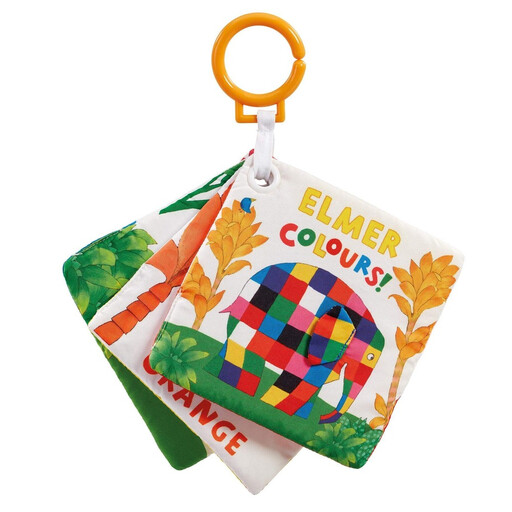
Why This Fits Their Persona: This soft activity book is a practical starting point for families seeking sensory toys for babies that are lightweight and suitable for home or travel. It is listed for 0+ months and includes a clip ring for prams, car seats or changing bags.
Its different textures, crinkle details and hidden squeaker provide varied interaction without relying on a large electronic feature set. Surface cleaning guidance is also provided.
Soft fabric construction; textured patches, crinkle sounds and a clip ring for portable play.
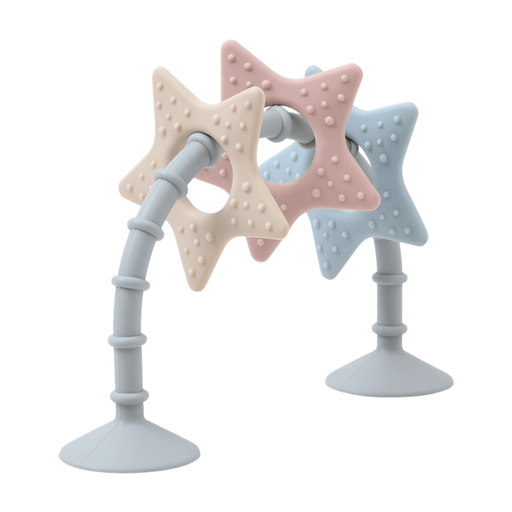
Why This Fits Their Persona: Families wanting one compact item for highchairs, baths and journeys may appreciate its multi-location design. It is listed for 0+ months and uses textured silicone stars for tactile play.
The suction base has a clear use condition: it should be attached to clean, dry, smooth, non-porous surfaces. This makes its limitations easier to plan for.
Food-grade, BPA-free silicone; dishwasher-safe construction according to the product information.
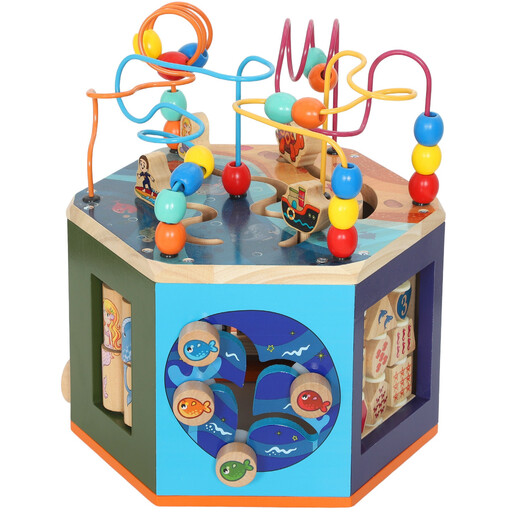
Why This Fits Their Persona: This is suited to toddlers who enjoy longer, hands-on play sessions and families with a dedicated play area. The cube measures 28W x 26.2D x 32H cm and is listed for 18+ months.
The activities are clearly specified rather than described only in broad developmental language: bead movement, number learning, pattern matching and movement games.
Wood and MDF construction; multiple fine motor skill and hand-eye coordination activities in one unit.
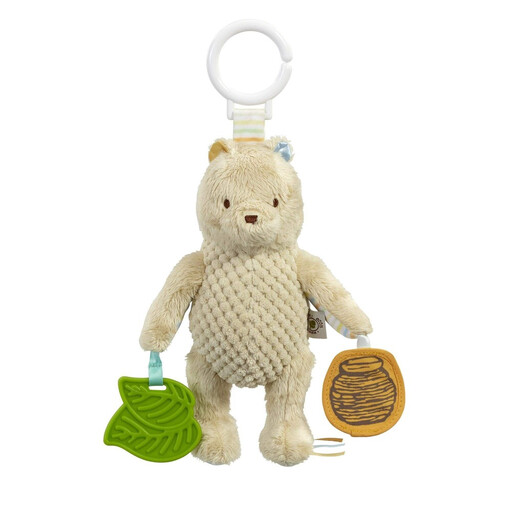
Why This Fits Their Persona: Its clip attachment and compact format make it suitable for prams, car seats and supervised play away from home. It is listed for 0+ months and combines several sensory elements.
The product information explains how to attach and clean it, while also advising regular checks for wear. It should not be left within reach of an unsupervised infant in a cot.
Includes textured fabrics, crinkle sounds, a chime rattle, teether and discovery mirror.
We have compiled a complete, real-time list of products that fully satisfy these strict selection criteria and UK safety regulations.
For newborns, focus on sensory toys for babies with easy-to-grasp forms, gentle sounds and contrasting textures. Lightweight rattles and soft activity books can be suitable options when used under supervision.
From around six months, babies may enjoy toys that encourage reaching, pulling, pressing and transferring objects between hands. A securely attached suction toy can be useful during supervised highchair play.
From 18 months, toddlers may be ready for Montessori toys for toddlers, wooden activity toys and simple matching games. These can offer repeated opportunities to practise turning, sorting and moving pieces.
From age three, products such as balance games or falling-stick catching games may support family interaction and hand-eye coordination. Always follow the stated age grading, especially where small balls, marbles, batteries or detachable parts are included.
They can provide opportunities for supervised sensory exploration, grasping, reaching and listening. Choose products that match the child’s age and check for secure stitching, clips and attachments before each use. Toys should not replace interaction with a parent or carer.
Compact soft books, clip-on sensory toys and lightweight rattles are practical choices because they take up little space. A toy attached to a pram or car seat must be secured according to the instructions and kept away from a sleeping infant’s reach.
Lifespan depends on materials, frequency of use, cleaning and storage. Wooden toys may need occasional checks for loose parts or surface damage, while fabric toys should be cleaned as directed. Inspect every toy regularly and stop using it if it becomes damaged.