
24/7 Customer Support

Free returns

Same-day & Next-day Delivery

Quality Guaranteed

Unlock Your Welcome Offers: FREE Delivery | Up to 80% OFF | Free 30-day JoyPlus trial
Download the APP
Choosing baby and toddler drinking cups can feel surprisingly complicated. There are open-rim designs, baby sippy cups, straw cups, 360° cups and spill-resistant beakers, all promoted as easy solutions for weaning. However, a cup that works well at the kitchen table may be awkward in a changing bag, while a highly sealed design can be difficult to clean properly.
The practical choice depends on your child’s age, current drinking skills and where the cup will be used. This guide explains the features worth paying for, the common marketing traps to avoid and a selection of products for different UK family routines.
Sealed valves can reduce leaks when a cup is upright or briefly tipped, but they do not remove every possible source of mess. Incorrect assembly, worn silicone, pulpy drinks and vigorous shaking can affect performance. Some cups also allow less liquid through, which may frustrate a baby learning to sip.
For nursery bags and car journeys, a leak-resistant lid with a cover is useful. At home, a free-flow or open cup may offer a more direct way to practise drinking, provided an adult is present.
A cup may appear convenient because it has several valves and seals, but hidden channels can retain milk or juice. This creates extra daily work and makes it harder to see whether every component is clean and dry.
Before buying, check whether the lid, spout or straw can be fully disassembled. A dishwasher-safe design can help, but dishwasher compatibility does not replace dismantling and inspecting small parts.
Age guidance is an important starting point, not a guarantee that a particular design will suit every child. A 3-month-old beginning supported drinking has different needs from a confident 18-month-old drinking independently. Consider grip, flow, capacity and whether your child can tilt a cup or create suction through a straw.
A free-flow cup may support tipping and sipping practice, whereas a pressure-sensitive valve releases liquid only when the child drinks. Neither style is automatically suitable for every stage.
Look for clear material details such as BPA-free polypropylene (PP), food-grade silicone or other stated food-contact materials. BPA-free baby cups are widely available, but this label should be considered alongside the manufacturer’s care instructions and the relevant product information.
For products intended as children’s drinking equipment, check that the packaging identifies an applicable standard, such as EN 14350 where relevant. Always follow the stated minimum age, avoid hot liquids unless the instructions specifically permit them and never microwave a cup that the manufacturer says is unsuitable for microwave use.
A 190–210ml cup may be easier for smaller hands, while a 266–360ml toddler cup can reduce refills during nursery, outings or play. Larger capacity also makes the cup heavier when full, so balance volume against grip.
Inspect the spout, straw, valve and seals before every use. Replace components when they become cracked, torn, cloudy, loose or difficult to clean. Some soft-spout products recommend scheduled spout replacement, so check the product directions rather than assuming one cup will last indefinitely.
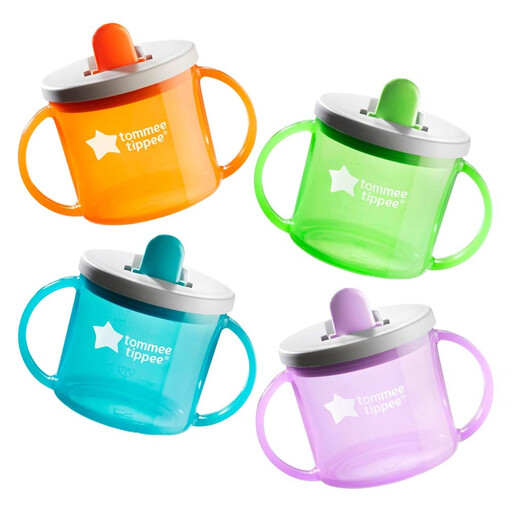
Why This Suits Them: A compact 190ml option for families introducing a first cup at home, with handles sized for small hands and a design suitable for sterilisation and dishwasher cleaning.
The two-part construction avoids a large collection of hidden components, while the free-flow spout makes the flow style clear rather than relying on a heavily restricted valve.
Free-flow spout, easy-grip handles, two-part disassembly and BPA, BPS, PVC, phthalate and nitrosamine-free materials as listed.

Why This Suits Them: A considered option for parents who want a rim-style transition with more spill control than a conventional open cup.
The removable valve can be separated for cleaning, helping address the problem of inaccessible residue in multi-part cups.
207ml capacity, 360° pressure-sensitive rim, easy-grip handles and top-rack dishwasher compatibility.
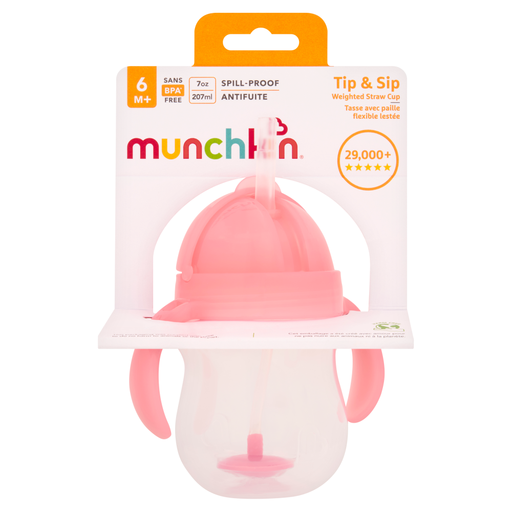
Why This Suits Them: Suitable for families wanting a straw cup for travel, prams or flexible drinking positions during outings.
The included straw brush acknowledges the cleaning requirement of straw systems, and the lid twists into a stated Click Lock seal.
207ml capacity, weighted straw for any-angle drinking, flip-top cover, easy-grip handles and top-rack dishwasher suitability.
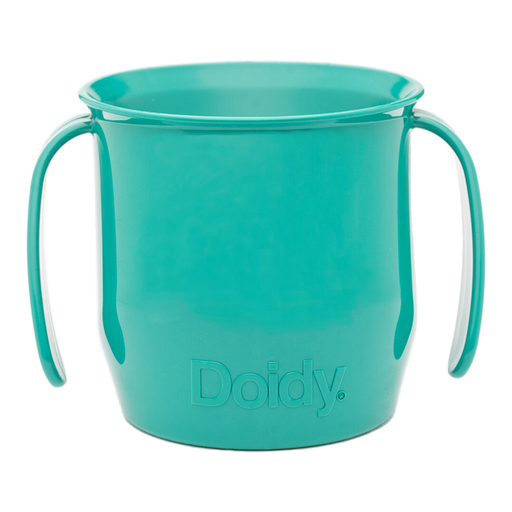
Why This Suits Them: A practical choice for caregivers who want to introduce an open rim early and can supervise practice at mealtimes.
It does not promise a mess-free experience: the slanted open-rim design is intended for guided learning, so initial spills are an expected part of use.
Suitable from 3+ months, slanted body helps the child see the liquid, two handles aid grip and food-safe polypropylene is dishwasher safe.
We have compiled a complete, real-time list of products that fully satisfy these strict selection criteria and UK safety regulations.
There is no single required style. For cups for 3+ months and cups for 4+ months, a handled trainer cup or a small open-rim design may be considered when your child is ready and an adult can provide direct supervision. Follow the product’s minimum age and your health visitor’s guidance.
Some cups for 6+ months are specifically designed with soft straws, handles and restricted valves. A weighted straw cup may help a baby access liquid without tipping the whole container. Check the instructions carefully and clean the straw internally after each use.
Many families move to cups for 12+ months or cups for 18+ months as grip, coordination and fluid needs develop. A 266–360ml cup can be useful for nursery and outings, but a smaller, lighter cup may still be easier for independent use. Age guidance, handling ability and the cup’s condition should all inform the decision.