
24/7 Customer Support

Free returns

Same-day & Next-day Delivery

Quality Guaranteed

Unlock Your Welcome Offers: FREE Delivery | Up to 80% OFF | Free 30-day JoyPlus trial
Download the APP
Choosing baby and toddler sensory toys can feel straightforward until you compare flashing lights, musical functions, age labels and long lists of developmental claims. Parents, grandparents and carers often want one engaging toy that is safe, useful and suitable for the child’s current stage. However, attractive packaging does not always reveal whether a toy will work well in a real UK home.
The following guide highlights common buying traps, explains the specifications worth checking and matches different play needs with suitable options.
A toy may advertise lights, songs, buttons and moving parts, yet these features can be difficult for a young child to activate independently. Look for simple cause-and-effect actions such as pressing, turning, tapping, sorting or pulling. These provide clearer opportunities for exploration than a toy that plays continuously without interaction.
“Suitable from” ages are important, but they are not a complete developmental guide. A floor-play toy may suit a baby who is reaching and tracking objects, while a standing activity table may be more appropriate once a child can sit or stand steadily. Always check the product’s warning label and consider the child’s actual movement and coordination.
Musical toys for toddlers can become unpopular with adults if the volume cannot be adjusted. Battery-operated toys also create ongoing costs and require secure battery compartments. Before buying, check whether batteries are included, what type is needed and whether there is a volume dial, mute mode or manual play option.
For sensory toys for 6–36 months, check the stated age range, choking warnings and intended play position. Toys marked 0+ may include soft fabrics, rattles, mirrors or teethers, but they still need regular inspection. Products for 1–3-year-olds may include more buttons and movable parts, but supervision remains sensible, particularly during first use.
Toys with small components should never be offered below the stated age. A product designed for children aged three and over is not suitable for younger toddlers simply because they appear confident with toys.
For plastic educational toys for babies and developmental toys for toddlers, look for clearly stated materials and construction details. Rounded edges, secure parts and a stable base are useful practical features. Some listings specify BPA-free ABS plastic, while wooden products may identify materials such as rubberwood or MDF.
Where a listing states compliance with EN71, this refers to European toy safety requirements covering areas such as mechanical and physical properties, flammability and certain chemical elements. CE marking is also relevant to toys sold in the UK, but parents should still read the individual warnings, instructions and manufacturer information rather than relying on a symbol alone.
A compact baby activity cube may suit a flat or travel-friendly play area, while a toddler activity table needs enough surrounding space for safe movement. Check dimensions before ordering, especially for smaller UK flats, nurseries or shared family rooms.
For frequently handled toys, wipeable plastic can be convenient. Soft toys and crochet rattles may require hand washing or surface cleaning. Follow the care instructions and stop using any toy if seams, threads, batteries or structural parts become damaged.
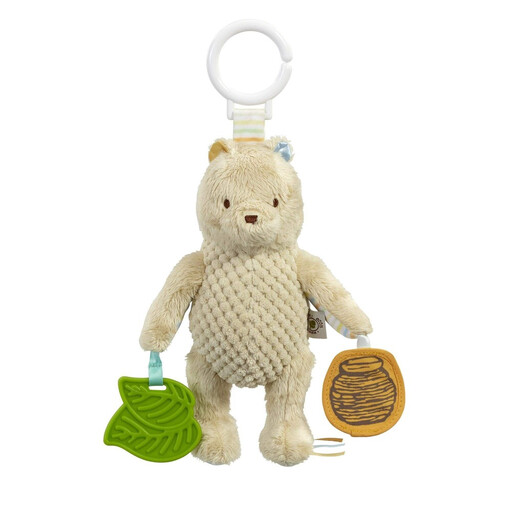
Why This Fits Their Persona: A portable choice for families wanting a simple first sensory toy for prams, car seats or cots. It offers tactile play without needing batteries.
Its play value comes from textures, crinkle sounds, a chime rattle, mirror and teether rather than constant electronic effects. The listing states a 0+ months suitability.
Includes a plastic C-clip for attachment and a BPA-free textured teether. Surface washing is specified in the care instructions.
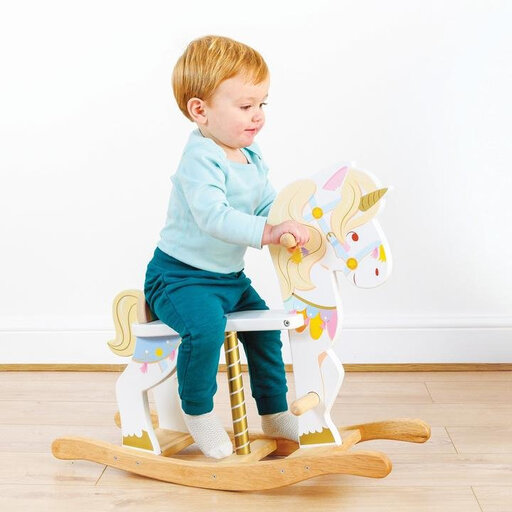
Why This Fits Their Persona: Suitable for households seeking a substantial, screen-free gift with a traditional design for indoor play from 12 months.
It does not depend on lights or replaceable batteries. The listing provides a defined maximum weight capacity and states that assembly is required.
Made from FSC-certified rubberwood according to the listing, with water-based paints and EN71 and ASTM standards stated.
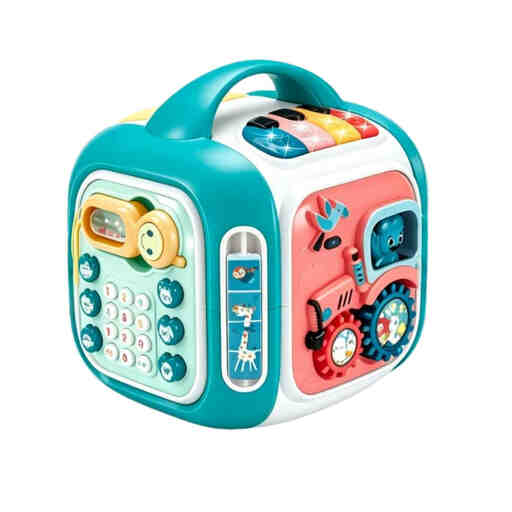
Why This Fits Their Persona: A practical option for active toddlers who enjoy switching between several hands-on activities at home or while travelling.
The eight play modes include gears, a pretend phone, piano, guitar and musical windmill, giving children several actions to revisit rather than one repeated effect.
The compact 23 x 23 x 24 cm design includes a carry handle. The listing states BPA-free ABS, rounded edges and suitability for ages 1–3.
For musical play, the children’s drum set with adjustable volume and working microphone is listed for ages 1–3 and includes light-up drum pads, liftable cymbals and a removable stand. Its adjustable volume dial is useful where adults need more control over sound levels. Batteries are not included, so check the required battery details before purchase.
For younger babies, the baby musical drum toy combines drumming, shape sorting, lights and animal sounds. It is listed for 6–18 months, although carers should follow the supplied warnings and supervise play.
Families searching for quieter Montessori toys may prefer the AIYAPLAY Wooden Activity Cube, listed for 18+ months, with a bead maze, pattern matching and number activities. You can also browse posting toys for 1 year olds for more hands-on options that encourage grasping, placing and matching.
We have compiled a complete, real-time list of products that fully satisfy these strict selection criteria and UK safety regulations.
Some are, provided they are specifically labelled for the child’s age. Soft rattles, crinkle toys, mirrors and attached teethers may suit younger babies. Inspect them regularly and never leave a toy attached to a cot or pram if it is loose, damaged or within an unsafe reach.
Battery use depends on how often the toy is played and whether it has lights, melodies or sensors. Look for a volume control, mute setting and clearly stated battery type. Rechargeable batteries may reduce repeat purchases, but always use the size and specification stated by the manufacturer.
Lifespan varies according to materials, frequency of use, cleaning and storage. Wipe toys as instructed, keep battery compartments secure and check for cracks, loose parts, torn seams or damaged cords. Stop using a product immediately if a safety-critical component becomes worn.