
24/7 Customer Support

Free returns

Same-day & Next-day Delivery

Quality Guaranteed

Unlock Your Welcome Offers: FREE Delivery | Up to 80% OFF | Free 30-day JoyPlus trial
Download the APP
Choosing between baby and toddler sippy cups can be surprisingly difficult. Packaging often highlights terms such as “no spill”, “antibacterial” and “independent drinking”, but these features do not always suit every child or daily routine.
The most useful approach is to match the cup with your child’s age, drinking ability and typical environment. A cup for a four-month-old beginning weaning may need a soft, free-flow spout, while an active toddler may benefit from a larger weighted straw cup for nursery, travel or outdoor play.
A leak-proof sippy cup relies on correctly fitted valves, seals and lids. If a straw is not pushed fully into place, a valve is twisted or the lid is overfilled, liquid may still escape. Some designs also become less reliable when the silicone parts are worn or damaged.
Before buying, check whether the cup can be fully disassembled and whether replacement parts are available. A flip-top lid can also help protect the drinking surface inside a changing bag.
A 300ml or 350ml cup may reduce refills, but it can be heavy for a young child when full. Large cups are generally more suitable for toddlers who can hold and tilt a container confidently. For early learners, a 190ml to 240ml training cup for babies may be easier to grip and control.
Handles, contoured sides and a non-slip surface can be more useful than extra capacity when independent drinking is the priority.
A cup may appear simple but still contain narrow straw channels, valves and hidden seals where milk or juice residue can collect. A genuinely practical easy-clean sippy cup should come apart without excessive force and should allow every liquid-contact component to be washed.
Dishwasher compatibility can save time, but check the instructions carefully. Top-rack cleaning is common, and a dedicated straw brush is useful for reaching the inside of a weighted straw.
Always follow the age guidance printed on the product. The range of cups for babies aged 4 to 18 months includes several distinct designs:
Age guidance is a starting point rather than a guarantee that every child will use a particular design immediately. Use all cups with direct adult supervision.
A soft silicone spout is familiar for some bottle-fed babies and may be gentle on developing gums. A straw cup for toddlers encourages sipping without requiring the child to tip the entire container. A weighted straw moves with the liquid, allowing access when the cup is held at an angle.
A 360-degree cup has no conventional spout and lets the child sip around the rim. This can resemble an open cup, although it may require more coordination and can still spill if dropped.
Look for clearly listed materials such as food-grade polypropylene and silicone. A BPA-free sippy cup is a sensible specification to check, but BPA-free does not remove the need for proper cleaning, supervision and regular inspection.
For everyday use, check the following:
Do not use hot or fizzy drinks unless the product instructions explicitly allow them. Prolonged sucking of drinks can contribute to tooth decay, so water is often the most straightforward everyday option.
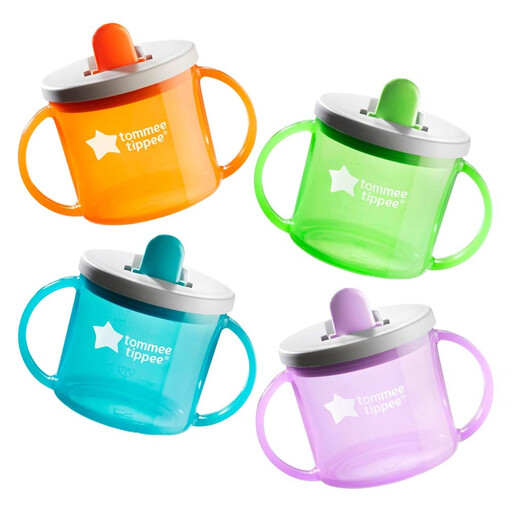
Why This Fits Their Persona: Its 190ml capacity and easy-grip handles are suited to babies starting the move from bottle or breastfeeding at home or during short outings.
The two-part construction avoids a complicated collection of valves, while the free-flow spout makes the drinking action clear rather than relying on a marketing label alone.
Free-flow spout, flip-down cover, dishwasher compatibility and sterilisation support.
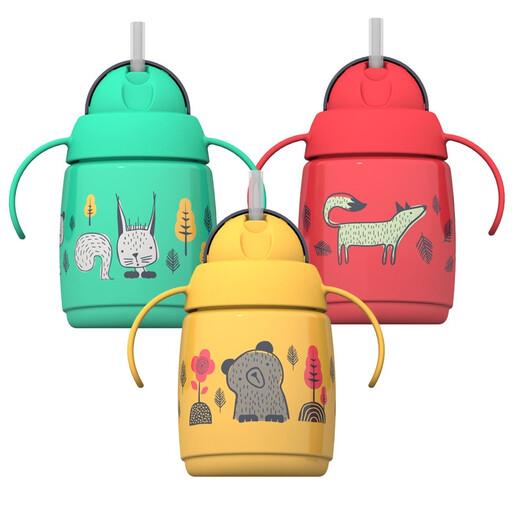
Why This Fits Their Persona: A 300ml format with measurement markers, handles and a weighted straw suits families wanting one versatile cup for home, nursery and travel.
The included straw brush and detachable components address the hidden-cleaning problem, while the flip cover protects the straw between uses.
Weighted silicone straw, measurement markers, cleaning brush and dishwasher and steriliser compatibility.
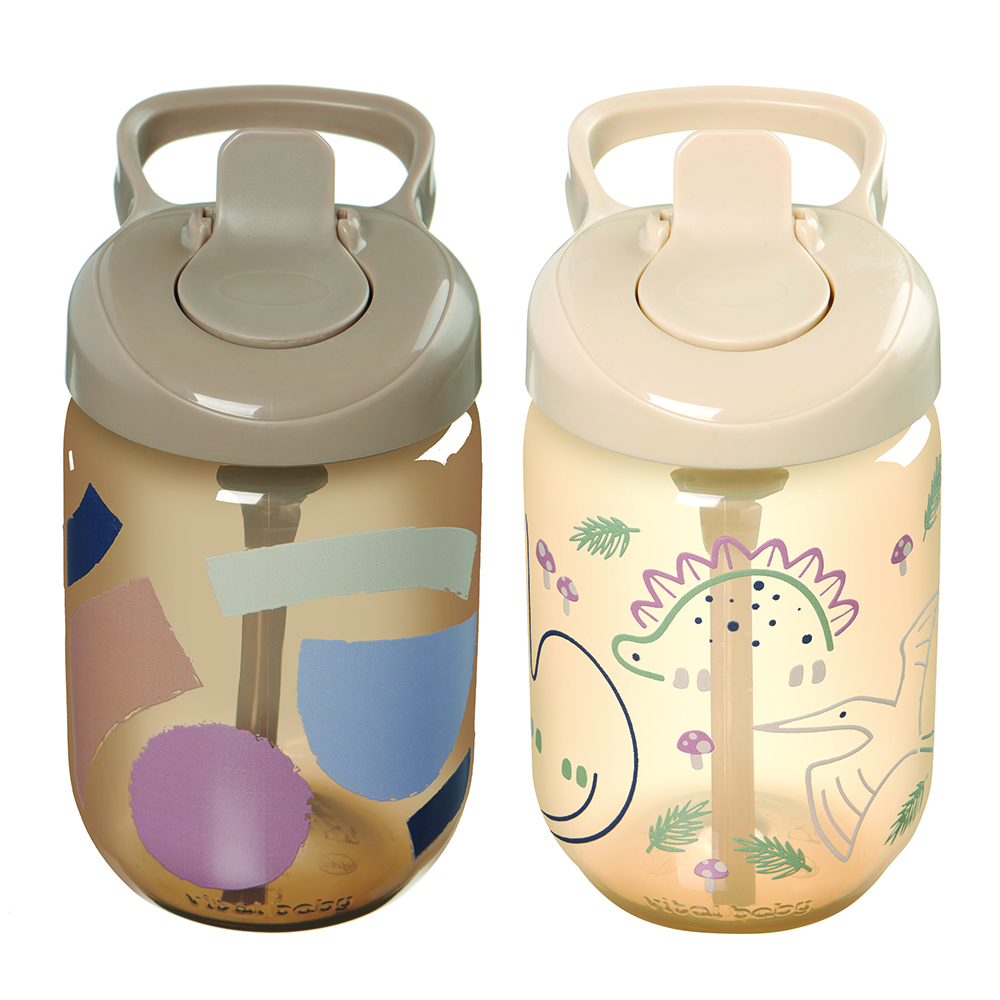
Why This Fits Their Persona: The two-cup pack and 350ml capacity are practical for active toddlers who need a spare for nursery, the car or longer days out.
The weighted straw follows the liquid as the cup tilts, while the flip-top and non-spill valve are designed for use in bags and on the move.
350ml capacity, weighted silicone straw, contoured grip and top-rack dishwasher suitability.
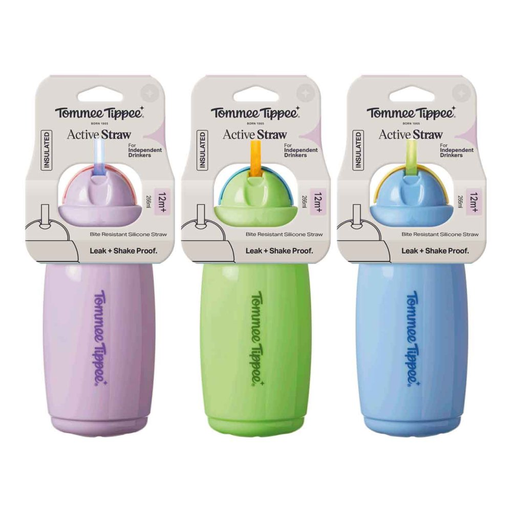
Why This Fits Their Persona: Parents planning park visits, walks and outdoor play may prefer an insulated straw cup designed for cold drinks.
Its intended use is clearly limited to cold liquids, avoiding the common mistake of treating an insulated cup as suitable for hot drinks.
266ml capacity, insulated construction and straw-based drinking for toddlers aged 12 months and above.
A few alternatives may suit different transitions:
We have compiled a complete, real-time list of products that fully satisfy these strict selection criteria and UK safety regulations.
For everyday use, plain water is a simple choice. Follow your health visitor’s or other qualified healthcare professional’s guidance for milk and weaning. Avoid hot and fizzy drinks, and check each product’s instructions before use.
Inspect the cup, straw, spout, valve and lid before every use. Replace the relevant part, or the entire cup if parts are unavailable, when you see cracks, weakness, clouding, chewing damage or a poor seal. Follow any replacement schedule supplied by the manufacturer.
Not necessarily. A weighted straw can help a child access liquid while holding the cup at different angles, but some babies need time to learn straw suction. Start with the age guidance, offer the cup under supervision and choose a smaller, easier-to-hold design if the child struggles with a larger format.