
24/7 Customer Support

Free returns

Same-day & Next-day Delivery

Quality Guaranteed

Unlock Your Welcome Offers: FREE Delivery | Up to 80% OFF | Free 30-day JoyPlus trial
Download the APP
Buying baby and toddler toys can look straightforward until you compare age labels, safety information, materials, batteries and cleaning requirements. A toy that seems engaging in a product photo may be too noisy for a flat, difficult to store in a smaller home or unsuitable for a child’s current abilities.
This guide helps parents, grandparents and gift buyers compare educational toys for toddlers, sensory toys for babies, musical toys and pretend play options without relying on exaggerated marketing language.
A toy labelled for “0–6 years” may be physically suitable for a broad age group but offer very different value at each stage. A baby play mat can support tummy time and crawling, while a three-year-old may mainly use it as a soft floor surface. Check the approved age, recommended age and the type of play expected.
Lights, sounds and multiple buttons can attract attention, but children may not use every function. For younger babies, simple cause-and-effect actions—grasping, tapping, reaching or rolling—can be more appropriate than a crowded control panel. Look for features that match the child’s development rather than paying for functions that may rarely be used.
A toy can become inconvenient if it needs frequent battery changes, cannot be wiped clean or takes up too much floor space. Before buying, check:
Age guidance is a starting point, not a substitute for supervision. Toys for ages 0–6 include very different categories, from soft activity areas to role-play sets containing small pieces.
For babies, prioritise large, easy-to-hold parts and simple sensory feedback. Sensory toys for babies may use contrasting colours, textures, gentle sounds or movement. For toddlers, look for opportunities to press, turn, sort, stack, match and imitate. Toddler learning toys are usually more useful when the action is clear and repeatable.
Always follow the product warning. A toy marked as unsuitable for children under 36 months should not be given to a younger child, even with an adult nearby, unless the manufacturer’s guidance specifically allows it.
Look for clearly stated materials, smooth edges and secure construction. Product listings may mention materials such as BPA-free ABS plastic, XPE foam or EVA foam. These descriptions are useful, but they do not replace checking the full safety information.
For toys sold in the UK, look for the relevant conformity marking and manufacturer or responsible-person details. CE and UKCA markings, where applicable, indicate that the product is declared to meet relevant requirements; they are not a substitute for reading warnings and inspecting the toy.
Pay particular attention to:
Dimensions matter in UK homes where nursery, lounge and storage space may be limited. A large mat may be useful for crawling, but measure the available floor area first. For baby activity toys and musical products, adjustable volume is helpful in shared accommodation or during quiet periods.
Water-resistant surfaces and dishwasher-safe components can reduce cleaning effort. However, bath toys still need rinsing and complete drying to reduce residue and trapped moisture.
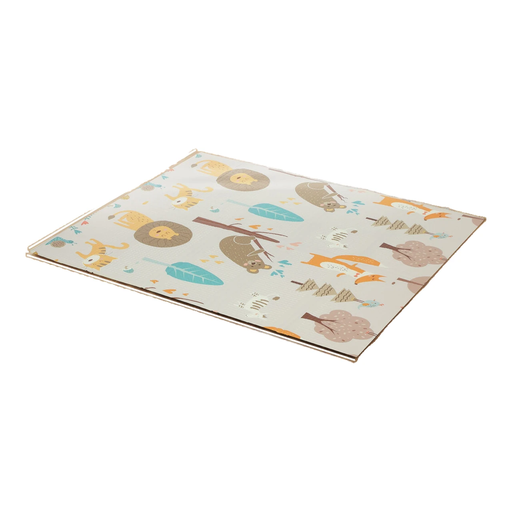
Why This Fits Their Persona: A practical starting point for families wanting one spacious surface for crawling, tummy time and floor play indoors or outdoors.
The foldable design addresses storage concerns, while the stated water-resistant surface is easier to wipe after spills. Its age information should still be checked against the child’s stage.
Double-sided animal designs, 1.5cm XPE foam padding, 177 x 146cm dimensions and a stated 2.57m² coverage area.
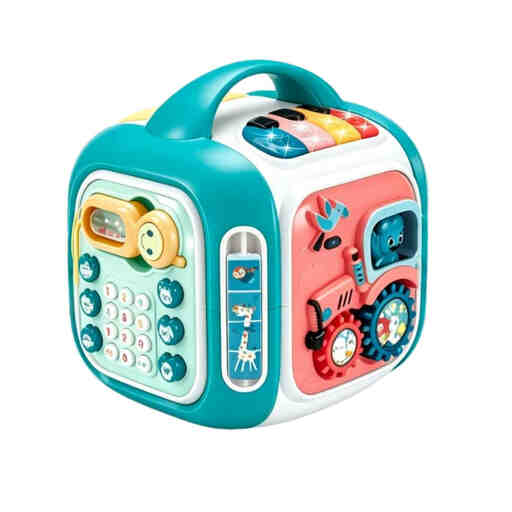
Why This Fits Their Persona: Suitable for buyers seeking a compact, multi-function activity centre for a toddler’s playroom, nursery or travel bag.
Rather than buying several single-function toys, this cube combines eight play modes. Check the stated 1–3 age range and inspect it regularly for damage.
Compact 23 x 23 x 24cm format, piano and guitar functions, pretend phone play, gears and a carry handle.
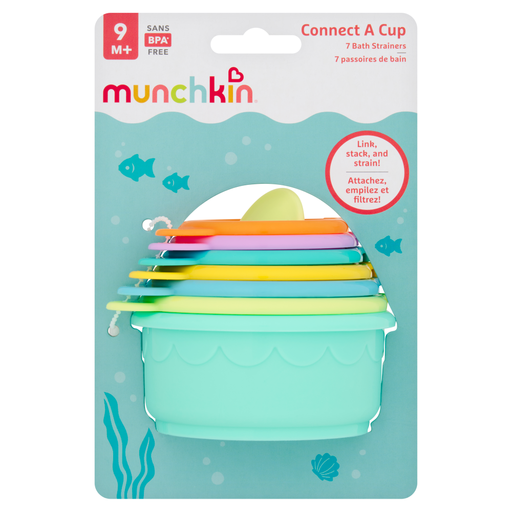
Why This Fits Their Persona: A focused choice for families who want repeatable water play during bath time, rather than another general toy for the nursery.
The seven cups offer several actions without electronic parts or battery costs. They still require rinsing, drying and continuous adult supervision near water.
Numbered cups support counting, different base patterns create varied pouring effects, and the BPA-free cups are dishwasher safe.
We have compiled a complete, real-time list of products that fully satisfy these strict selection criteria and UK safety regulations.
Consider the child’s current interests and the space available at home:
For babies, consider large, washable sensory items, play mats and simple rattling or musical books. From around nine months, supervised water cups and grasping toys may be suitable. Toddlers can usually explore activity cubes, shape sorters and basic musical instruments when the product’s age guidance matches their development.
Lifespan depends on storage, cleaning, frequency of use and exposure to outdoor surfaces. Check the mat regularly for tears, separation, surface damage or loss of grip. Replace it if damage creates an unsafe edge or exposes the internal material.
Battery use varies by sound, light settings and play frequency. Adjustable volume or mute controls can make a toy more practical, while checking whether batteries are included helps avoid unexpected setup costs. Remove batteries before long-term storage and follow the manufacturer’s instructions.