
24/7 Customer Support

Free returns

Same-day & Next-day Delivery

Quality Guaranteed

Unlock Your Welcome Offers: FREE Delivery | Up to 80% OFF | Free 30-day JoyPlus trial
Download the APP
Choosing baby training cups can feel straightforward until you compare open rims, valves, handles, straws, age labels and cleaning instructions. A cup that works well at home may be inconvenient in a changing bag, while a highly leak-resistant design may have more parts to clean.
This guide explains the practical features UK parents and carers should check before buying, followed by product matches for different stages and routines.
Age labels are useful starting points, but they do not describe every child’s coordination or drinking experience. Some weaning cups are suitable from 3 months+, while others are designed for 6 or 12 months and require a stronger sucking action.
Check whether the design suits your child’s current ability:
Always follow the age guidance on the packaging and supervise your child during use.
A valve or silicone seal can reduce spills, but no drinking cup should be treated as completely accident-proof. A cup may leak if the lid is not fitted correctly, the valve is damaged or the product is shaken vigorously.
For travel, look for practical features such as:
For early learning at home, a genuine open rim may be more useful than maximum spill resistance.
Hidden valves, narrow straws and small silicone components can retain milk or juice if they are not dismantled and cleaned thoroughly. Before buying, check whether the cup is dishwasher-safe, whether it has removable parts and whether a straw brush is included.
Water is generally simpler to clean from a cup than thick or pulpy drinks. Follow the manufacturer’s instructions and inspect every component regularly for cracks, wear or weakness.
The most important decision is how your child will drink.
There is no single format that suits every child. Consider whether your priority is learning the open-cup action, limiting spills or making drinking easier while out.
Look for clearly stated materials such as BPA-free polypropylene, food-grade silicone or Tritan plastic. “BPA-free baby cups” are widely available, but check the complete materials list rather than relying only on front-of-pack wording.
Also check:
Never assume that a dishwasher-safe cup is safe for all dishwasher temperatures or that every component can be sterilised. Follow the supplied directions.
A smaller capacity can be easier for a baby to hold and control, while a larger toddler drinking cup may reduce refilling during outings. Handles are useful when children are learning to lift and tilt a cup, but older toddlers may prefer a body they can grip directly.
For nursery, park trips and travel, consider a protective cap, leak-resistant seal and a shape that fits your bottle pocket or changing bag.
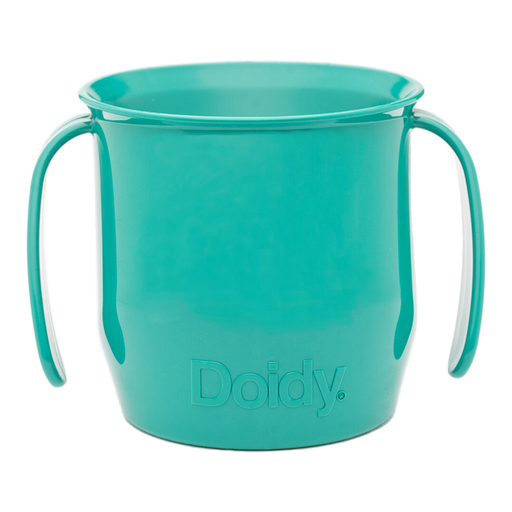
Why This Fits Their Persona: A straightforward choice for families introducing a first open rim during early weaning, particularly when most drinking happens at home.
It does not rely on a concealed valve or complicated seal. The slanted rim lets the child see the liquid, although supervised practice and some spills should be expected.
Two handles support small hands; the food-safe polypropylene cup is BPA-, phthalate- and PVC-free and dishwasher-safe.

Why This Fits Their Persona: Suitable for families wanting a transition format that resembles an open cup while offering more control over spills during everyday meals.
The removable 360° valve is accessible for cleaning, helping avoid the hidden residue problem found in some multi-part cups. It is still important to disassemble it after use.
The 207ml cup has easy-grip handles, a pressure-sensitive rim and top-rack dishwasher compatibility.
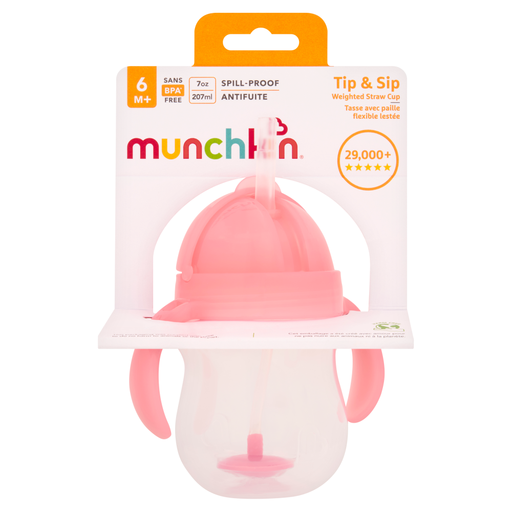
Why This Fits Their Persona: A practical match for active families using a cup in the pushchair, car or while travelling around the UK.
The weighted straw helps the child access liquid from different angles, while the flip-top protects the straw between drinks. The seal still needs checking before placing it in a bag.
The 207ml BPA-free cup includes easy-grip handles, a Click Lock lid, top-rack dishwasher compatibility and a straw-cleaning brush.
We have compiled a complete, real-time list of products that fully satisfy these strict selection criteria and UK safety regulations.
Some open-rim cups are labelled for children aged 3 months+, but readiness varies. Begin with a small amount of suitable liquid, hold the cup for your baby and supervise closely. Check the individual product guidance before use.
360° cups can reduce spills because a valve controls liquid flow, but children still need to learn to tilt the cup and sip around the rim. Open cups provide more direct practice but usually involve more mess at the beginning.
There is no universal replacement interval. Inspect the cup, seal, valve and straw regularly, replacing them at the first sign of cracks, tears, clouding, persistent odour or weakened fitting. A dishwasher-safe design may simplify daily cleaning, but it does not prevent normal wear.