
24/7 Customer Support

Free returns

Same-day & Next-day Delivery

Quality Guaranteed

Unlock Your Welcome Offers: FREE Delivery | Up to 80% OFF | Free 30-day JoyPlus trial
Download the APP
Moving from breast or bottle feeding to independent drinking can be messy, confusing and surprisingly expensive. A cup that looks suitable in a product photo may be difficult for small hands to grip, awkward to clean or unsuitable for the way your child actually drinks.
When comparing baby training cups, look beyond colourful designs and phrases such as “no-spill”. The most useful choice depends on your child’s age, drinking ability, where the cup will be used and how much cleaning you are prepared to do each day.
Most leak-proof baby cups use a valve, seal or spout that reduces leakage when the cup is upright or gently tipped. However, a poorly fitted valve, a worn silicone component or vigorous shaking can still result in drips. Some cups also require every part to be correctly assembled before the seal works properly.
Before buying, check:
A traditional spout may feel familiar, but it does not offer the same drinking action as an open cup for babies. If your priority is learning to sip from a rim, a spoutless 360-degree cup or a small slanted cup may be more suitable.
This does not mean every child must use one particular design. A weaning cup should match your child’s current ability, while allowing gradual progression towards independent drinking.
Straws, valves and narrow spouts can trap milk or juice residue. A cup may be dishwasher-safe while still needing manual cleaning inside the straw or around the seal. If parts cannot be separated, inspecting and drying them thoroughly becomes more difficult.
A simple cup with two or three removable parts can be easier for daily use than a more technical design with several small components.
Use the age guidance printed on the product and consider whether your child can sit upright and handle the cup safely. The products below cover options listed for children from 3 to 18 months and beyond, but age labels are not a substitute for adult supervision.
A baby sippy cup with a valve limits flow when the child is not actively drinking. A straw cup can be useful when your child prefers sipping without tipping the whole cup. Weighted straws are designed to follow the liquid as the cup moves.
A rim-based cup, such as a 360-degree trainer, allows drinking from different points around the edge. A genuine open cup offers the most direct practice but is also more likely to spill during early learning.
Look for clearly stated materials such as BPA-free polypropylene, food-grade silicone or other specified food-contact materials. BPA-free labelling is useful, but also check whether the lid, valve and straw use different materials.
Capacity should suit the intended setting:
Check dishwasher instructions carefully. “Top-rack dishwasher safe” does not necessarily mean that every component can be sterilised or microwaved.
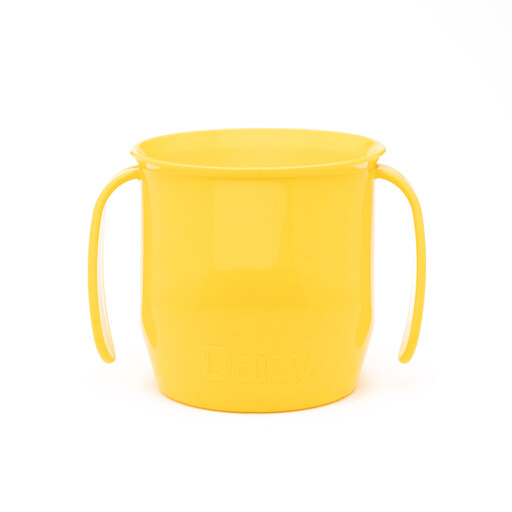
Why This Fits Their Persona: A lightweight first cup for babies listed from 3+ months, suitable for assisted practice at home during weaning.
Its slanted open rim makes the liquid visible and avoids relying on a conventional teat or spout. Expect some early spillages while your child learns.
Two handles, food-safe polypropylene and top-rack dishwasher suitability.

Why This Fits Their Persona: A tidy home-and-outings option for families wanting a controlled-flow rim with handles and a compact 207ml capacity.
The removable 360-degree valve is designed to close when the child stops sipping, while the parts can be separated for cleaning.
Easy-grip handles, BPA-free plastic and top-rack dishwasher suitability.
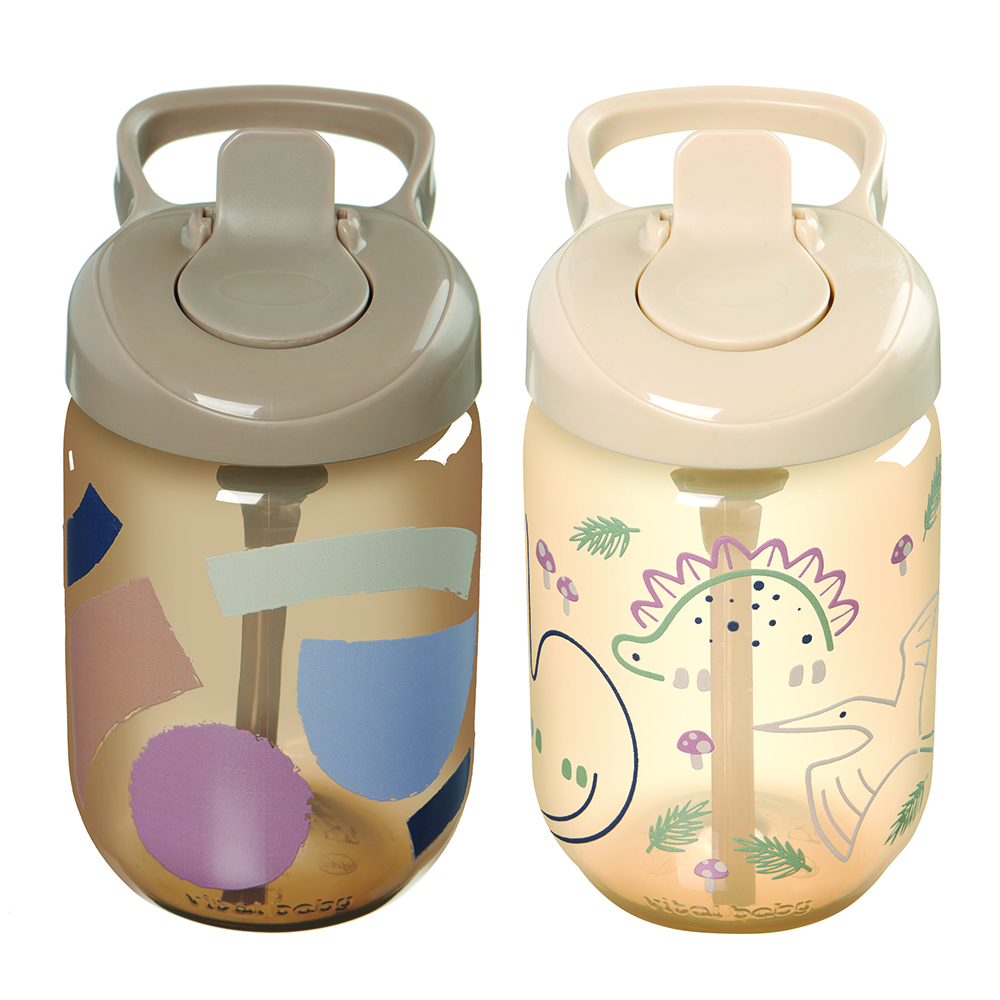
Why This Fits Their Persona: A practical choice for toddlers at nursery, in the car or on longer family outings where a larger capacity and spare cup are useful.
The weighted straw lets a toddler sip at different angles, while the flip-top lid helps protect the straw in a bag.
Two 350ml cups, BPA-free materials, contoured sides and dishwasher suitability.
We have compiled a complete, real-time list of products that fully satisfy these strict selection criteria and UK safety regulations.
Age guidance varies by design. Some products are listed from 3+ or 4+ months, while others are intended for 6, 12 or 18 months and above. Introduce a cup when your child is ready, use small amounts initially and always supervise. Follow the instructions supplied with the specific product.
They serve different purposes. A straw cup can reduce spills and is convenient for travel, while an open cup for babies gives more direct practice with rim drinking but usually creates more mess. Many families use a controlled-flow cup outside and practise with an open rim during supervised meals.
There is no fixed lifespan. Inspect the cup, valve, straw and spout before every use. Replace the item at the first sign of cracking, tearing, weakness or persistent leakage. Frequent cleaning, drying and correct assembly can help maintain the cup, but worn soft components should not be kept in service.