
24/7 Customer Support

Free returns

Same-day & Next-day Delivery

Quality Guaranteed

Unlock Your Welcome Offers: FREE Delivery | Up to 80% OFF | Free 30-day JoyPlus trial
Download the APP
Starting weaning is an exciting milestone, but choosing between baby training cups, baby weaning cups, straw cups and open rims can quickly become confusing. A cup that looks practical online may leak in a changing bag, contain hard-to-clean valves or be unsuitable for your baby’s current stage.
The right choice depends less on colourful designs and more on drinking style, age suitability, cleaning requirements and everyday use. This guide explains the main buying traps and compares practical options for babies and toddlers in the UK.
Most non-spill baby cups use a valve, seal or spout to control liquid flow. These parts may reduce leaks when the cup is upright, but a cup can still drip if it is overfilled, incorrectly assembled or shaken vigorously.
Before buying, check:
A complicated seal may perform well but become inconvenient if it takes too long to wash after every use.
An age recommendation is a useful starting point, not a guarantee that every baby will manage the cup immediately. Some cups for babies aged 3 months+ have an open rim and require adult guidance. A straw cup may suit a baby with developing sipping skills, while another child may find a free-flow spout easier first.
Always consider whether your baby can:
Use all drinking equipment under direct adult supervision.
A cup with a straw, valve, lid and cover may have more components than a simple open training cup. Small silicone parts can also wear, split or retain residue. Check whether a cleaning brush is included and whether replacement spouts or straws are available before purchasing.
Open training cups support direct drinking from a rim, but early use normally involves more spills. A slanted rim can help a baby see the liquid without tilting their head too far.
Spouted sippy cups for babies offer a more familiar bottle-to-cup transition and can be easier to manage during early practice. However, prolonged sipping of milk or sweet drinks can contribute to tooth decay, so follow NHS and dental guidance on drinks and mealtimes.
Straw cups for babies are useful for drinking without tipping the cup. Weighted straws can help a child access liquid from different angles, which may be practical in a highchair or pushchair.
A smaller 190–240ml cup is often easier for little hands to control. Larger 300–350ml designs hold more liquid but may feel heavier when full. Look for baby cups with handles that are easy to grip without forcing the wrists into an awkward position.
Capacity markings can be useful if you want to monitor how much water or milk has been added, but they do not replace advice from a health visitor or GP about your child’s fluid intake.
Look for clearly stated materials such as BPA-free polypropylene, silicone or other food-contact plastics. BPA-free baby cups are widely available, but “non-toxic” wording alone does not explain how a product should be cleaned or used.
Prioritise:
Never use a damaged cup. Inspect the rim, spout, straw, valve and handles regularly, particularly once your baby begins teething.
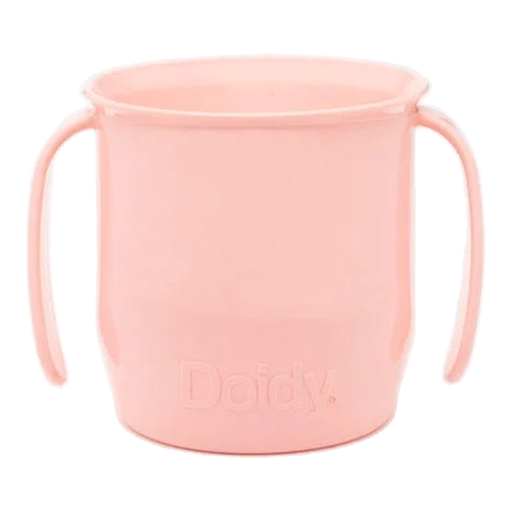
Why This Fits Their Persona: A straightforward option for families introducing an open rim at home, where small spills are manageable and hands-on guidance is available.
Its open-rim design avoids hidden valves and the cup is intended for supervised practice rather than promising a spill-free experience.
Slanted rim, two handles, BPA-, phthalate- and PVC-free polypropylene, and dishwasher-safe construction.
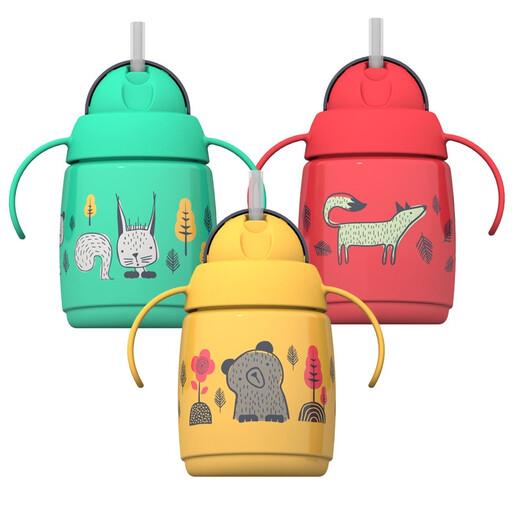
Why This Fits Their Persona: A feature-rich choice for families wanting one straw cup for home, nursery trips and journeys around the UK.
The weighted straw and specified INTELLIVALVE anti-leak system address angled drinking and accidental knocks, while the included brush helps clean inside the straw.
300ml capacity, easy-grip handles, measurement markers, flip cover and dishwasher- and steriliser-safe detachable parts.
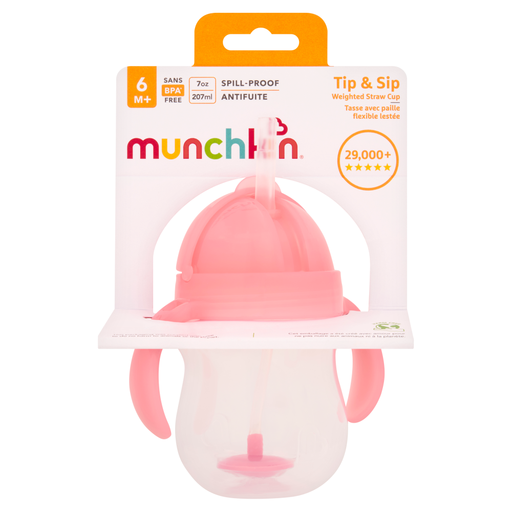
Why This Fits Their Persona: Suitable for active families who need a handled straw cup for outings, pushchairs and varied drinking positions.
Its weighted straw is designed for angled drinking, while the Click Lock lid and silicone seal are intended to reduce spills when correctly fitted.
207ml capacity, handles, flip-top straw cover, included cleaning brush and top-rack dishwasher compatibility.
Begin with a small amount of cool or room-temperature water, milk or another suitable drink. Sit your baby upright and offer the cup during a calm meal rather than when they are very thirsty.
For a first cup for babies, guide the handles gently and allow time for your child to explore the rim, spout or straw. Expect some spills when using an open cup. Do not force the cup or leave it within reach when your baby is unattended.
Disassemble the cup after use, wash every component and allow it to dry fully before reassembly. Replace any part that becomes cracked, torn, loose or difficult to clean. Avoid hot liquids, fizzy drinks and prolonged sipping unless the product instructions specifically state otherwise.
We have compiled a complete, real-time list of products that fully satisfy these strict selection criteria and UK safety regulations.
A suitable first cup depends on your baby’s development and your preferred learning method. Open training cups encourage rim drinking but usually involve spills. Free-flow or soft-spout cups can make the bottle-to-cup transition more controlled. Always follow the manufacturer’s minimum age and supervise use.
There is no universal replacement schedule. Inspect the cup before every use and replace it when the spout, straw, valve, seal or body shows damage, clouding, splitting or weakness. Silicone parts may need earlier replacement if a teething baby bites them regularly.
They can be useful for travel, nursery bags and furniture protection, but non-spill does not mean maintenance-free. Valves and straws still need thorough cleaning, and some designs may release a few drops when dropped or incorrectly assembled. Choose the simplest design that matches your child’s drinking stage and your daily routine.