
24/7 Customer Support

Free returns

Same-day & Next-day Delivery

Quality Guaranteed

Unlock Your Welcome Offers: FREE Delivery | Up to 80% OFF | Free 30-day JoyPlus trial
Download the APP
Choosing baby training cups can look straightforward until you compare spouts, valves, handles, straws and age labels. A cup that works well at home may leak in a nursery bag, while a highly sealed design may be frustrating for a baby still learning to sip.
This guide cuts through common marketing claims and focuses on the features that matter for UK families, from first cups for babies aged 3+ months to toddler drinking cups for nursery, travel and everyday use.
Terms such as “spill-proof”, “non-spill” and “leak-proof” describe a design intention, not permission to store every cup upside down indefinitely. Valves may leak if they are incorrectly fitted, worn, clogged by pulpy drinks or left with liquid inside for too long.
Before buying, check:
A secure lid and correctly assembled valve are just as important as the headline feature.
Age guidance is useful, but it does not guarantee that a child will immediately manage the cup. A 3+ month open cup requires close adult guidance and will usually involve spills. A spouted cup may feel more familiar to a younger baby, while a straw or 360° design may suit an older child developing independent control.
Look at the drinking action, not just the printed age:
A cup with several hidden seals, narrow straw sections or small detachable parts can become inconvenient if it is difficult to clean thoroughly. This is especially relevant when the cup is used with milk or diluted juice.
Choose products that can be disassembled fully, check dishwasher and sterilisation instructions, and inspect spouts, straws and valves regularly. Replace any component showing cracks, weakness, chewing damage or distortion.
Many parents search for BPA-free baby cups, but it is sensible to check the full material information rather than relying only on front-of-pack wording. The products below list materials such as polypropylene, silicone, TPE and Tritan. Confirm that the cup is intended for food contact and follow the manufacturer’s directions for temperature, microwave use and sterilisation.
Never assume that a dishwasher-safe cup is suitable for boiling, microwaving or hot drinks. Several products in this selection are intended for cold or room-temperature liquids only.
A smaller 190ml or 207ml cup can be easier for a young baby to hold and less wasteful during early practice. Capacities around 266ml to 360ml are more suitable for active toddlers, nursery days or longer outings.
For travel, consider:
There is no single design that suits every child. A weaning cup with handles may be a practical starting point, while open cup training for babies can begin with small amounts of water and direct support. A 360° cup provides a rim-like drinking experience with a pressure-sensitive seal, whereas a soft-spout cup offers a more familiar mouthfeel.
For oral development claims, treat brand wording carefully. A spoutless design may encourage a sipping action similar to an open cup, but progress depends on the child’s readiness and regular supervised practice.
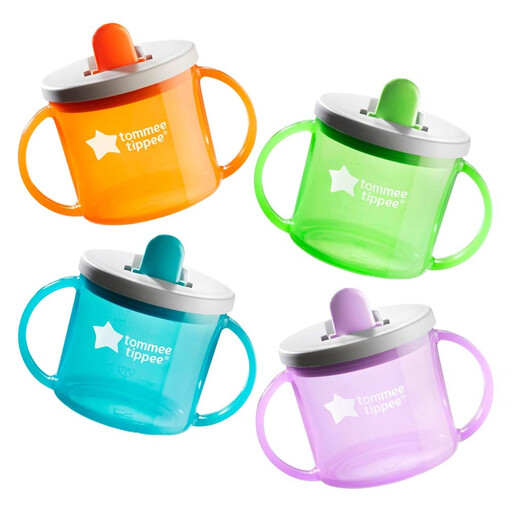
Why This Fits Their Persona: A compact 190ml option for families introducing a first handled cup during early weaning at home.
Its two-part construction is easier to dismantle than more complicated valve systems, while the flip-down spout helps protect it when carried.
Free-flow spout, easy-grip handles and dishwasher and sterilisation compatibility.
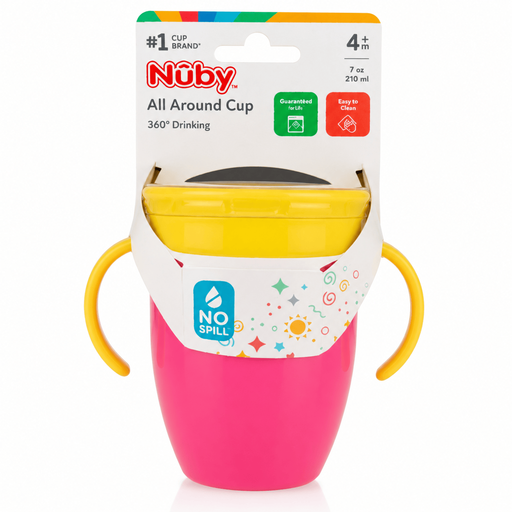
Why This Fits Their Persona: Suitable for parents seeking a rim-style cup with a cover for use at home and during outings.
The pressure-sensitive seal opens when the child presses the rim and closes when they stop, reducing reliance on a projecting spout.
360° drinking edge, BPA-free materials, minimal parts and a watertight cover lid.
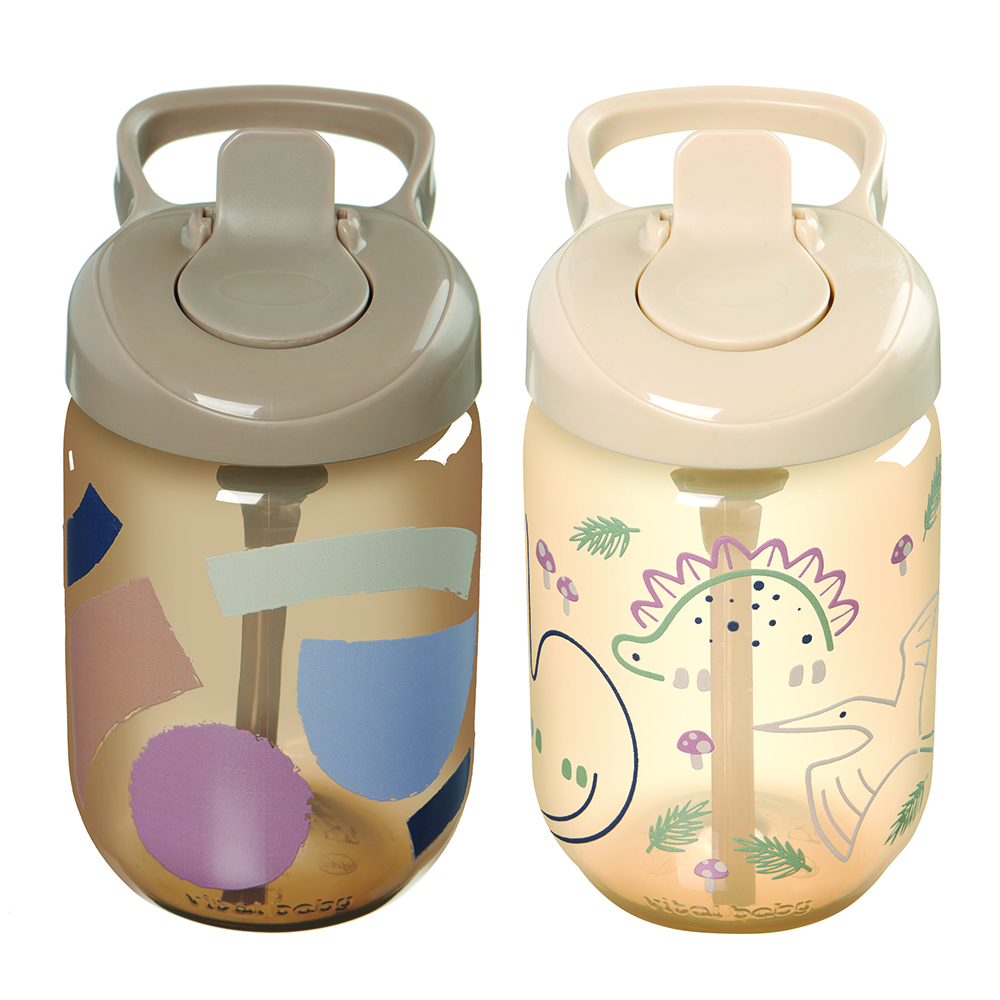
Why This Fits Their Persona: A practical two-pack for toddlers attending nursery, travelling or needing a larger daily drink capacity.
The weighted straw is designed for drinking at different angles, while the flip-top lid covers the straw between uses.
350ml capacity, two cups in the pack, contoured sides and dishwasher-safe components.
We have compiled a complete, real-time list of products that fully satisfy these strict selection criteria and UK safety regulations.
For cups for babies aged 3+ months, an open-rim design such as the Doidy Cup can be introduced with a small amount of liquid and hands-on support. From around 4 to 6 months, some babies may manage handled free-flow or valved cups. Readiness varies, so start slowly and expect spills during practice.
Not necessarily. A simple two-part trainer cup may be quicker to wash, but any valve or straw needs careful cleaning. Disassemble every removable component and use a straw brush where required. A cup that is difficult to clean can cost more in time than a simpler design with occasional spills.
There is no universal lifespan. Continue using a cup only while the body, spout, straw, seal and valve remain intact. Replace components at the first sign of cracking, chewing damage, weakness or persistent leakage. Regular inspection is particularly important for frequently used toddler drinking cups.