
24/7 Customer Support

Free returns

Same-day & Next-day Delivery

Quality Guaranteed

Unlock Your Welcome Offers: FREE Delivery | Up to 80% OFF | Free 30-day JoyPlus trial
Download the APP
Choosing a baby walker is not simply a question of colour or price. Parents, grandparents and carers need to compare age suitability, floor space, stability, storage and the difference between a seated walker and a foot-to-floor ride-on toy.
Marketing descriptions can also make similar products sound interchangeable. A push-along baby walker, activity walker and toddler ride-on car serve different purposes, so selecting the wrong style may leave you with an item that is difficult to use, quickly outgrown or unsuitable for your home.
A seated or activity walker is designed for a child who can sit unaided and usually includes a framed seat, wheels and an activity tray. A wooden baby walker or push-along model, by contrast, is intended for a child who can already stand and is beginning to move while holding a handle.
A toddler ride-on car or foot-to-floor walker is different again. The child sits on a low seat and propels the toy with their feet. Check the product’s intended use rather than assuming that every item described as a “walker” supports the same stage of development.
An age range such as 6–36 months is only a starting point. Your child’s sitting ability, leg length, weight and confidence all matter. A seated walker should allow the child’s feet to rest comfortably on the floor, while a ride-on toy needs a seat height that lets them place both feet down securely.
Always check the maximum weight, seat or platform height, dimensions and manufacturer’s warnings. Stop using the product when your child can walk independently, reaches the stated weight limit or no longer fits comfortably.
Lights, sounds and interactive panels can attract attention, but they may not compensate for poor storage or awkward cleaning. Before buying, consider whether the walker will fit through internal doorways, whether it can be folded and whether the seat or tray can be wiped clean.
For products with electronic features, check whether batteries are included. Several models in this guide require 2 x AA batteries, which are sold separately.
Look for anti-tip pads, a wide base, non-slip wheel materials and a secure frame. On a seated walker, height adjustment is useful only when each setting locks firmly and places the child’s feet in a comfortable position.
A product listing may mention standards such as EN71, EN62115, EMC or RoHS. These references relate to particular safety, electrical or material requirements, but they do not replace reading the supplied instructions. The HOMCOM tractor models listed below state that they have been tested to EN71-1-2-3, EN62115, EMC and RoHS requirements. Check the product packaging and documentation for the applicable UK conformity marking and warnings.
Measure your available floor space before ordering. The 4-in-1 walker measures 73 x 64cm when open and folds to 73 x 64 x 29cm. The wooden activity walker is 34 x 32 x 45cm, making it a different proposition for compact rooms.
For everyday maintenance, removable or washable seat pads are practical. Plastic trays and wheels should be checked regularly for food, hair or debris that could affect movement.
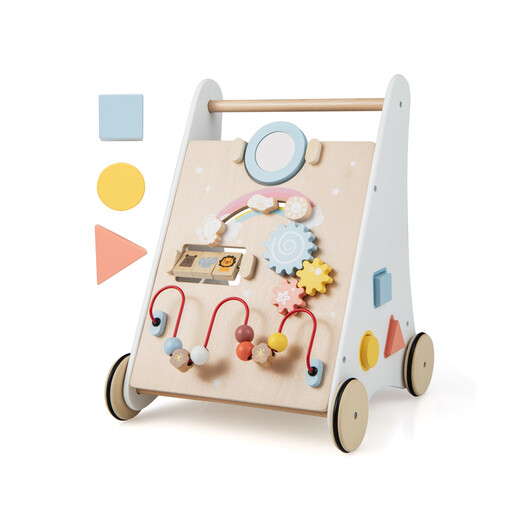
Why This Fits Their Persona: A practical choice for families seeking a non-electronic toddler walking toy for indoor play and early standing practice.
It is clearly specified for children aged 12 months and over, rather than being presented as a universal walker for every stage.
It has four wheels with non-slip rubber rings, multiple activity panels and a rear storage shelf.
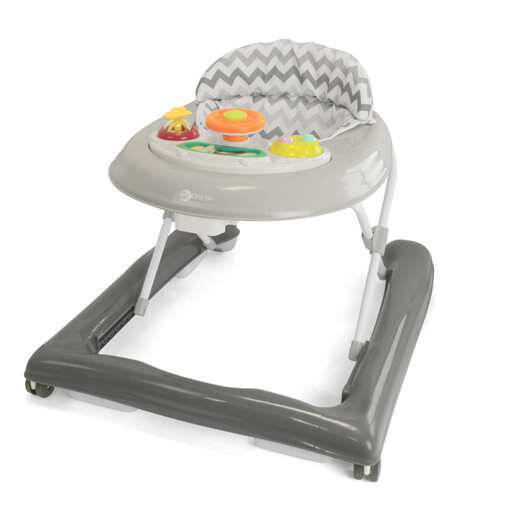
Why This Fits Their Persona: Suitable for households wanting adjustable height, interactive play and a walker that folds flat for storage or visits to relatives.
Three height positions help avoid relying on a fixed setting, while anti-tip pads and a high-back seat are specified in the product details.
The toy tray is removable, the seat pad is washable and the frame folds flat. It is intended for children who can sit unaided up to 12kg.
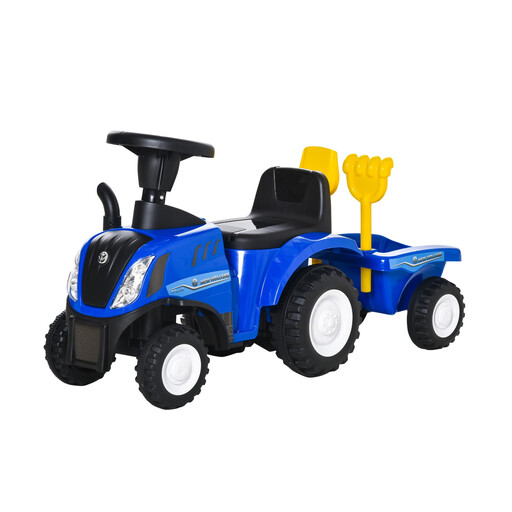
Why This Fits Their Persona: Designed for toddlers who want an active indoor or outdoor-style ride-on experience with storage and role-play accessories.
Its specification separates manual foot-powered movement from electronic functions, so the ride-on drive mode does not rely on a motor.
It has a 25kg maximum load, six textured tyres, a removable rear cargo box, horn and interactive lights. A fork and shovel are included.
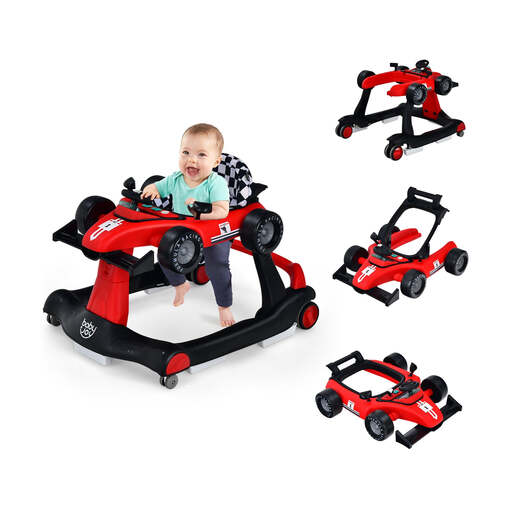
Why This Fits Their Persona: Useful for families comparing a walker for 6-36 months and wanting several play formats in one foldable product.
It offers three height settings and adjustable wheel speed, allowing setup to be matched more closely to the child and floor surface.
It converts between four modes, includes anti-slip pads and a safety bumper and folds to 73 x 64 x 29cm. It is specified for 6–18 months and up to 12kg.
We have compiled a complete, real-time list of products that fully satisfy these strict selection criteria and UK safety regulations.
Before first use:
Some seated models are specified from approximately six months, but only when the child can sit unaided and remains below the stated weight limit. A push-along walker or wooden baby walker is generally more appropriate once the child can stand and hold the handle. Always follow the individual product instructions.
Lifespan depends on construction, frequency of use and whether the product is outgrown. Adjustable height settings and removable play trays may extend practical use, but a walker should be retired if it has damaged parts, loose fasteners or no longer fits the child safely.
Not always. Wooden push walkers and manual foot-to-floor toys do not require batteries. A baby walker with lights and sounds, such as an electronic activity walker, may require 2 x AA batteries. Check the listing before purchase and supervise battery compartments carefully.