
24/7 Customer Support

Free returns

Same-day & Next-day Delivery

Quality Guaranteed

Unlock Your Welcome Offers: FREE Delivery | Up to 80% OFF | Free 30-day JoyPlus trial
Download the APP
Watching your baby take their first wobbly steps is a milestone every parent cherishes. As they transition from crawling to cruising, you might be looking for ways to support their newfound mobility safely. A baby walker can be a fantastic tool to help them explore their surroundings and build confidence on their feet.
However, the market is filled with options, from traditional sit-in models to modern push-along designs. How do you choose the right one for your little one? As the Joybuy Product Recommendation Officer, my role is to help you understand the key features to look for, so you can make a choice that suits your family's needs. This guide will walk you through what to consider and highlight some of our top recommendations for 2026.
Before diving into specific products, let's cover a few practical points. Keeping these in mind will help you narrow down your options and select a walker that is both safe and engaging for your child.
In the UK, baby walkers should comply with the safety standard BS EN 1273:2020. This standard ensures the product has been designed to be stable and reduce the risk of tipping. Look for a baby walker with wheels that has a wide, sturdy base. Some models also include friction strips or safety pads underneath, which are designed to stop the walker if it approaches an uneven surface like a step. An adjustable height baby walker is also crucial, as it allows you to position your baby so their feet can touch the floor comfortably, promoting a proper walking posture.
There are two main categories of walkers, each serving a slightly different purpose:
A walker that keeps your baby entertained will provide much more value. Many models come with built-in activity centres featuring lights, sounds and tactile toys to stimulate sensory development. For longevity, look for multi-functional designs that can adapt as your child grows. Materials are also a factor; a classic wooden baby walker is often durable and can become a cherished toy for years.
Based on features, versatility and user-friendliness, here are a few standout options to consider.
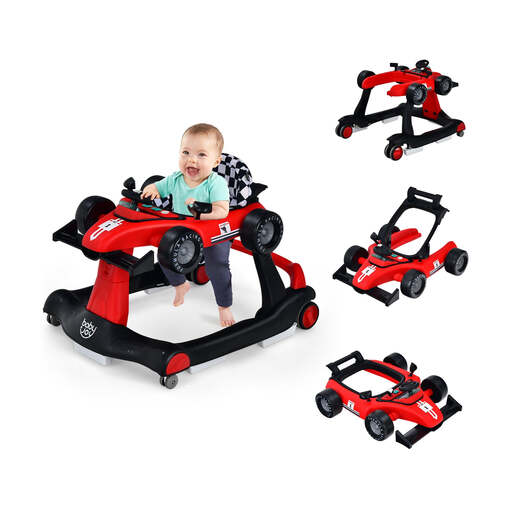
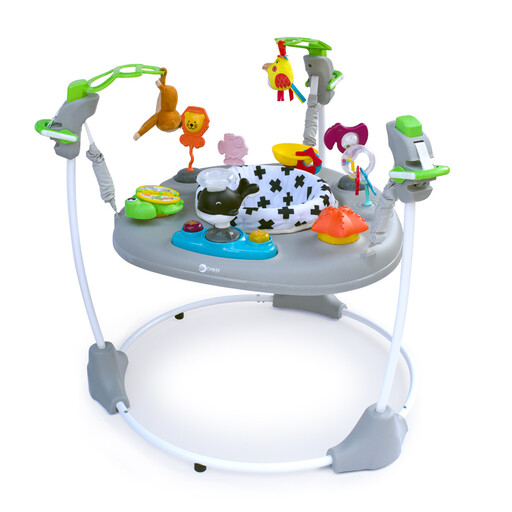
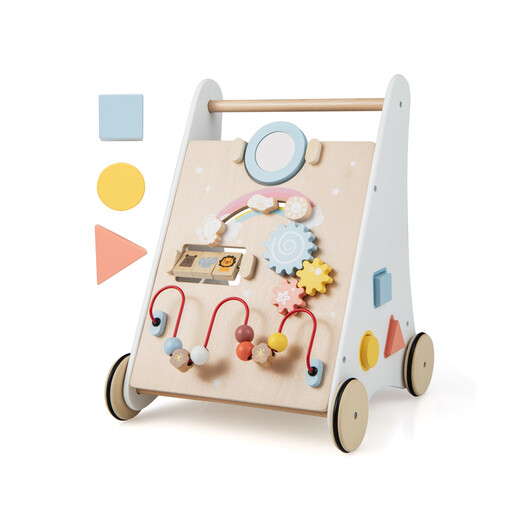
These recommendations cover a range of needs, from multi-functional sit-in models to classic push-alongs. If you're specifically looking for a walker to help your toddler practise their steps, you may find more suitable choices in our broader collection.
Explore our full range of toddler push along walkers to find the perfect match for your little adventurer.
1. At what age can a baby use a walker? Most sit-in baby walkers are suitable for babies from around 6 months, or once they can sit up confidently on their own. Push-along walkers are typically for older babies, around 12 months and up, who are already pulling themselves up to a standing position. Always check the manufacturer's recommended age and weight limits.
2. Are push along walkers a better choice than sit-in walkers? They serve different developmental stages. A sit-in walker offers contained support and mobility for a younger baby. A push along baby walker is designed to help a toddler who is already learning to stand to practise balance, coordination and forward motion. The right choice depends on your child's stage of development.
3. How do I ensure a baby walker is safe to use? Always choose a walker that complies with the UK safety standard BS EN 1273:2020. Ensure it has a wide, stable base to prevent tipping. It should only be used on flat, clear surfaces, away from stairs or other hazards and always under direct adult supervision. Using an adjustable height baby walker correctly is also key to ensuring your baby's feet are properly positioned for safe movement.