
24/7 Customer Support

Free returns

Same-day & Next-day Delivery

Quality Guaranteed

Unlock Your Welcome Offers: FREE Delivery | Up to 80% OFF | Free 30-day JoyPlus trial
Download the APP
As your little one starts to show signs of wanting to be on their feet, a baby walker can seem like the perfect next step. However, the market is filled with options that promise the world but often fall short. Many parents find themselves with a product that is either quickly outgrown, unsuited to their home's flooring or simply fails to engage their child. Before you buy, it's crucial to understand the common pitfalls that lead to a wasted purchase.
Two frequent issues we see are walkers with impractical "grows with your child" claims and designs that overlook key safety features for UK homes. A walker that’s a jack-of-all-trades can often be a master of none, feeling flimsy for a confident toddler after serving a 6-month-old. Similarly, not all wheels and bases are created equal, with many struggling on the combination of thick carpets and hard floors common in British houses, posing a stability risk.
To make a confident choice, focus on a few core parameters rather than marketing buzzwords. These objective factors will determine the walker's safety, longevity and true value for your child's development.
The first decision is between a sit-in walker and a push walker (also known as a sit to stand walker). Sit-in models offer contained support, while push walkers encourage more independent balance and movement. Whichever you choose, safety is non-negotiable. Look for walkers that comply with the British and European safety standard EN 1273:2020. This standard ensures the product has key safety features, such as:
These features are essential for providing a secure environment for your child's first steps.
An adjustable baby walker can offer excellent value, but only if the adjustments are practical. Look for:
adjustable baby walker should allow the seat or handle height to be modified. This ensures your child can maintain a healthy posture as they grow, with their feet flat on the floor in a sit-in model or their arms at a comfortable height on a push walker.baby walker with wheels down for a cautious beginner and then loosen them as your child becomes a more confident toddler walker. This single feature can significantly extend the product's useful life.Many walkers double as a baby activity walker. The quality of these activities varies greatly. While flashing lights and sounds can be momentarily engaging, they don't always contribute to development. Consider walkers with features that encourage problem-solving and fine motor skills, such as:
A classic wooden baby walker often excels here, providing tactile, cause-and-effect learning without overwhelming electronic stimulation.
Based on these practical criteria, we've matched several products to different family needs and priorities.
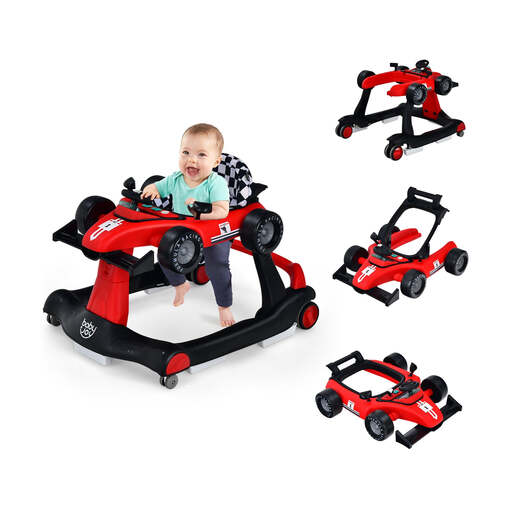
Why This Fits Their Persona: This model is designed for families who want a single product that adapts to different stages. It transforms from a traditional walker to a push-behind, a push car and a rolling toy, covering the 6-18 month range effectively.
It directly counters the impractical "grows with you" claim by offering four genuinely distinct functional modes, along with adjustable height and wheel speed to match a child's developing confidence.
The multi-mode design provides excellent long-term value. Its safety features include anti-slip stair pads and a rear safety bumper for added peace of mind.
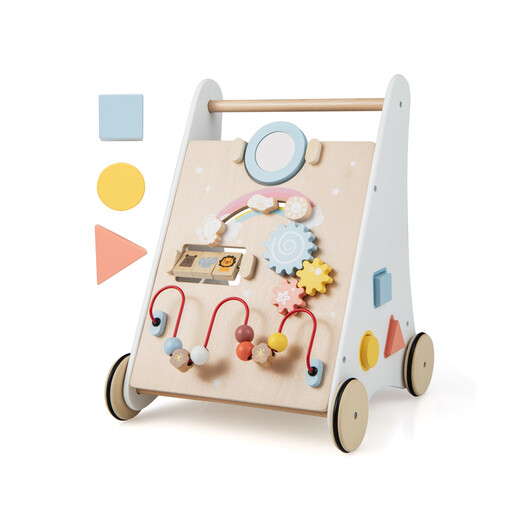
Why This Fits Their Persona: Ideal for those who prefer classic, durable materials and hands-on developmental activities. This wooden push walker combines walking support with a multi-faceted activity centre that encourages cognitive and motor skills.
It avoids the trap of over-stimulation by focusing on tactile, engaging activities like a shape sorter, gears and a bead maze. The stable triangular wooden structure provides robust support.
Constructed from solid wood and MDF, it is built to last. The wheels have non-slip rubber rings to protect floors and ensure smooth movement, and it includes a handy rear storage shelf for toys.
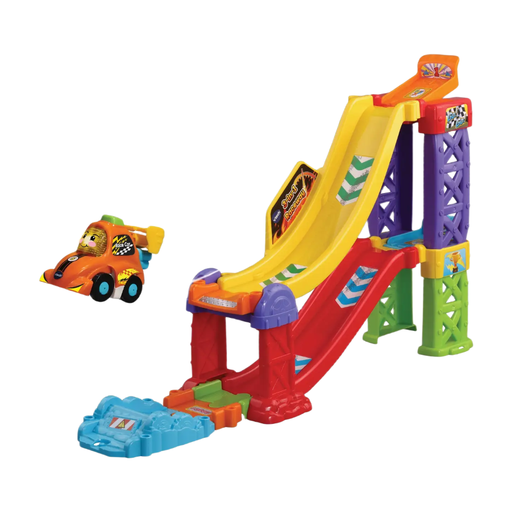
Why This Fits Their Persona: This is not a walking aid, but an interactive push-along playset for toddlers (1-5 years) who are already walking confidently. It encourages purposeful movement, imaginative play and fine motor skills.
It avoids the trap of being quickly outgrown by shifting focus from walking support to imaginative play. Its reconfigurable tracks and compatibility with other playsets give it huge long-term play value.
The 3-in-1 track design and SmartPoint locations that trigger sounds and phrases offer a rich, interactive experience that develops language and motor skills. It's an excellent "next stage" toy.
We have compiled a complete, real-time list of products that fully satisfy these strict selection criteria and UK safety regulations.
Most sit-in walkers are suitable from around 6 months, or whenever a baby can sit up unaided and support their own head. Push walkers are typically introduced later, around 9-12 months, when a baby is already pulling themselves up to stand and showing an interest in cruising along furniture. Always prioritise developmental readiness over age.
It depends on the walker and the carpet. Walkers with larger, sturdier wheels generally perform better on carpets than those with small, plastic castors. For homes with thick-pile carpets, a robust push walker is often more stable and easier to manoeuvre than a sit-in model. Always check that the walker moves smoothly and doesn't catch or tip on your specific flooring.
For fabric seats, check if they are removable and machine washable—this is a significant convenience. Plastic components and activity toys can usually be wiped down with a cloth and a mild, baby-safe disinfectant. For a wooden baby walker, use a slightly damp cloth to wipe surfaces and avoid soaking the wood, which could cause it to warp. Always refer to the manufacturer's cleaning instructions.