
24/7 Customer Support

Free returns

Same-day & Next-day Delivery

Quality Guaranteed

Unlock Your Welcome Offers: FREE Delivery | Up to 80% OFF | Free 30-day JoyPlus trial
Download the APP
Watching your child take their first wobbly steps is a milestone filled with excitement and a little bit of parental anxiety. As they gain confidence and a desire for independence, finding the right tools to support their journey is key. The world of baby walkers and ride on toys can be overwhelming, with options ranging from simple push along toys to complex multi-stage tricycles.
This guide is designed to help you navigate the choices, focusing on safety, developmental appropriateness and practical features. We'll explore what to look for and share some of our top recommendations to help your little one move, play and grow with confidence.
Making the right choice involves more than just picking a fun design. Here are a few key points to keep in mind to ensure you find a product that is safe, suitable and offers good value.
In the UK, baby walkers and toys must comply with strict safety standards, such as EN71 for toys and EN 1273 for baby walkers. Always look for products that meet these regulations. For a sit in baby walker, this means checking for a wide, stable base and anti-tip safety pads to prevent falls near stairs or uneven surfaces. For toddler ride on toys like tricycles, a secure harness, a sturdy frame and a reliable braking system are essential, especially on models with a toddler tricycle with parent handle.
A toy that is too advanced can be frustrating, while one that is too simple may be ignored.
Consider features that make life easier for you and extend the product's lifespan. Height-adjustable walkers can grow with your baby. Foldable designs are a huge plus for storage in smaller homes. For ride-on toys, look for durable materials that can withstand outdoor use and features like storage baskets for carrying snacks and treasures.
Here are a few standout options that cater to different ages and developmental needs, selected for their blend of safety, function and engaging features.
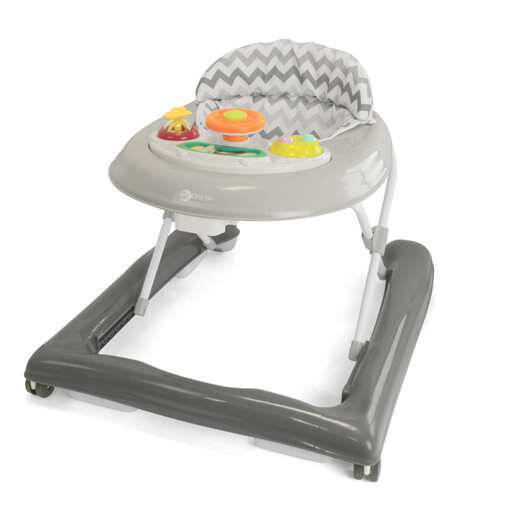
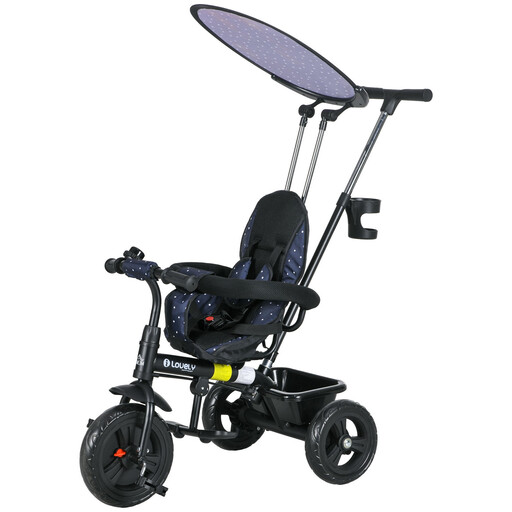
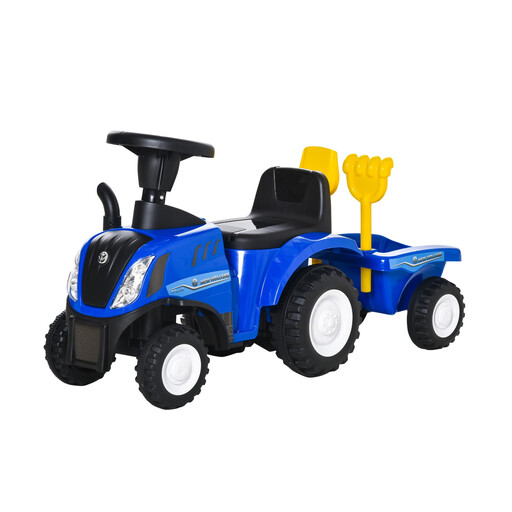
Every child's journey to mobility is unique, and the products above are just a starting point. If you're looking for different styles, colours or other types of active toys to get your little one moving, there are many more options to discover.
For a wider selection of outdoor and active equipment, browse our full range of Preschool outdoor play toys.
1. Are sit-in baby walkers safe to use? Modern baby walkers sold in the UK are required to meet stringent safety standards (EN 1273:2020) designed to minimise risks. Look for models with a wide, stable base and anti-tip friction pads, which help stop the walker at the edge of a step. It is crucial to always use them on a flat surface away from stairs and to never leave a child unattended while in a walker.
2. What is the difference between a push along walker and a ride-on toy? A push along toy, also known as a first steps walker, is designed for a child to stand behind and push, using the handle for support as they practise walking. A ride-on toy, such as a foot to floor ride on, is for a child to sit on and propel forward with their feet. Push alongs help with the initial mechanics of walking, while ride-ons help develop balance, coordination and leg strength.
3. At what age can a toddler use a tricycle? This depends on the type of tricycle. A multi-stage toddler tricycle with parent handle can often be used from as early as 12-18 months, with the parent doing all the steering and pushing. Children typically develop the coordination to pedal independently between the ages of 2 and 3. Convertible models like a 6 in 1 trike are excellent because they adapt as your child grows, allowing them to learn at their own pace.