
24/7 Customer Support

Free returns

Same-day & Next-day Delivery

Quality Guaranteed

Unlock Your Welcome Offers: FREE Delivery | Up to 80% OFF | Free 30-day JoyPlus trial
Download the APP
Choosing between baby walkers, trikes and strollers can be confusing. A product that works well in the living room may be unsuitable for a park path, while a roomy trike may be awkward to store in a confined hallway or car boot. Parents, grandparents and carers also need to consider age suitability, supervision, comfort and how quickly a child may outgrow the product.
The right choice depends less on the longest feature list and more on matching the design to your child’s stage and your everyday routine.
A 6-in-1 kids trike can offer several configurations, but not every stage will suit every child or household. Check the recommended and qualified age ranges, maximum load, folded dimensions and whether accessories need to be removed between modes.
A product may technically last from infancy to five years, yet a family with limited storage could find a large frame inconvenient. Look for genuinely useful adjustments, such as a removable push handle, reclining backrest or independent pedal mode.
Low weight is helpful for stairs, public transport and car travel, but it should not be the only consideration. Check the frame materials, wheel construction, harness design, braking system and maximum load.
For example, a lightweight foldable pushchair may be convenient for holidays, but parents should still check whether the seat reclines sufficiently, whether the canopy provides practical coverage and whether the basket holds the essentials needed for a day out.
“Suitable for indoor and outdoor use” does not mean a toy will perform identically on every surface. EVA wheels, suspension and a wide wheelbase can make a difference on pavements and compact gravel, but children should remain supervised and products should be used according to their instructions.
Where listed, standards such as EN71-1-2-3 relate to toy safety requirements, while EN1888 is associated with wheeled child conveyances. These markings should be considered alongside the manufacturer’s age guidance, warnings and assembly instructions.
Always match the product to your child’s current ability, not only their birthday. A baby stroller may be suitable from birth if it has an appropriate recline, whereas a toddler tricycle generally requires the child to sit securely and reach the pedals or footrests.
Check:
A foot-to-floor ride-on car is intended for children who can move themselves using their legs. It is not an electric vehicle, so check that the floor surface and available space suit this type of play.
Measure your car boot, cupboard or hallway before ordering. A stroller that folds to 56 x 50 x 25 cm may be easier to store than a larger trike, while a ride-on car with under-seat storage can reduce the need for a separate bag during short outings.
For regular travel, prioritise:
For longer walks, look for a padded or supportive seat, adjustable footrest, canopy and parent handle. A baby trike with push handle should allow the adult to steer comfortably without leaning or twisting. Adjustable handle heights are particularly useful when several carers share the product.
For a baby push walker or adjustable baby walker, check the height settings, wheel speed controls, anti-slip features and folding mechanism. Use only on suitable flat surfaces and follow the supplied instructions. Walkers and activity products require close adult supervision, particularly around stairs, doors and uneven floors.
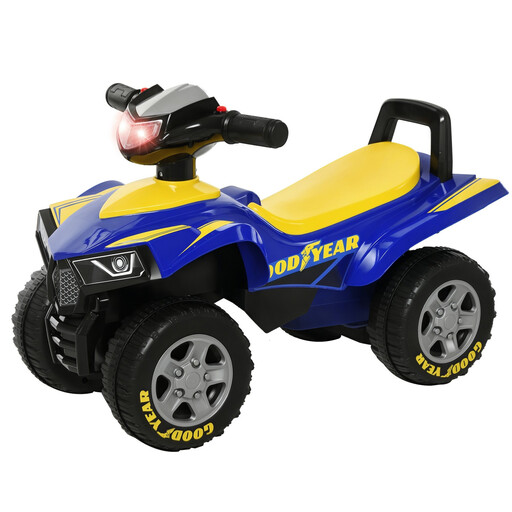
Why This Fits Their Persona: A straightforward option for families seeking a manual indoor or outdoor ride-on for a child aged 18–36 months, without batteries powering the movement.
The listing clearly states the 18–36-month age range, 25 kg maximum load and foot-to-floor operation, making expectations clear.
Four wide tyres, a large seat, under-seat storage, lights and a push-button horn.
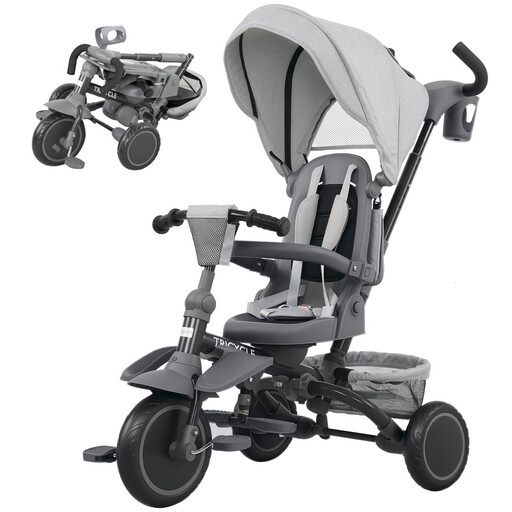
Why This Fits Their Persona: Suitable for families wanting one adaptable product for park walks, close supervision and later independent pedalling from approximately 12 to 60 months.
Its listed configurations include a push trike and independent tricycle, while the harness, guardrail and adjustable backrest address changing support needs.
Rotating seat, three push-handle heights, compact folding size and storage basket with parent bag.
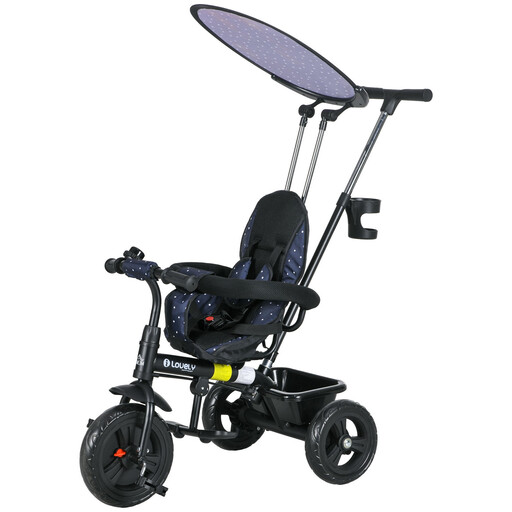
Why This Fits Their Persona: A practical choice for frequent outdoor use where a parent needs steering control, storage and weather coverage across several growth stages.
The product specifies its 9–60-month qualified age range, 25 kg maximum load, 5-point harness and dual braking system.
Six riding stages, EVA wheels, a canopy, long parent handle and spacious basket.
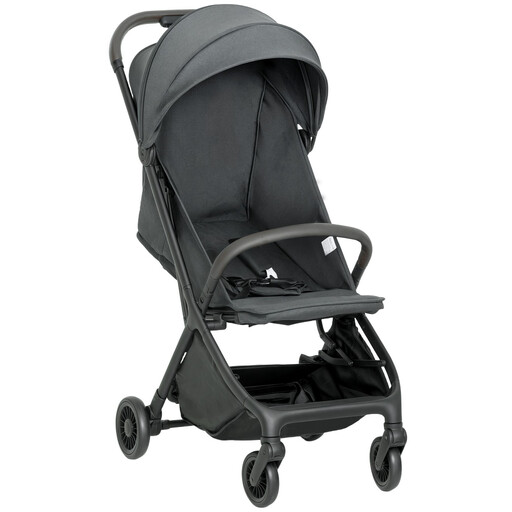
Why This Fits Their Persona: Designed for birth to three years, it suits families balancing car journeys, everyday errands and compact home storage.
The stated 6.3 kg weight, folding dimensions, 15 kg load limit and 0–36-month guidance make it easier to compare with your travel needs.
Single-hand fold, 115°–170° backrest recline, five-point harness, four-wheel suspension and under-seat basket.
We have compiled a complete, real-time list of products that fully satisfy these strict selection criteria and UK safety regulations.
Not necessarily. Check the manufacturer’s instructions before using a walker on laminate, rugs or other surfaces. Keep walkers away from stairs, hot surfaces, trailing cables and doorways, and supervise continuously. A baby push walker may require more balance and control than a seated adjustable baby walker.
This depends on the model’s age range, seat adjustment and maximum load. Several toddler tricycle designs listed above cover approximately 12–60 months, while simpler models are commonly aimed at two- to five-year-olds. Stop using the product when your child exceeds the stated limit or can no longer sit and pedal comfortably.
A manual stroller or foot-to-floor ride-on car does not require charging or fuel. Ongoing costs are more likely to involve batteries for lights or sounds, replacement accessories and storage. Electric ride-on products, where applicable, may also require charging and battery care. Always check the product description for battery requirements before purchase.