
24/7 Customer Support

Free returns

Same-day & Next-day Delivery

Quality Guaranteed

Unlock Your Welcome Offers: FREE Delivery | Up to 80% OFF | Free 30-day JoyPlus trial
Download the APP
As a Joybuy Product Recommendation Officer, I often speak with parents and grandparents navigating the world of baby mobility aids. Choosing the right one can feel overwhelming, especially when you want to ensure your little one is safe, engaged and properly supported. The market is filled with options, but not all are created equal. Before you buy, it's crucial to understand a few common pitfalls that can lead to a purchase you'll regret.
Many find themselves caught out by three key issues:
Understanding these potential traps is the first step. The next is knowing what to look for instead.
To make a confident choice, focus on a few core parameters rather than marketing buzzwords. These factors determine the safety, usability and longevity of a baby walker or ride-on toy.
The term "baby walker" covers a wide range of products, each suited to a different stage of development. Matching the type to your child's current abilities is critical.
sit in baby walker should have a deep, supportive seat, multiple height adjustments and a very wide base to ensure stability.toddler walker, this type is for children who are already pulling up on furniture and starting to "cruise." They provide support from the front, encouraging forward momentum. A quality push along walker, including a wooden baby walker, should have adjustable wheel tension to control the speed.When analysing any mobility toy, safety is non-negotiable. Always check for UKCA and EN 71 certification, which indicates the product meets the UK's stringent toy safety standards. Beyond certification, look for these practical features:
sit in baby walker.push along walker are vital for preventing it from running away from an unsteady toddler.Your walker will inevitably face spills and messes. Consider the materials for both durability and practicality.
wooden baby walker uses non-toxic paints and has smooth, rounded edges to prevent splinters.sit in baby walker or baby jumper activity centre should be made from a breathable, durable fabric. A key feature is that it should be easily removable and machine-washable.Based on these practical criteria, here are a few options from our catalogue, matched to different family needs and priorities.
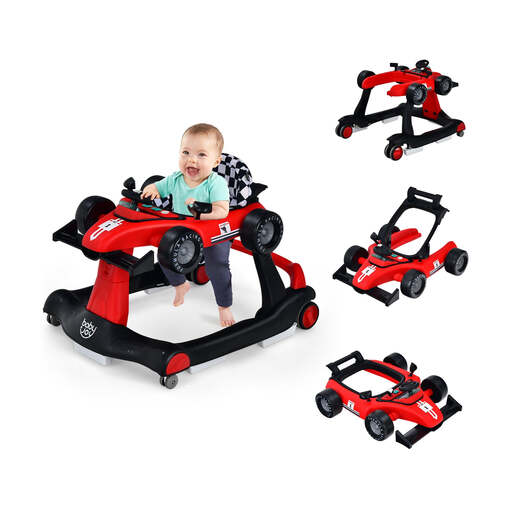
Why This Fits Their Persona: This is for the family seeking a single, adaptable product for the crucial 6-18 month window. It starts as a secure sit-in walker and converts to a push-behind walker, providing genuine value as the baby's skills progress.
It counters the "grows with you" illusion by offering genuinely useful modes. The adjustable height and speed control on the rear wheels mean it adapts properly to your child's size and confidence level, rather than being a poor compromise.
Features four distinct modes for extended use. Includes crucial safety features like anti-slip stair pads and a safety bumper, addressing core safety concerns directly.
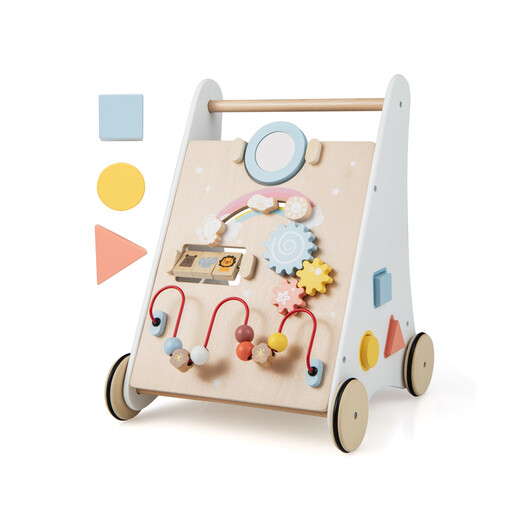
Why This Fits Their Persona: Perfect for families who appreciate classic wooden toys and want a walker that doubles as a developmental tool. Its aesthetic fits well in a modern home, and the built-in activities offer learning opportunities beyond just walking.
This avoids the material mismatch pitfall. The solid wood and MDF construction is durable, and the wheels have non-slip rubber rings to protect floors—a detail often overlooked in other wooden toys.
It's a 7-in-1 baby activity walker focused on cognitive skills like shape sorting and motor skills with gears and mazes. The stable triangular structure and rear storage shelf add practical value.
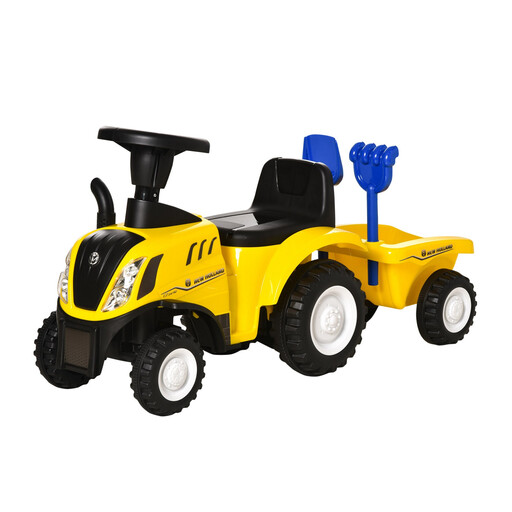
Why This Fits Their Persona: Once a child is confidently walking, their needs change. This ride-on tractor is built for active play, helping to improve balance and coordination while being robust enough for a toddler's energetic use, both indoors and out.
It avoids prioritising gimmicks over function. While it has a fun horn and lights, its core design is a sturdy foot-to-floor ride-on with six textured wheels for stability and a secure seat, making it a practical toy rather than just a novelty.
This is a dual-purpose toy, acting as both a push walker and a ride-on. The rear cargo box and included sand tools add a layer of imaginative play that extends its use.
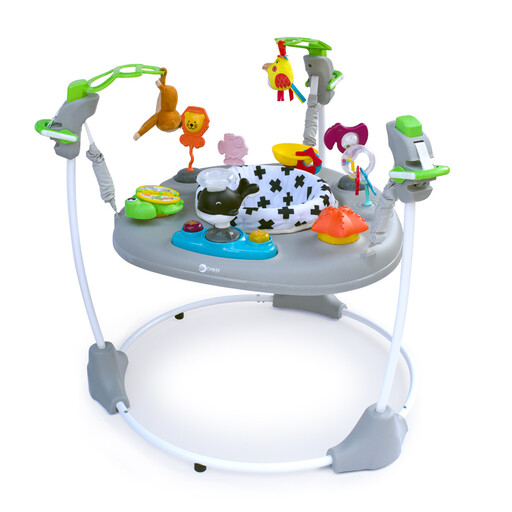
Why This Fits Their Persona: For parents who want to provide a safe, contained play area before their baby is mobile, or as a supplement to a walker. This baby jumper activity centre keeps a child entertained and stimulated in one place.
This product is not a walker and doesn't pretend to be. It's a dedicated stationary activity centre, avoiding any pitfalls related to unsafe mobility. It is designed for a specific purpose: pre-walking entertainment and leg strengthening.
The 360° rotating seat gives the baby access to 10 different activities, promoting sensory and motor skill development. The seat pad is removable and washable, addressing the key maintenance requirement.
We have compiled a complete, real-time list of products that fully satisfy these strict selection criteria and UK safety regulations.
This depends entirely on the type of product and your child's individual development. Sit-in walkers are generally intended for babies who can sit up confidently on their own, typically around 6 months of age. Push-along walkers are for the next stage, when a toddler is already pulling up to a standing position and cruising along furniture (around 9-12 months). Always refer to the manufacturer's specific age and weight guidelines and ensure your child is supervised during use.
Most modern walkers are designed to function on both hard floors and low-pile carpets. However, performance can be noticeably slower on thick or plush carpets. If your home is mostly carpeted, look for models with large, smooth-rolling wheels that can move more easily. For push-along walkers, adjustable wheel tension is a useful feature that can help you adapt the speed to different floor surfaces.
For plastic frames and integrated toys, a simple wipe-down with a damp cloth and a mild, non-toxic cleaning solution is usually all that is needed. The most important feature for easy cleaning is a removable and machine-washable seat pad, which is common on sit-in walkers and activity centres. This makes dealing with inevitable spills and messes much more manageable. Always check the product's specific care instructions before cleaning.