
24/7 Customer Support

Free returns

Same-day & Next-day Delivery

Quality Guaranteed

Unlock Your Welcome Offers: FREE Delivery | Up to 80% OFF | Free 30-day JoyPlus trial
Download the APP
Watching your baby transition from sitting to pulling up and taking those first wobbly steps is a truly memorable time. As they gain confidence and curiosity, you may start looking for toys that can support this exciting developmental stage. The market for baby walking toys is vast, and it can be difficult to know which product is the right fit for your child and your home.
This guide is designed to help you navigate the options. As the Joybuy Product Recommendation Officer, my role is to provide clear, practical information to help you choose products that are safe, engaging and suitable for your baby's developmental journey.
Before we look at specific products, here are a few key considerations to keep in mind when making your selection.
Safety is the number one priority. In the UK, sit-in baby walker products must comply with strict safety standards, such as BS EN 1273:2020. Look for features like a wide, stable base to prevent tipping and anti-tip pads or friction strips that stop the walker at the edge of a step or uneven surface. Always ensure the product is used on a flat surface, away from stairs and under adult supervision.
Different toys are designed for different stages of mobility.
The most effective developmental toys for babies are those that capture their attention. Look for interactive elements like lights, sounds and different textures. A toy with a detachable play tray or one that can be used in different ways as your child grows offers better long-term value and reduces the need for multiple separate toys.
Here are a few products that stand out for their design, features and suitability for different developmental needs.
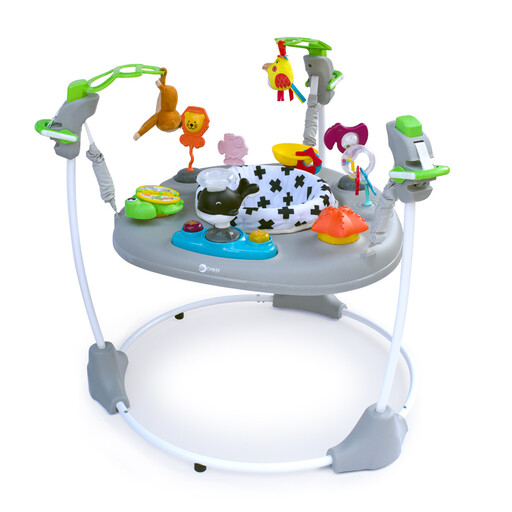
Why It Stands Out This stationary activity centre is a fantastic option for pre-mobile babies. It provides a safe and stimulating environment for them to bounce and play without moving around the room. The 360-degree rotating seat means your baby can turn to face any of the 10 different activities, encouraging exploration and helping to develop motor skills.
Pros
Who is it for? This is ideal for babies from approximately 4-12 months who can sit up unaided but are not yet walking. It’s a great way to keep them entertained while supporting leg strength development.
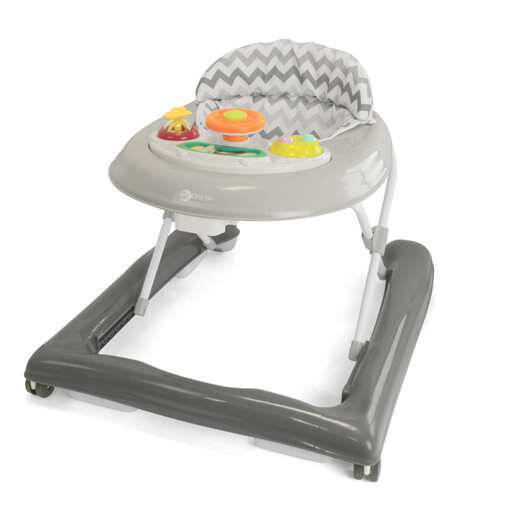
Why It Stands Out The Wizzy Walker is a well-rounded sit-in walker that combines mobility with entertainment. The interactive play tray, complete with a steering wheel and horn, keeps little hands busy, while the height adjustment ensures a comfortable fit as your baby grows. Its most practical feature is the ability to fold completely flat, making it simple to store away.
Pros
Who is it for? This walker is designed for babies from around 6 months who can sit up by themselves and are ready to gain some independence and explore their home on wheels.
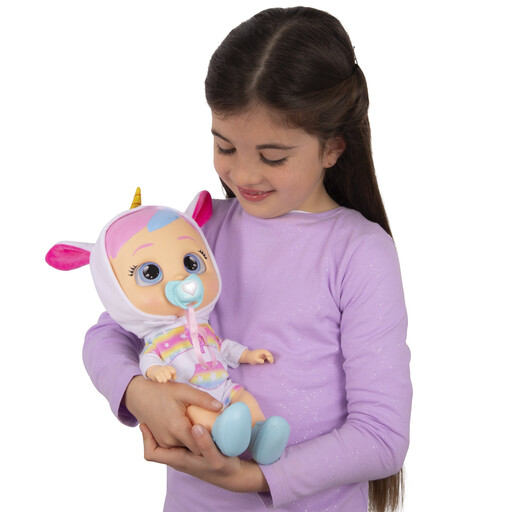
Why It Stands Out This toy takes a different approach by encouraging toddlers to guide the doll as she learns to walk. By holding the doll's hands and walking with her, your child practises their own balance and coordination. It cleverly blends physical activity with nurturing role-play, as children can also comfort the doll when she cries LED tears.
Pros
Who is it for? This is a wonderful companion for toddlers aged 18 months and up who are already standing and taking steps. It helps build confidence and makes practising walking a fun, interactive game.
As your little one grows, their play needs will change in a flash. If you're planning for future birthdays or looking for a gift for an older child, our curated selection of toys for different age groups can help.
? Explore our collection of toys for five year olds and beyond.
1. When can my baby start using a walking toy? This depends on the type of toy. Stationary activity centres and jumpers are generally suitable once a baby can sit up firmly on their own (around 4-6 months). Sit-in walkers are for babies who can sit unaided (around 6 months+). Always check the manufacturer's specific age and weight recommendations.
2. Are baby walkers safe to use? Modern baby walkers sold in the UK are required to meet stringent safety standards designed to prevent common accidents. Key features include anti-tip bases and mechanisms to stop the walker at a step. However, no toy is a substitute for supervision. You should always supervise your child, ensure the area is free from hazards like stairs and loose cables and limit use to short periods (e.g., 15-20 minutes at a time).
3. What is the difference between a baby walker and an interactive baby jumper? A baby walker allows for horizontal movement, helping a baby move around a room on wheels. An interactive jumper is stationary and allows for vertical movement (bouncing). Both help to build leg strength and provide entertainment, but they serve different functions. A jumper is for stationary play, while a walker is for supported mobility.