
24/7 Customer Support

Free returns

Same-day & Next-day Delivery

Quality Guaranteed

Unlock Your Welcome Offers: FREE Delivery | Up to 80% OFF | Free 30-day JoyPlus trial
Download the APP
Moving your baby from a bottle or breast to their first cup is a significant milestone. But with so many options on the market—from open cups and spouted sippies to 360-degree rims—it can be difficult to know where to start. Choosing the right baby weaning cup is about more than just preventing spills; it’s about supporting your child's oral motor skills, encouraging independence and making the transition as smooth as possible.
This guide is designed to help you navigate the choices. We will break down the key features to look for in a baby's first cup and present some of our top recommendations to help you find a practical and developmentally sound option for your little one.
Before diving into specific products, here are a few key considerations to keep in mind during your search.
The type of cup you choose can influence how your baby learns to drink.
Safety is paramount when choosing any product for your baby. Always look for a BPA-free baby cup. Bisphenol-A (BPA) is a chemical that has been phased out of many baby products due to health concerns. Most modern cups are made from safe, food-grade plastics like polypropylene (PP) or silicone. Also, consider how easy the cup is to clean. Models with fewer parts or those that are dishwasher-safe can make your life much easier and help prevent the build-up of mould in hidden valves or crevices.
A cup for a 4 month old will have different requirements than one for an 18-month-old. For younger babies just starting their transition cup from bottle, look for features like:
As your child grows into a toddler, you might prioritise durability and larger capacity in a toddler trainer cup.
Here are a few standout options that cater to different needs and developmental stages.
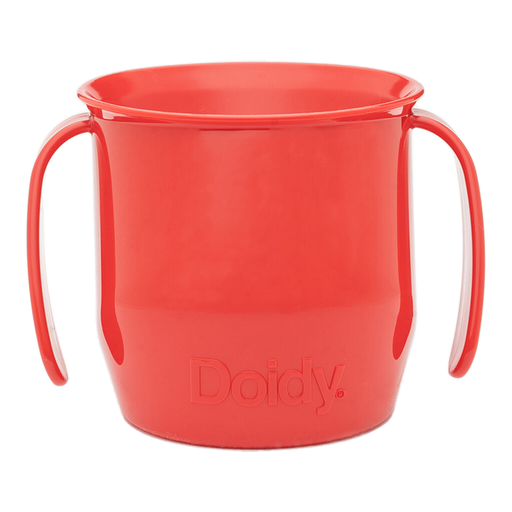
Why It Stands Out: The Doidy Cup is a classic for a reason. Its unique slanted design allows your baby to see the liquid without tilting their head back, making it an intuitive first step into open-cup drinking. It encourages the same natural jaw movements used in breastfeeding, supporting healthy oral development.
Pros:
Who is it for? Parents who want to introduce an NHS recommended baby cup style from an early age and prioritise developmental benefits over spill-proof convenience.

Why It Stands Out: The Munchkin Miracle 360° Cup is a popular choice that offers a clever compromise between a sippy cup and an open cup. The pressure-sensitive valve allows a child to drink from any point on the rim, but it automatically seals when they stop sipping, effectively preventing spills.
Pros:
Who is it for? Parents looking for a mess-free transition cup from bottle that still helps their child learn the fundamentals of drinking from a regular cup.

Why It Stands Out: For parents whose top priority is a truly no-spill sippy cup, this Tommee Tippee model delivers. It features INTELLIVALVE anti-leak technology, which is designed to be completely shake-proof and leak-proof. An added benefit is the spout, which is made with BACSHIELD antibacterial technology.
Pros:
Who is it for? Parents seeking a highly durable, hygienic and leak-proof toddler cup that can withstand being dropped, shaken and thrown while keeping liquids contained.
Every baby's journey to independent drinking is unique. If you haven't found the perfect match here, or if you'd like to see a wider variety of styles and colours, you can browse our complete collection.
Explore our full range of infant feeding cups here
1. When should I introduce a weaning cup to my baby? You can start introducing a cup from around 4-6 months of age, which is often when babies begin weaning onto solid foods. At this stage, you can offer small sips of cooled, boiled water with meals. Starting early helps them become familiar with sipping as a new skill.
2. What type of cup is recommended by the NHS for babies? The NHS generally advises using free-flow or open cups. This is because they help a baby learn to sip rather than suck, which is better for their teeth and encourages the development of muscles used for talking. While cups with valves are convenient, it's good practice to also offer an open cup when you can supervise.
3. How do I clean a leak-proof toddler cup properly? To clean a cup with a valve, it's essential to disassemble it completely. Remove the lid, valve and any other separate parts. Wash all components in hot, soapy water or place them on the top rack of the dishwasher if the manufacturer's instructions permit. Pay close attention to the valve, as this is where residue can build up. Ensure all parts are completely dry before reassembling to prevent mould growth.