
24/7 Customer Support

Free returns

Same-day & Next-day Delivery

Quality Guaranteed

Unlock Your Welcome Offers: FREE Delivery | Up to 80% OFF | Free 30-day JoyPlus trial
Download the APP
As a Joybuy Product Recommendation Officer, my role is to help you navigate the crowded market of baby products. Starting your baby on solid foods is an exciting milestone, but choosing the right equipment can feel overwhelming. The shelves are filled with items promising a mess-free, easy journey. However, many parents find themselves with a cupboard full of gear that is impractical, difficult to clean or simply not right for their baby's stage.
This guide cuts through the clutter, focusing on the practical details that matter. We will highlight common purchasing pitfalls and explain the core features to look for in your baby weaning essentials, ensuring you choose items that are safe, functional and offer genuine value.
Before you add anything to your basket, be aware of these frequent traps that lead to wasted money and frustration:
To make informed choices, focus on these non-negotiable features. They are the difference between a product that lasts a week and one that sees you through the entire weaning process.
The material of your baby's feeding equipment is paramount. Look for a BPA-free weaning set as a baseline. Bisphenol-A (BPA) is a chemical that has been widely removed from baby products due to health concerns.
Beyond this, consider the material itself:
A four-month-old starting their first purées has very different needs from a one-year-old learning to self-feed.
Your time is precious, so choose equipment that makes your life easier.
Based on these practical criteria, here are some recommended products matched to different parent and baby needs.

Why This Fits Their Persona: This multi-pack is ideal for parents who need a reliable, no-frills set of first feeding essentials. It provides enough spoons to get through a day of meals without a large upfront cost, making it a practical starting point.
It avoids the "oversized set" trap by focusing on one essential item. You get exactly what you need for the first stage of weaning—simple, effective spoons.
The long, ergonomic handles are perfect for reaching into food jars and the shallow spoon bowl is correctly sized for a baby's first tastes of purée.

Why This Fits Their Persona: For parents who value convenience and a coordinated look, this complete baby feeding set provides everything needed for the self-feeding stage in one purchase. It's a practical solution for busy households.
Unlike mixed-quality kits, every item in this set is made from consistent, food-grade silicone. This ensures uniform safety, durability and cleaning ease across all components.
The strong suction bases on the bowl and plate are a standout feature, genuinely reducing mess. The inclusion of a bib, cup and cutlery makes it a comprehensive package.
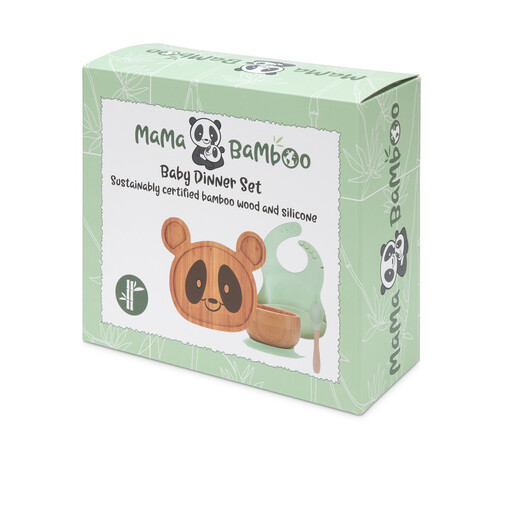
Why This Fits Their Persona: This set is perfect for families in the UK looking to minimise their use of plastics. It is crafted from sustainably sourced bamboo and food-grade silicone, offering an effective and stylish eco-friendly choice.
It sidesteps the trap of low-quality materials by using durable, natural bamboo. It proves that sustainable choices do not require a compromise on functionality, thanks to the strong silicone suction bases.
The sectional plate is great for introducing different food textures and tastes. The strong suction on both the plate and bowl helps keep mealtimes tidy.
We have compiled a complete, real-time list of products that fully satisfy these strict selection criteria and UK safety regulations.
Yes, when you choose products made from 100% food-grade silicone. This material is stable, non-toxic and does not leach harmful chemicals into food. It is also free from BPA, PVC and phthalates. Always check that a product specifies it is made from food-grade silicone, as this is a higher standard than generic silicone.
Most babies are ready to try a fork between 12 and 18 months, once they have mastered spoon-feeding and show an interest in spearing their food. Start with a fork that has soft, rounded tines, like those found in a dedicated baby cutlery set. This ensures they can spear soft foods like cooked vegetables or pasta without any risk of hurting their mouth.
A lightweight baby highchair can sometimes slide on smooth flooring. To prevent this, you can place a non-slip mat underneath the highchair legs. A simple rubber-backed rug or a dedicated non-slip floor protector will add grip and stability, ensuring the chair stays firmly in place during mealtimes. Always ensure the highchair is on a flat, level surface.