
24/7 Customer Support

Free returns

Same-day & Next-day Delivery

Quality Guaranteed

Unlock Your Welcome Offers: FREE Delivery | Up to 80% OFF | Free 30-day JoyPlus trial
Download the APP
Starting your baby on solid foods is a significant milestone, but choosing the right tools can feel overwhelming. The first spoon you offer is more than just a utensil; it’s your baby’s introduction to a new world of tastes and textures. With so many options available, from different materials to various shapes and sizes, it's important to find one that is safe, comfortable and suited to your little one's developmental stage.
As a Joybuy Product Recommendation Officer, my role is to help you navigate these choices. This guide offers practical advice on what to look for in baby weaning spoons and presents a selection of our top recommendations to make your decision simpler.
Before diving into specific products, let's cover the key features to consider. Focusing on these three areas will help you find the ideal first spoons for your baby.
A baby's gums are incredibly sensitive, especially when teething. Soft tip weaning spoons, typically made from food-grade silicone, are gentle and won't cause discomfort. Always ensure any spoon you choose is explicitly labelled as a BPA free baby spoon. For families looking for sustainable options, bamboo baby spoons offer an eco-friendly alternative, often paired with a silicone tip for softness.
The spoon's design plays a crucial role in the feeding experience. Long handle baby spoons are practical for parents, making it easy to scoop food from jars and bowls. As your baby grows and wants to try feeding themselves, shorter, chunkier handles are easier for small hands to grip, making them excellent self feeding spoons. The spoon's bowl should also be shallow, which helps your baby manage small amounts of food as they learn to eat.
Weaning is a journey with different stages. Spoons designed for baby spoons 4 months are typically very soft and intended for the first tastes of thin purees. By the time your baby is ready for baby spoons 6 months, they may be tackling thicker textures and showing an interest in holding the spoon themselves. Look for products that clearly state the suitable age range to ensure they match your baby's needs.
Here are a few standout options that cater to different needs and preferences, helping you find the right fit for your family's starting solids journey.
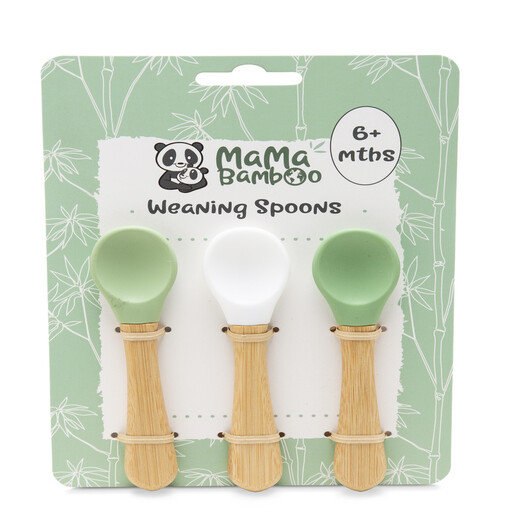
Why It Stands Out: This spoon combines an eco-conscious design with baby-friendly features. The handle is made from sustainable bamboo, while the tip is soft, food-grade silicone, offering a great balance of sustainability and comfort.
Pros:
Who is it for? This is an excellent choice for environmentally-conscious parents whose baby is around 6 months or older and beginning to show an interest in self-feeding.
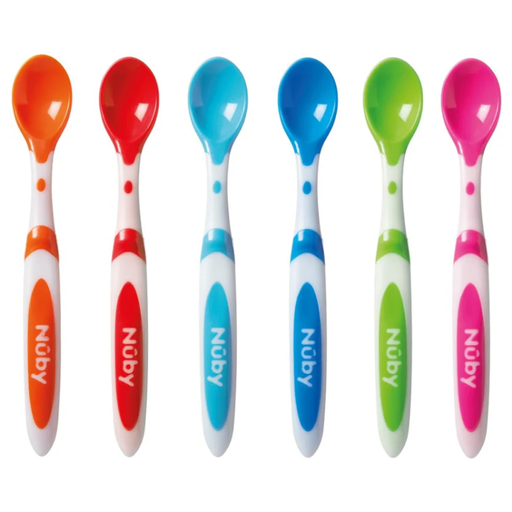
Why It Stands Out: This multi-pack offers great value and is designed specifically for the very first stages of weaning. The long handles and shallow bowl make parent-led feeding straightforward and manageable.
Pros:
Who is it for? Ideal for parents starting the weaning process with a baby from 4 months old, focusing on smooth purees and parent-led feeding.
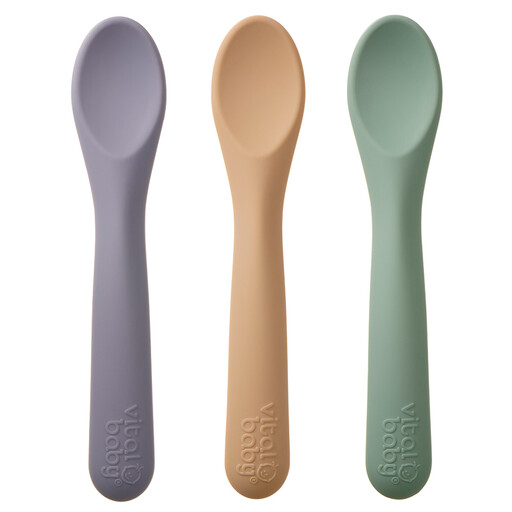
Why It Stands Out: These silicone baby spoons are exceptionally soft and flexible, making them one of the gentlest options for a baby's delicate mouth. The thoughtful design includes a built-in hygiene rest to keep the spoon tip off surfaces.
Pros:
Who is it for? A great option for parents of babies aged 4 months and up who are concerned about sensitive gums and appreciate practical, hygienic features.
Every baby has unique preferences, and what works for one may not work for another. If you haven't found the perfect match yet or simply wish to explore different designs, materials and colours, we invite you to browse our full collection of baby spoons.
The NHS recommends starting solid foods at around 6 months of age. At this point, your baby can typically sit up with support and shows good head and neck control. Some parents may begin with smooth purees slightly earlier, but it's always best to look for signs of readiness and consult with your health visitor if you are unsure.
Stage 1 spoons are designed for the very beginning of weaning (around 4-6 months). They usually have very soft tips, long handles for parent feeding and a shallow bowl for thin purees. Stage 2 spoons are for older babies (around 7+ months) who are developing self-feeding skills. They often have shorter, chunkier handles for an easier grip and a slightly deeper bowl to hold thicker foods.
Cleaning instructions depend on the material. Most silicone baby spoons and plastic spoons are dishwasher-safe (top rack recommended). However, spoons with natural components like bamboo baby spoons should be hand-washed to maintain their quality. Always check the manufacturer's instructions on the packaging before the first use.