
24/7 Customer Support

Free returns

Same-day & Next-day Delivery

Quality Guaranteed

Unlock Your Welcome Offers: FREE Delivery | Up to 80% OFF | Free 30-day JoyPlus trial
Download the APP
Baby wipes can simplify nappy changes, mealtimes and travel, but the wrong pack may dry out quickly, tear during use or contain ingredients your child’s skin does not tolerate. Packaging terms such as “water-based”, “natural” and “biodegradable” can also mean different things from one product to another.
Before adding a multipack to your basket, check the material, formula, closure and intended use. These details usually matter more than attractive packaging or a long list of marketing claims.
A wipe labelled 99% water may still contain preservatives, moisturisers, pH adjusters or cleansing agents. These ingredients are often necessary to keep the product stable, but parents of newborns or children with sensitive skin may prefer a shorter, clearly listed formula.
Read the full ingredient list rather than relying on the front label. Fragrance-free baby wipes and alcohol-free baby wipes can be sensible starting points for delicate skin, although every child can respond differently.
Biodegradable baby wipes should still go in a household waste bin unless the packaging specifically provides appropriate disposal instructions. Even products marketed as flushable can contribute to blockages, particularly in older UK plumbing or homes with septic systems.
For routine nappy changes, dispose of used wipes with household waste. Do not flush standard baby wipes, plastic-free baby wipes or plant-based baby wipes down the toilet.
Bulk wet wipes can offer convenience, but an ineffective seal may allow the remaining sheets to dry out. A secure lid or resealable label is important for packs kept beside the changing mat, in a car or inside a changing bag.
If you are buying a large supply, keep unopened packs in a cool, dry place and close each opened pack immediately after use.
For newborn wipes, look for information such as:
Terms such as “hypoallergenic baby wipes” are useful only when supported by transparent product information. They should not be treated as a guarantee that irritation is impossible. Stop using a product if redness, discomfort or other irritation develops, and seek appropriate healthcare advice if needed.
Thin wipes may be adequate for light hand cleaning but less practical for messy nappy changes. A thicker sheet can provide more coverage and reduce the chance of tearing, while a larger format may be useful for head-to-toe cleansing.
Check whether the material is described as plastic-free, cellulose-based or made from plant fibres. “Plant-based” does not automatically mean compostable at home, so follow the disposal guidance on the packaging.
A 60-count pack may suit a changing bag or occasional use. Larger multipacks, such as 12 packs of 48, are more suitable for households that use wipes throughout the day. Smaller travel baby wipes can be easier to carry, but may offer less value per sheet.
For home use, compare total sheet count and sheet dimensions. For outings, prioritise a compact pack with a dependable resealable closure.

Why This Fits Their Persona: A straightforward 60-wipe pack for parents starting a new routine or keeping a spare pack in a changing bag.
The listed formula is fragrance-free and alcohol-free, with plant-based fibres and no need to commit to a very large pack.
60 sheets per pack; plant-based, plastic-free material; aloe vera is listed among the ingredients.
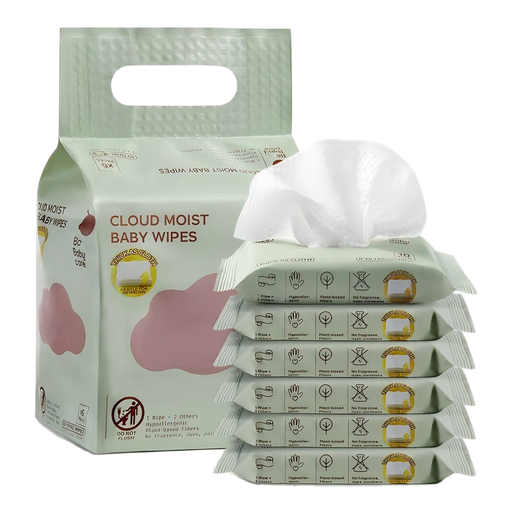
Why This Fits Their Persona: Suitable for shoppers prioritising a thicker, more hydrated sheet for frequent nappy changes and sensitive skin routines.
The product information specifies unscented wipes, 99% purified water and a plant-based, plastic-free cellulose base.
Six packs of 10; OEKO-TEX certification number is provided; three-times-thicker construction is stated.
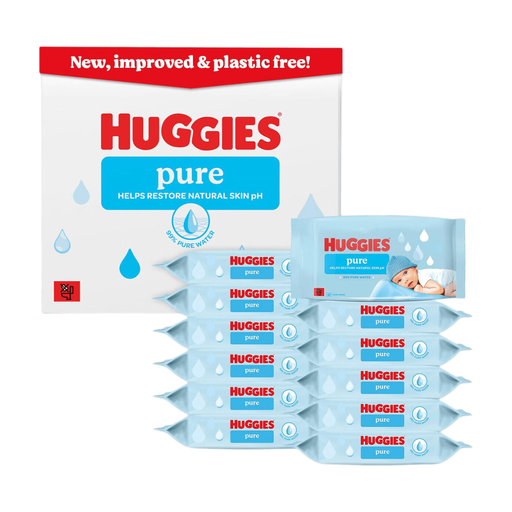
Why This Fits Their Persona: The 576-sheet total suits busy households managing repeated nappy changes, hand cleaning and face clean-ups.
The product details identify a 99% pure-water formula, fragrance-free and alcohol-free composition and resealable packaging.
12 packs of 48; suitable from 0 months according to the listing; naturally derived, plastic-free fibres are specified.
For more formats, including newborn wipes, gentle cleansing wipes, travel packs and household options, browse the wider wipes range.
We have compiled a complete, real-time list of products that fully satisfy these strict selection criteria and UK safety regulations.
Fragrance-free wipes may be a practical choice for newborn skin because they avoid added perfume, but suitability depends on the complete formula and your baby’s individual response. Check the age guidance and ingredients, and introduce a new product carefully.
There is no universal lifespan after opening. A well-sealed pack may remain moist until the stated shelf-life date, while exposure to heat or air can dry the sheets sooner. Keep packs closed and replace any product that has changed smell, texture or appearance.
A bulk pack can reduce the cost per sheet, but only if the wipes are used before drying out and the pack size matches your household’s needs. Compare the total number of sheets, sheet thickness and storage space rather than judging value from the number of packs alone.