
24/7 Customer Support

Free returns

Same-day & Next-day Delivery

Quality Guaranteed

Unlock Your Welcome Offers: FREE Delivery | Up to 80% OFF | Free 30-day JoyPlus trial
Download the APP
Baby wipes are a daily essential for many UK households, from newborn nappy changes and nursery runs to travel, mealtimes and quick clean-ups. However, a low price or attractive “natural” label does not always tell you whether a pack suits your baby’s skin, your storage needs or your disposal routine.
The right choice depends on the formula, wipe material, pack design and intended use. This guide explains the main buying pitfalls and highlights practical options for different households.
A product described as water-based may still contain preservatives, fragrance, botanical extracts or cleansing agents. These ingredients are not automatically unsuitable, but babies with sensitive or eczema-prone skin may be more comfortable with a short, clearly listed ingredient list.
Check the packaging for:
A fragrance-free or hypoallergenic label can help narrow the choice, but always read the full ingredients list and stop using a product if redness or irritation develops.
A plastic-free baby wipe may use regenerated cellulose or another plant-based fibre, while a biodegradable wet wipe may break down only under particular environmental conditions. Neither term means the wipe should be flushed.
Look for specific material information such as 100% plant-based fibres, regenerated cellulose or cellulose-based non-woven fabric. Also check how the outer packaging should be recycled, as the wipe and pack may follow different disposal routes.
Bulk buying can reduce how often you reorder, but a large case may be inconvenient if the individual packs lack secure lids or if wipes dry out after opening. Compare the total number of wipes with the number of packs, rather than judging value by the outer box alone.
A smaller pack may be more useful for a changing bag, while larger cases can suit a home with frequent nappy changes. Reseal each opened pack firmly and follow the manufacturer’s recommended usage period.
For newborns and sensitive skin, prioritise a formula with no added fragrance, no alcohol and a limited number of clearly stated ingredients. Purified water baby wipes can be appealing to parents who want a simple cleansing base, but the other ingredients still matter.
Some wipes include aloe vera, glycerin or panthenol. These are included for their skin-conditioning properties, but individual tolerance varies. Wipes should be used externally only and not on broken or sore skin unless a healthcare professional advises otherwise.
The wipe should be large and strong enough to clean effectively without tearing. A thicker or embossed texture may provide better handling during messy nappy changes, although it can also increase the amount of material used per wipe.
For regular use, compare:
Most baby wipes belong in a household waste bin, even when labelled biodegradable. Do not flush them unless the product is specifically certified for flushing and your local water and wastewater guidance permits it.
Flushable toilet wipes are designed for a different purpose from baby wipes. If using them, flush only the quantity stated on the pack—commonly one at a time—and never flush baby wipes, facial cleansing wipes or household cleaning wipes. When in doubt, use a bin.

Why This Fits Their Persona: A straightforward everyday option for families starting to compare sensitive baby wipes for nappy changes, hands and faces.
The listed formula is fragrance-free and alcohol-free, helping shoppers avoid paying for scent when simplicity is the priority.
60 wipes per pack; plant-based fibres and aloe vera are listed among the product features.

Why This Fits Their Persona: Suitable for parents who place a high value on a short ingredient list and want separate packs for home, nursery or a changing bag.
The product information lists two ingredients: 99.9% ultra-purified water and grapefruit seed extract, with no fragrance or alcohol.
180 wipes across three packs; the wipe material is described as plant-based and plastic-free.
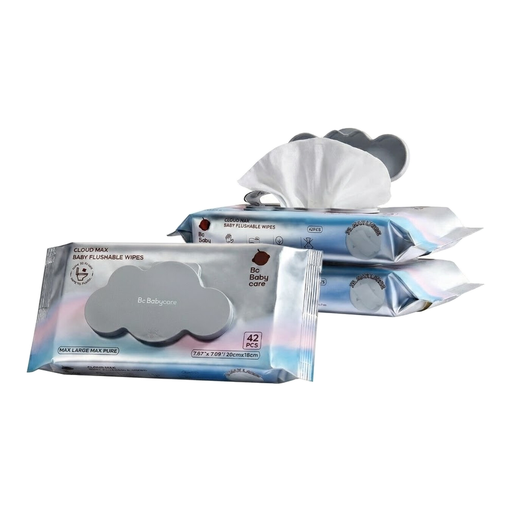
Why This Fits Their Persona: Designed for potty training, family toilet use and travel when a compact pack is more useful than standard baby wipes.
Unlike ordinary baby wipes, this product is specifically described as flushable and IWSFG certified. Follow the pack instructions and flush only one wipe at a time.
Three packs of 42 wipes; fragrance-free, hypoallergenic and made from plant-based fibres according to the listing.
Not every wet wipe should be used on a baby. Facial cleansing wipes are formulated for removing make-up, oil and daily impurities, while oral wipes are intended for gums and the mouth. Household and antibacterial wipes may contain ingredients unsuitable for infant skin.
For adult toilet hygiene, individually packed toilet wipes can be convenient for commuting, travel or office use. Keep these separate from baby wipes and check the disposal instructions carefully. For a wider comparison of baby, facial, toilet and household options, browse the hygienic wipes range.
We have compiled a complete, real-time list of products that fully satisfy these strict selection criteria and UK safety regulations.
Many products are labelled suitable from birth, but suitability depends on the individual formula and your baby’s skin. Choose fragrance-free, alcohol-free wipes with clearly listed ingredients, and consider using cotton wool and water during the first days if advised by your midwife. Stop using wipes if irritation appears.
This varies by product. Reseal the lid after every use and follow the pack’s guidance; some products recommend using an opened pack within two to four weeks. Discard wipes that have dried out, changed colour or developed an unusual smell.
Ordinary baby wipes should not be flushed, even if they are biodegradable or labelled “sewer-friendly”. Dispose of them in household waste. Only use flushable toilet wipes where the packaging provides appropriate certification and instructions, and flush the permitted quantity one at a time.