
24/7 Customer Support

Free returns

Same-day & Next-day Delivery

Quality Guaranteed

Unlock Your Welcome Offers: FREE Delivery | Up to 80% OFF | Free 30-day JoyPlus trial
Download the APP
As a parent or caregiver in the UK, navigating the baby care aisle can feel overwhelming. When your little one has sensitive skin, the pressure to choose the right product is even greater. The shelves are filled with packets promising the gentlest, purest clean, but not all baby wipes are created equal. My role as Joybuy's Product Recommendation Officer is to help you see past the marketing jargon and make informed choices for your family.
This guide focuses on selecting baby wipes for sensitive skin, highlighting the common traps that lead to wasted money and potential skin irritation and showing you what to look for instead.
Before you add any pack of wipes to your basket, be aware of these frequent issues that can affect both your baby's comfort and your budget.
To confidently choose the right product, focus on these three non-negotiable factors.
For sensitive skin, less is almost always more. The goal is to find a wipe that cleans effectively without leaving behind a residue of potential irritants.
The material of the wipe itself is just as important as the liquid it's soaked in.
Consider your usage patterns to get the best value.
Based on the criteria above, here are a few options that align with the needs of different UK families.

Why This Fits Their Persona: Ideal for parents who prioritise the absolute minimum number of ingredients. The formula is famously simple and the wipes are plant-based and plastic-free, aligning with a sustainable lifestyle.
It directly counters the "natural marketing" trap with a transparent, two-ingredient formula: 99.9% purified water and a drop of fruit extract.
The formula is dermatologically approved and suitable for premature and newborn skin. The wipes are plastic-free and biodegradable.
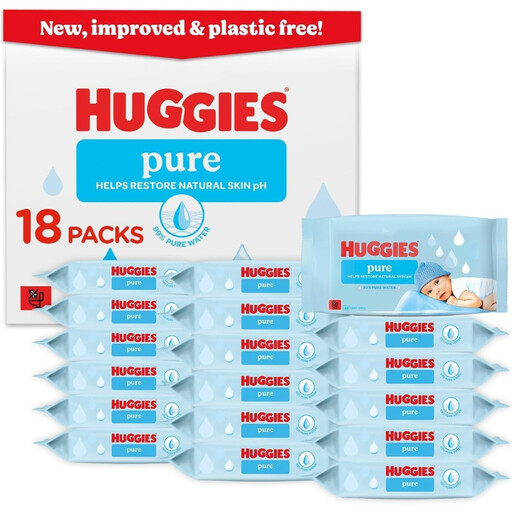
Why This Fits Their Persona: For families who need a reliable, cost-effective supply. This bulk pack from a trusted brand offers excellent value without compromising on the essentials for sensitive skin, like being fragrance-free and hypoallergenic.
This avoids the "false economy of thin wipes" by providing a quality product in a large quantity, ensuring great long-term value. It also avoids the "hidden plastic" trap, as the wipes are made from 100% naturally derived fibres.
Excellent cost-per-wipe value in a large bulk pack. The formula is approved by the British Skin Foundation and is plastic-free.

Why This Fits Their Persona: For parents seeking a noticeably more substantial wipe. The extra thickness and moisture are designed to minimise friction, making them a great choice for babies with particularly reactive or eczema-prone skin.
This product is the direct opposite of the "thin wipe" pitfall. It is marketed as being 3 times thicker and significantly more moist, providing a premium feel and function. The OEKO-TEX certification adds a layer of verifiable trust.
Noticeably thick, soft and highly saturated for an effective clean with fewer wipes. It is also plastic-free, biodegradable and OEKO-TEX certified.
We have compiled a complete, real-time list of products that fully satisfy these strict selection criteria and UK safety regulations.
Here are answers to a few common questions UK parents have about baby wipes.
Mostly, yes, but not entirely. To ensure the wipes remain safe and free from bacteria and mould after the pack is opened, a very small amount of a preservative or stabiliser is required. For example, many brands use a trace amount of fruit or seed extract. This is a crucial safety feature, as pure water alone would quickly become a breeding ground for germs.
No, you should never flush any type of baby wipe down the toilet in the UK. Even wipes labelled as biodegradable or plastic-free do not break down quickly enough to be processed by our wastewater systems. They are a major cause of 'fatbergs' and sewer blockages. Always dispose of used wipes in your household waste bin.
A newborn can get through 8-12 nappy changes a day, and you might use 2-3 wipes per change. This means you could easily use over 250-300 wipes in the first month alone. For this reason, once you've found a brand that suits your baby's skin, buying bulk baby wipes is a practical and economical choice for stocking up on newborn baby wipes.