
24/7 Customer Support

Free returns

Same-day & Next-day Delivery

Quality Guaranteed

Unlock Your Welcome Offers: FREE Delivery | Up to 80% OFF | Free 30-day JoyPlus trial
Download the APP
For parents, guardians and carers, choosing baby wipes for sensitive skin can feel more complicated than it should. Labels such as “pure”, “natural” and “gentle” appear everywhere, but these descriptions do not always tell you what is in the formula, how the wipe should be disposed of or whether the pack suits everyday use.
The right choice depends on your child’s age, skin sensitivity, household routine and disposal arrangements. It is also worth checking the product page rather than relying only on the front of the packaging.
A wipe can contain a high percentage of water while also including preservatives, cleansers, moisturisers or botanical extracts. These ingredients are not automatically unsuitable, but babies with reactive skin may benefit from a shorter, clearly listed ingredient profile.
Look for unscented baby wipes, fragrance-free baby wipes and alcohol-free formulas if you are trying to reduce potential irritants. Always check the full ingredients list, especially if your child has previously reacted to a particular ingredient.
“Plant-based” may describe the fibres, but it does not necessarily mean the entire product or packaging is plastic-free. It also does not mean that a wipe will break down in a home compost bin.
Check whether the product specifically states 100% plant-based fibres, plastic-free or biodegradable. Disposal instructions still matter: most eco-friendly baby wipes belong in a household waste bin, even when made from cellulose or other renewable fibres.
Flushable wipes should not be treated exactly like toilet paper. Check whether the product provides a recognised flushability certification and follow the stated limit, such as one wipe at a time. The Bc Babycare flushable wipes listed below state IWSFG certification and a 98.5% disintegration result in 30 minutes, according to the supplied product information.
For non-flushable baby wipes, including many 99% water baby wipes, disposal in household waste is essential. Even products marketed as biodegradable wet wipes can contribute to blockages if flushed. Local plumbing and sewerage guidance should take priority.
For newborns or babies prone to dryness, select a formula that is clearly labelled fragrance-free, unscented and alcohol-free. A short ingredient list can make it easier to identify a possible cause if irritation occurs.
“Hypoallergenic baby wipes” describes the product’s positioning, not a guarantee that every baby will tolerate it. Patch-testing a small area and observing the skin is sensible. Do not use wipes on broken or sore skin unless advised by a healthcare professional, and stop using them if redness or irritation develops.
A wipe that tears easily may require several sheets per change, increasing cost and creating more waste. Compare the stated sheet size, thickness and material. Some products use plant-based baby wipes made from regenerated cellulose or other fibres; others use conventional non-woven materials.
Extra-large or thicker wipes may offer more coverage for messy changes, while thinner packs can be easier to carry in a changing bag. Consider both performance and storage space rather than assuming thicker always means more economical.
Calculate the total number of wipes rather than comparing pack prices alone. Bulk baby wipes can reduce the cost per wipe, but only if your household uses them before they dry out. Resealable lids and secure labels help retain moisture after opening.
For occasional use, travel or nursery bags, smaller packs may be more practical. For frequent nappy changes, a multi-pack such as 576, 960 or 1,152 wipes can reduce the need for repeat orders, provided you have dry, cool storage space.
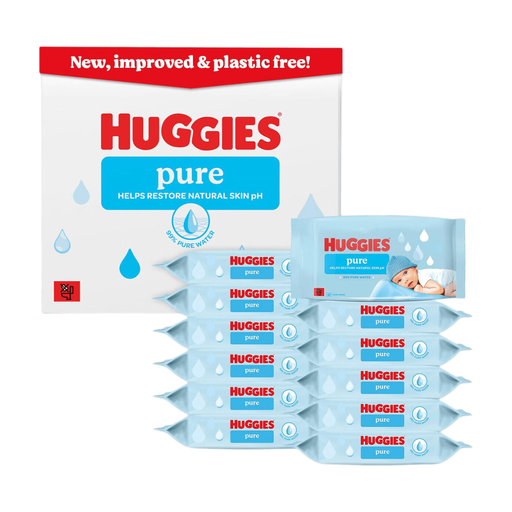
Why This Fits Their Persona: A 576-wipe pack gives new parents a substantial supply for nappy changes, hands and faces without choosing a very large case immediately.
The product information states 99% pure water, fragrance-free, alcohol-free and non-flushable, making the intended use and disposal clear.
Plastic-free wipe material, naturally derived fibres and a resealable pack.

Why This Fits Their Persona: Parents seeking a minimal formula for newborn, premature or sensitive-skin care may prefer the stated two-ingredient composition.
The listing identifies 99.9% purified water and 0.1% grapefruit seed extract, with no fragrance or alcohol, rather than using only a broad “natural” description.
180 wipes across three packs; the wipe material is described as plant-based and plastic-free.

Why This Fits Their Persona: Families managing frequent changes, nursery use or multiple children may value the 960-wipe bulk format.
The listed specification states unscented, 99% purified water, plastic-free cellulose and “do not flush”, avoiding ambiguity around sensitive-skin use and disposal.
Three-times-thicker material is stated, alongside an OEKO-TEX certification reference.
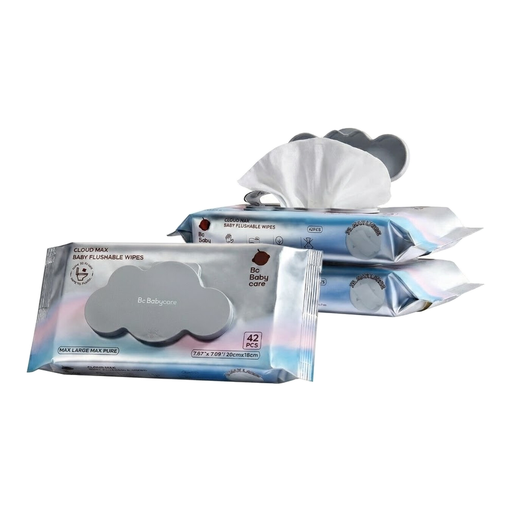
Why This Fits Their Persona: Its extra-large format is designed for potty training, family bathrooms and personal hygiene at home or while travelling.
The product information states fragrance-free, hypoallergenic, 100% plant-based fibres and IWSFG certification. It also specifies flushing one wipe at a time.
XL sheets are stated to be over 40% larger than leading brands; the formula is listed as 99% water.
We have compiled a complete, real-time list of products that fully satisfy these strict selection criteria and UK safety regulations.
Many fragrance-free baby wipes are labelled suitable from birth, but suitability depends on the complete formula and your baby’s individual skin. Check the age guidance and ingredients, then stop use if irritation appears.
Plastic-free wipes are generally made without plastic fibres, but their breakdown rate depends on the material and disposal conditions. Do not place them in household compost unless the packaging specifically allows it. Follow the product’s disposal instructions.
They may be practical for potty training or travel, but cost depends on sheet count, size and how many are used per visit. Compare the price per wipe and follow the one-at-a-time flushing guidance to reduce the risk of blockages and unexpected plumbing costs.