Parents introducing solids
For a baby starting solids from around 6 months, yoghurt choice involves pasteurisation, fat level and careful introduction of foods containing milk, in line with NHS guidance.


Choose organic yoghurt if certified organic production matters to your household, but do not use the organic label as a shortcut for deciding what to feed a baby. For a baby starting solids from around 6 months, NHS guidance points to pasteurised, full-fat, plain or unsweetened yoghurt; full-fat yoghurt remains the NHS recommendation for children under 2. Check milk allergens separately: lactose-free dairy yoghurt is not suitable for someone with a milk allergy.
For a baby starting solids from around 6 months, yoghurt choice involves pasteurisation, fat level and careful introduction of foods containing milk, in line with NHS guidance.
Parents choosing everyday dairy foods for a young child can use the NHS recommendation for full-fat yoghurt up to age 2 to distinguish it from lower-fat products intended for other household members.
A plain pot can be portioned for different meals, while smaller packs may be more convenient away from home. An adult looking for lactose-free dairy needs to make a separate check for milk allergy.
For a young child, check the yoghurt’s feeding suitability first; consider organic certification and pack format as separate decisions.
| Priority | What to check | Your needs |
|---|---|---|
| Age and recipe | For a baby starting solids from around 6 months, check for pasteurised, full-fat, plain or unsweetened yoghurt. Check the exact pack for added sugar and its fat level. | I’m choosing yoghurt for a baby starting solids or a child under 2. NHS guidance identifies pasteurised full-fat yoghurt as suitable from around 6 months and recommends full-fat yoghurt up to age 2. |
| Organic claim | Check the organic labelling and certification information on the pack. Then assess ingredients, fat level and allergens separately; organic status does not answer those questions. | Organic production matters to our household, but I still need a yoghurt that fits the person eating it. UK government guidance describes organic production rules and approved control-body certification. |
| Milk allergen | Read the milk allergen statement and ingredient list. Do not treat lactose-free dairy yoghurt as milk-free; when introducing foods that can cause allergies, follow NHS advice to offer them one at a time in very small amounts. | Someone in our household may react to milk, so I need to distinguish milk allergy from a preference for lactose-free dairy. Rachel’s Organic states that its lactose-free natural yoghurt is not suitable for people with a milk allergy. |
| Pack format | Compare a plain family pot with individually portioned products. Check the recipe of each variant: natural, fruit, lower-fat and lactose-free yoghurts need not have the same ingredients. | We may share a pot at home or prefer a portioned pack for a particular occasion. Convenience does not replace the age, recipe and allergen checks. |
Organic certification concerns production; it does not tell you whether a yoghurt is pasteurised, full-fat, plain or appropriate for a particular child.
For a baby starting solids from around 6 months, check the yoghurt against NHS feeding guidance first, then consider its organic claim separately.
Lactose-free dairy yoghurt can still contain cow’s-milk protein. Rachel’s Organic explicitly warns that its lactose-free natural yoghurt is not suitable for people with a milk allergy.
Read the milk allergen statement. For a diagnosed or suspected allergy in a child, seek advice from a GP or health visitor rather than substituting a lactose-free dairy product.
A lower-fat yoghurt does not follow the NHS recommendation for full-fat yoghurt up to age 2.
Check the fat description on the exact pack when buying for a young child; do not assume every organic yoghurt has the same fat level.
A brand range can contain plain, fruit, lower-fat and lactose-free yoghurts with different ingredients and nutrition information.
Read the ingredient list, nutrition panel and allergen statement for the variant you intend to use.
Its range includes natural and Greek-style yoghurts as well as Little Yeos products.
Its product pages describe natural Greek-style and lactose-free dairy yoghurts, among other variants.
This retailer’s natural-yoghurt listings include named Yeo Valley Organic products alongside other natural yoghurts.
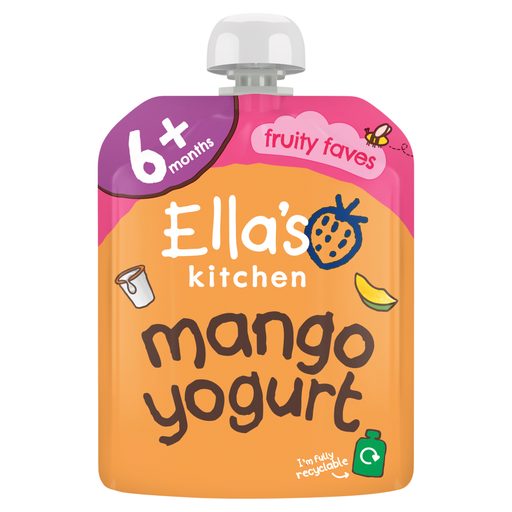
This option is a portioned fruit yoghurt for the baby-feeding scenario; assess its label separately from a plain family yoghurt.
 No image available
This 90g fruit yoghurt pouch is labelled for ages 6+ months and offers a portioned format rather than a plain yoghurt. Its description says no added sugar, but it contains fruit and milk; check the current pack for full-fat classification, pasteurisation and organic certification details. Follow the serving directions and keep the cap out of reach of children under 36 months.
No. Organic describes production, not whether the recipe suits a baby’s age or allergy status. For a baby starting solids from around 6 months, NHS guidance identifies pasteurised full-fat yoghurt as suitable and recommends plain or unsweetened yoghurt.
From around 6 months, look for pasteurised, full-fat, plain or unsweetened yoghurt, following NHS guidance. Check the milk allergen information and introduce foods that can cause allergic reactions one at a time in very small amounts.
No. The NHS recommends full-fat yoghurt up to age 2. Check the fat level on the exact product rather than assuming that an organic or natural label tells you whether it is full-fat.
No: lactose-free dairy yoghurt can still contain cow’s-milk protein. Rachel’s Organic says its lactose-free natural yoghurt is not suitable for people with a milk allergy; for a child with a diagnosed or suspected allergy, speak to a GP or health visitor.
The NHS advises introducing foods that can cause allergic reactions one at a time and in very small amounts from around 6 months, so a reaction is easier to spot. If your baby has a diagnosed allergy or eczema, or there is a family history of allergy, eczema, asthma or hay fever, speak to a GP or health visitor first.