Parents starting solids around 6 months
You are looking for a first yoghurt once your baby is ready for solids. The NHS says breast milk or first infant formula remains the main source of nutrition at this stage.


For a baby around 6 months old who is ready for solids, the NHS recommends pasteurised, full-fat, plain or unsweetened yoghurt. A larger plain pot can be portioned for family use, while a baby-labelled fruit pouch offers a different format but needs a check of its ingredients and other allergens. If milk is new to your baby, the NHS advises introducing it on its own in a very small amount.
The yoghurt choice changes depending on whether your baby is starting solids, trying milk for the first time or already eating a range of ingredients.
You are looking for a first yoghurt once your baby is ready for solids. The NHS says breast milk or first infant formula remains the main source of nutrition at this stage.
You want a simple way to introduce a milk-containing food. The NHS advises offering foods that can trigger allergic reactions one at a time and in very small amounts, so a possible reaction is easier to spot.
You are deciding between portioning plain yoghurt from a shared pot and using a fruit pouch. The ingredients, allergens and storage instructions matter alongside the serving format.
Check readiness and the yoghurt itself first, then decide whether a shared pot or a portioned pouch fits how you will serve it.
| Priority | What to check | Your needs |
|---|---|---|
| Starting solids | Check that your baby is around 6 months old and showing readiness for solids. The NHS says usual breast milk or first infant formula feeds remain important. | I want to offer yoghurt as a first food, not use it in place of my baby's usual milk feeds. |
| Plain, full-fat yoghurt | Look for pasteurised, full-fat, plain or unsweetened yoghurt, as recommended by the NHS. Read the current ingredients and nutrition label; no added sugar does not mean sugar-free. | A simple plain yoghurt makes more sense for my baby's first tastes than choosing by a Greek-style or baby-food label alone. |
| Milk and other allergens | Check for milk and any other relevant ingredients. The NHS advises introducing foods that can trigger allergic reactions one at a time and in very small amounts. | If milk is new to my baby, I want to introduce it separately rather than alongside the oats and barley in a mixed-ingredient pouch. |
| Serving format | For a shared pot, check the storage instructions and serve a separate small portion. For a fruit pouch, compare ingredients and nutrition per 100g with a plain yoghurt. | Portioning from a pot works when the family will use it; a pouch is useful to me when its format matters and my baby has already tolerated its ingredients. |
Natural, Greek-style and baby-labelled yoghurts can have different ingredients. NHS advice for weaning specifically identifies pasteurised, full-fat, plain or unsweetened yoghurt.
Check the fat description and ingredients, then compare nutrition on the same per-100g basis.
A pouch containing milk alongside oats and barley makes it harder to tell which ingredient is involved if your baby reacts.
The NHS advises introducing foods that can trigger allergic reactions one at a time and in very small amounts. If your baby has diagnosed or suspected cow's-milk-protein allergy, seek clinical advice about introducing dairy.
Plain yoghurt contains naturally occurring milk sugar. A fruit yoghurt's total sugars also reflect its recipe, so the two labels do not describe identical products.
Read the ingredients alongside the sugars figure per 100g; neither label alone tells you the whole recipe.
Yeo Valley's Tesco listing notes that food products can be reformulated. A previous listing may not reflect the pot or pouch you are about to serve.
Check the current pack, particularly for milk and any other allergens relevant to your baby.
These examples show how a plain pot and a baby-labelled pouch differ; their details apply to the named products, not every yoghurt from each brand.
Tesco lists Yeo Valley Natural Greek Style Yogurt 450G as made with organic whole milk and live cultures.
Tesco Greek Style Natural Yogurt 1Kg is a larger plain pot that can be portioned at home.
The Organic Banana Greek Style Yoghurt pouch listed by Tesco is labelled for babies aged 6 months and over.
This fruit yoghurt pouch represents the portioned option for a baby from 6 months who is ready for solids and has already tolerated its ingredients; it is not the plain yoghurt option in NHS guidance.
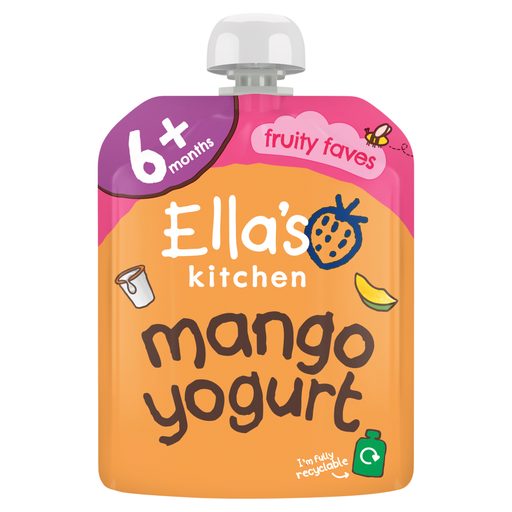 No image available
The portioned fruit-and-yoghurt format may suit serving by spoon once your baby has tolerated its ingredients.
This is not a plain yoghurt. Check the current pack for its ingredients and full-fat status; the listing directs serving from a bowl or spoon rather than drinking from the pouch.
The NHS says pasteurised full-fat yoghurt can be offered from around 6 months, once your baby is ready for solids. Breast milk or first infant formula remains the main source of nutrition at this stage.
Look for pasteurised, full-fat, plain or unsweetened yoghurt, in line with NHS advice. Check the current pack's ingredients and allergen information rather than relying on “natural” or “Greek-style” in the name.
The NHS advises introducing foods that can trigger allergic reactions one at a time and in very small amounts, so you can spot a possible reaction. A plain milk yoghurt avoids introducing the extra fruit and cereals found in some pouches at the same time.
Yes. GOV.UK's allergen guidance identifies milk among the 14 allergens for which food businesses must provide information. Read the current pack for milk and any other ingredients relevant to your baby.
Follow your baby's clinician or dietitian plan rather than offering ordinary dairy yoghurt as a routine weaning food. University Hospitals Sussex NHS Foundation Trust explains that cow's-milk allergy involves a reaction to proteins in milk and that reactions can be immediate or delayed.