
24/7 Customer Support

Free returns

Same-day & Next-day Delivery

Quality Guaranteed

Unlock Your Welcome Offers: FREE Delivery | Up to 80% OFF | Free 30-day JoyPlus trial
Download the APP
Choosing baby and toddler drinking cups can seem straightforward until you compare sippy cups, straw cups and open-cup trainers. Age labels, spill claims and specialist valves can make similar products look very different, while some designs become difficult to clean or unsuitable as your child’s skills develop.
For UK families, the right choice depends on more than colour or capacity. You need to consider the child’s age, drinking ability, where the cup will be used and how easily every component can be cleaned.
A non-spill cup usually controls liquid flow when the child is not drinking. It may still leak if the valve is incorrectly fitted, the lid is cross-threaded, the cup is overfilled or the product is shaken vigorously. A leak-proof cup is only as reliable as its seal and assembly.
For nursery bags and pushchairs, look for a secure lid or flip-top cover. At home, a free-flow or open cup may be more useful because it helps your child practise tilting and sipping, even if some spills are expected.
Age guidance is important, but children develop drinking skills at different rates. A cup for babies aged 3 months and over may be suitable for assisted drinking, yet a child of the same age may not be ready to hold it independently.
Check whether the cup uses a spout, straw, 360-degree rim or open edge. Also read the warnings: many products are intended for cold or room-temperature liquids only, and some should not be used with fizzy drinks or pulpy juices.
A cup with a complicated valve can work well but take longer to clean. Residue may remain inside narrow straws, silicone seals or small valve openings. Before buying, check whether the product fully disassembles, includes a straw brush and is suitable for the top rack of a dishwasher or sterilisation.
Fewer parts are not automatically safer, but they can make consistent cleaning easier.
Look for clear material details such as BPA-free polypropylene, food-grade silicone or Tritan plastic. BPA-free baby cups are a practical starting point, but material information does not replace safe use. Always follow the manufacturer’s instructions for temperature, cleaning and sterilisation.
The EN 14350 standard is relevant to certain children’s drinking equipment. However, not every cup is designed for the same use, so check the individual packaging and product instructions rather than assuming one standard covers every feature.
Avoid hot liquids unless the instructions specifically permit them. Never use a cup as a dummy or leave a child unattended while drinking. Inspect spouts, straws, valves and handles regularly, particularly during teething, and replace any damaged component or cup.
A 190–210ml cup is often easier for small hands and short practice sessions. Capacities around 266–350ml may be more suitable for longer outings, older toddlers or children who drink frequently.
For travel, consider:
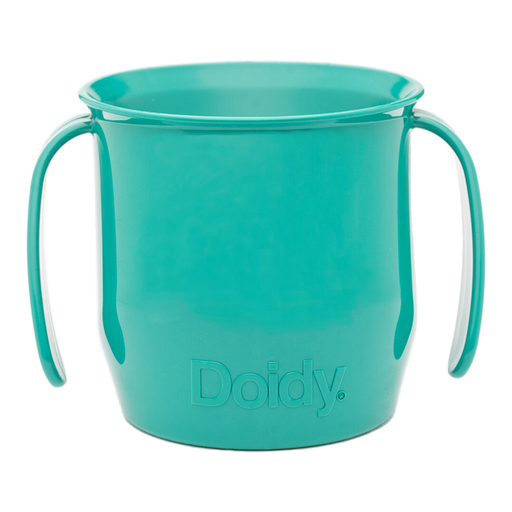
Why This Fits Their Persona: A simple starting point for families introducing open-cup drinking at home, with a 3+ months age indication and two handles for assisted practice.
It does not rely on a complex valve or narrow straw, so there are fewer internal parts to inspect and wash. Some spillage is expected during open-cup learning.
Slanted rim, easy-grip handles, food-safe polypropylene and top-rack dishwasher suitability.
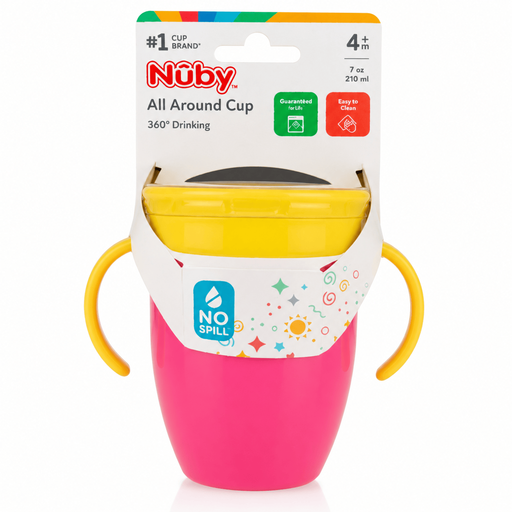
Why This Fits Their Persona: Suitable for parents seeking a 360-degree design that resembles an open cup while offering more control over spills at home or during short trips.
The pressure-sensitive silicone seal closes when the child stops sipping, while the minimal-part construction reduces cleaning complexity compared with some multi-valve cups.
210ml capacity, BPA-free materials, watertight cover lid and top-rack dishwasher suitability.
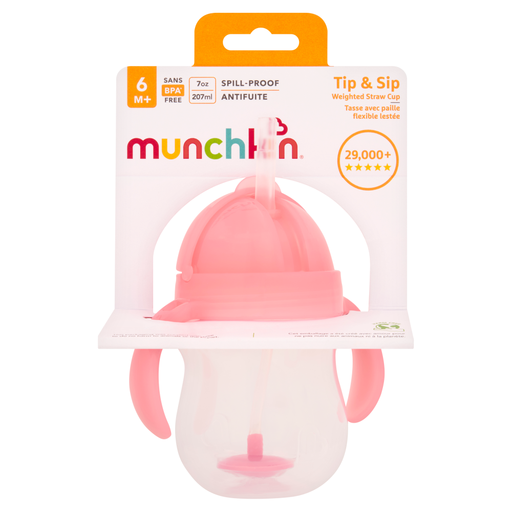
Why This Fits Their Persona: A practical option for babies and toddlers who find it difficult to drink by tipping a cup, including families using it at home, in a pushchair or on outings.
The weighted straw is designed for drinking from different angles, while the Click Lock lid and silicone seal address the common problem of loose travel lids.
207ml capacity, easy-grip handles, included straw brush and top-rack dishwasher suitability.
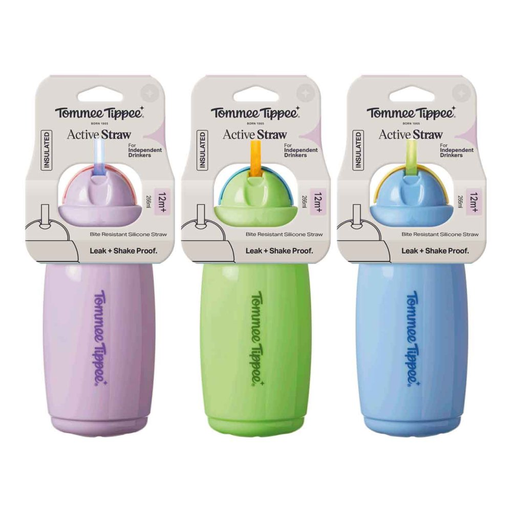
Why This Fits Their Persona: Designed for older toddlers who need a portable cup for nursery, parks, car journeys and active play.
The INTELLIVALVE system is designed to reduce leakage when correctly assembled, and the straw is removable for cleaning rather than permanently enclosed.
266ml insulated body, straw-based sipping and materials listed as free from BPA, BPS, PVC and phthalates.
We have compiled a complete, real-time list of products that fully satisfy these strict selection criteria and UK safety regulations.
A small weaning cup, free-flow cup or open-cup trainer may be suitable, depending on your child’s readiness and the guidance on the packaging. Two-handled designs can make assisted drinking easier, while some parents prefer a 360-degree cup to limit spills. Introduce small amounts and supervise throughout.
They serve different purposes. A 360-degree cup has a rim that can be used from different positions and may provide a closer step towards open-cup drinking. Traditional sippy cups with a spout can be easier for some children to understand during the bottle-to-cup transition. Consider your child’s current skills, not just the product description.
There is no universal replacement period. Longevity depends on use, cleaning, biting and exposure to heat. Inspect the cup before each use and replace it at the first sign of cracks, tears, clouding, damaged valves or weakened seals. Keeping separate home and travel cups can also help reduce wear on a single product.