
24/7 Customer Support

Free returns

Same-day & Next-day Delivery

Quality Guaranteed

Unlock Your Welcome Offers: FREE Delivery | Up to 80% OFF | Free 30-day JoyPlus trial
Download the APP
For busy UK parents and carers, a baby bottle washer and steriliser can reduce the time spent rinsing, scrubbing and air-drying feeding equipment. However, product descriptions often focus on impressive-sounding functions while overlooking the details that affect daily use.
A suitable automatic baby bottle washer should match your bottle collection, kitchen space and cleaning routine. Before buying, look beyond the number of programmes and check how the machine handles spray coverage, drying, water management and maintenance.
Automatic cleaning does not necessarily mean every surface receives the same water pressure. Narrow bottle necks, teat holes, collar threads and pump parts can retain milk residue if spray arms cannot reach them.
Look for a design with directed spray coverage, removable components and clear loading guidance. An upgraded three-arm spray arrangement, such as the one specified for the GORGENOX D20, may offer more targeted coverage than a basic single-jet system. Even so, heavily dried-on formula may still need a quick rinse before loading.
A baby bottle steriliser with dryer combines several separate stages:
A steam bottle steriliser does not replace washing. Placing unwashed bottles into a steam-only unit can leave visible residue behind. Similarly, a washer that finishes with damp items may require additional air-drying and handling.
A machine can become inconvenient if the water tank, filters, spray arms or internal chamber are difficult to clean. Check whether parts can be removed safely and whether the manufacturer provides descaling and maintenance instructions.
Capacity also matters. A compact unit may suit occasional bottle use, while larger households may need room for several bottles, teats, collars and breast pump components. Always compare the internal layout with the items you actually use rather than relying on a quoted bottle count.
Confirm the maximum bottle height and diameter, as well as compatibility with wide-neck bottles, anti-colic valves, breast pump parts and reusable food containers. A 2-in-1 bottle washer and steriliser is most useful when it can clean the complete feeding set rather than just the bottle body.
Check the position of spray outlets and whether smaller parts need a basket. Parts should remain separated during the cycle so water and steam can reach them properly.
Product listings may use the word “steriliser” without explaining the cycle. Check the instruction manual for the steam process, programme duration, drying temperature and cooling stage. Do not use unsuitable plastics or materials unless the manufacturer specifically permits them.
A heated drying function may finish the cycle faster, while filtered or circulated air can help reduce residual moisture. The appliance should be placed on a stable, heat-resistant surface with sufficient ventilation and kept away from children.
For UK households, also look for clear manufacturer details, supplied safety instructions and appropriate conformity information such as CE or UKCA marking where applicable. These markings should not be treated as a substitute for reading the product instructions.
Hard water is common in parts of the UK and may create limescale around heating elements. Before buying, check whether distilled, filtered or tap water is recommended and how often descaling is required.
Running costs include electricity for heating and drying, water consumption, detergent and replacement filters or seals. A shorter cycle is not automatically cheaper if it requires pre-rinsing or a second drying stage. Compare the complete routine, not just the advertised programme time.
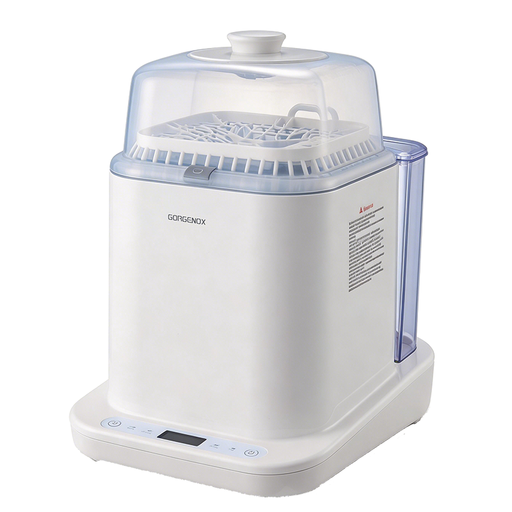
Why This Fits Their Persona: A practical match for households using several bottles and wanting washing, steam treatment and drying in one appliance rather than separate countertop equipment.
Its listed three-arm spray system addresses the concern that narrow parts may not receive directed coverage. It also combines washing, steam sterilisation and drying rather than offering steam alone.
Fully automatic 2-in-1 format; listed steam sterilisation, drying and plasma purification functions.
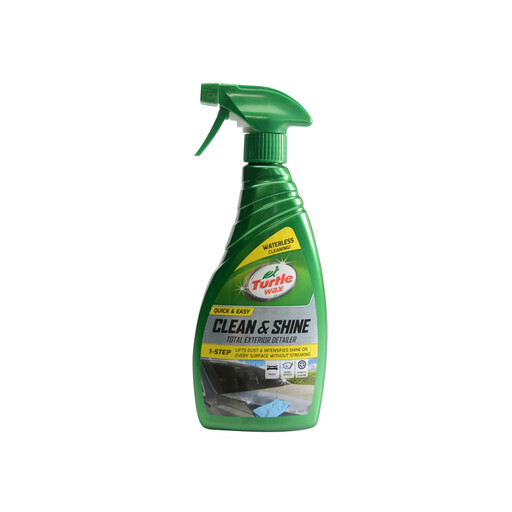
Why This Is Excluded: This is a car-care product, not a baby bottle washer, steriliser or cleaning product for feeding equipment. It must not be used on bottles, teats or breast pump parts.
It is clearly identified as an exterior car-detailing spray, helping buyers distinguish it from products intended for washing and sterilising baby-feeding equipment.
Cleans and waxes in one application; listed for clear coats and metallic paintwork. Not suitable for baby-care use.

Why This Is Excluded: This is a pet-grooming accessory, not a baby bottle washer or steriliser. It must not be used to clean or mist feeding equipment.
The listing states that it produces cool mist only, not hot steam, and includes warnings about eyes, sensitive areas and over-wetting. These specifications relate to pet grooming rather than sterilisation.
One-click hair ejection; USB-C charging with listed 240-minute gentle-mode runtime. Not suitable for baby-care use.
The same selection principles apply to other spray-based household products. A self-cleaning pet brush should state whether its mist is cool or heated, whether the body is waterproof and how hair is removed. The white pecute Pet Spray Comb with Water Bottle includes dual mist modes, a retractable-bristle cleaning mechanism and instructions not to rinse the device under a tap.
For vehicle maintenance, match the formula to the job. CarPlan Engine Cleaner & Degreaser is intended for ingrained oil, grease, dirt and grime on engine surfaces, with a two-minute penetration period followed by rinsing. It is not a substitute for a car exterior detailer.
For oxidised paintwork, CarPlan T-Cut Original Car & Auto Paint Restorer is listed for oxidation, scratches, tar spots and road grime. Test any paint-care product on a small, inconspicuous area first and follow the label instructions. Neither product should be selected solely because a listing uses terms such as “professional” or “restorer”.
We have compiled a complete, real-time list of products that fully satisfy these strict selection criteria and UK safety regulations.
It can be worthwhile for households washing multiple bottles and feeding accessories each day. The main benefit is workflow: one appliance may handle washing, steam treatment and drying. It is less useful if you only use one bottle occasionally or already have a suitable washing and sterilising routine.
No. Sterilising and washing perform different jobs. Rinse or wash away milk residue first, then use the steam programme according to the appliance instructions. Check that every bottle component is suitable for the selected cycle.
Lifespan depends on water hardness, frequency of use, cleaning and correct descaling. Regularly inspect seals, baskets, spray arms and heating areas. Avoid overloading, use only recommended cleaning products and follow the manufacturer’s maintenance schedule to help keep performance consistent.