
24/7 Customer Support

Free returns

Same-day & Next-day Delivery

Quality Guaranteed

Unlock Your Welcome Offers: FREE Delivery | Up to 80% OFF | Free 30-day JoyPlus trial
Download the APP
Buying baby nappies online can look straightforward until you compare weight ranges, absorbency claims, materials and pack quantities. A nappy that works well for one child may leak, rub or feel bulky on another. The right choice depends on fit and routine rather than branding alone.
Parents and carers in the UK should also look beyond phrases such as “all-day dryness” or “leak-proof”. These descriptions can refer to specific design features, but they do not replace checking the correct size, changing regularly and following the packaging instructions.
Nappy sizes are often associated with newborn, crawling or toddler stages, but weight is the more useful starting point. Babies of the same age can have very different body shapes. A nappy that is too small may leave red marks and gaps, while an oversized one can leak around the legs or waist.
For example, many size 3 nappies cover a range around 6–11 kg, but some products use 4–9 kg or 6–10 kg. Always compare the pack’s stated range with your baby’s current weight and body shape.
A jumbo pack may appear economical, but it can create waste if the cut or fastening system does not suit your baby. Try a smaller pack first where possible, especially when moving from newborn nappies to the next size.
Compare the cost per nappy, not just the pack price. A 50-pack and a 98-pack may serve different needs, and a larger pack is not automatically better value if several nappies are discarded because of poor fit.
Pull-up nappy pants can simplify changes for active babies and toddlers, but taped nappies may offer more adjustability for younger babies. Similarly, swim nappies are designed for water use and should not replace ordinary disposable baby nappies during the day.
Overnight nappies may include extra absorbent layers or back protection, but regular changes are still important. Treat long-duration claims as product guidance, not a reason to leave a wet or soiled nappy unchanged.
Check three points:
Taped nappies allow you to adjust the waist several times, which can be useful for newborns and babies who are not yet standing. Pull-up designs use a stretchy waistband and are convenient for standing changes, crawling and potty training.
Most disposable nappies use wood pulp and super-absorbent polymer (SAP) in the core. Some designs also include channels, extra dry layers, wetness indicators or back pockets. These features can help distribute liquid, but fit remains essential: even a highly absorbent core cannot compensate for gaps around the legs.
For overnight nappies, look for the specific features listed by the manufacturer, such as a larger absorbent core, sleep layer, flexible cuffs or back-leak protection. Change the nappy promptly when wet or soiled, and stop using it if irritation develops.
If your child has easily irritated skin, compare the ingredient and material information rather than relying only on “soft” wording. Some sensitive skin nappies are listed as fragrance-free, lotion-free, chlorine-free or free from latex and phthalates. Others include lotions or skin-contact ingredients, so read the full product description and packaging.
Terms such as eco-friendly nappies may refer to plant-based layers, certified pulp, recyclable packaging or manufacturing processes. These features differ between products. “Plant-based” does not mean every component is biodegradable, so check the materials and disposal instructions carefully.
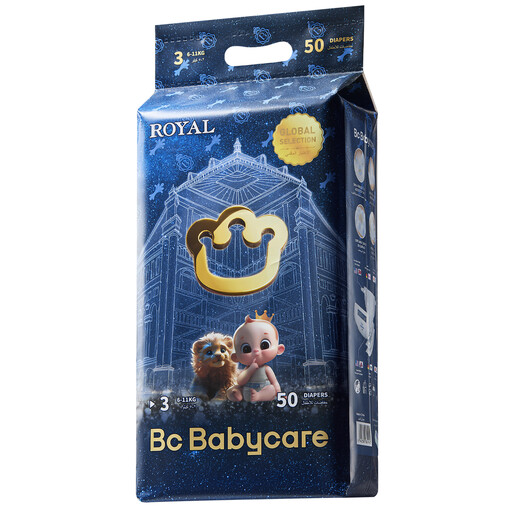
Why This Fits Their Persona: A 50-pack gives families moving into size 3 a practical quantity to check fit before committing to a larger purchase. It is listed for babies weighing 6–11 kg.
The stated weight range and three wetness indicator lines make it easier to check suitability and timing instead of relying on age labels alone.
The product listing specifies a thin absorbent core, breathable back layer, elastic waistband and 360-degree leakage protection design.
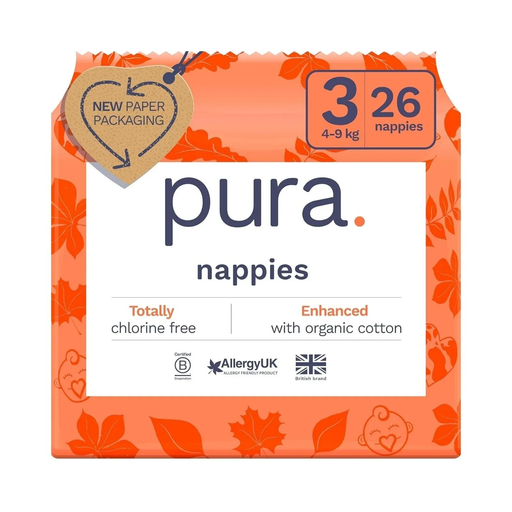
Why This Fits Their Persona: This option suits shoppers prioritising plant-based materials and product information for babies weighing 4–9 kg, including families comparing sensitive skin nappies.
Instead of relying on a broad eco label, the listing identifies plant-based polyethylene, organic cotton, sustainable wood pulp and chlorine-free construction.
The product is listed with organic cotton in the skin-contact layer, Allergy UK certification and FlashDry technology.
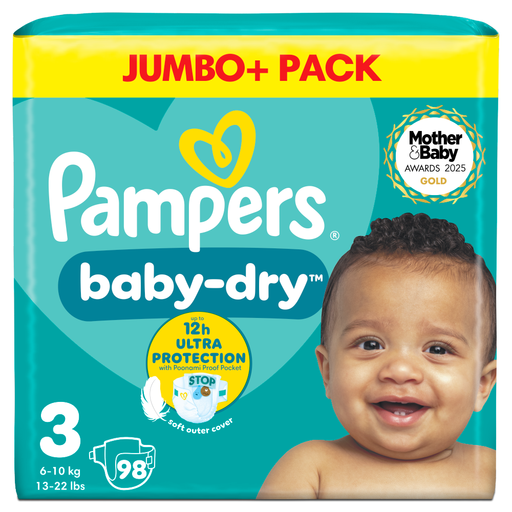
Why This Fits Their Persona: Families changing nappies frequently or preparing for overnight use may prefer the 98-pack format and features designed for wetness distribution.
The listing gives a defined 6–10 kg range and identifies the Stop & Protect Pocket, extra dry layer and safety leg cuffs rather than only using a general leak-resistant statement.
Features include Flexi-side wings, an extra dry layer, ComfortTouch cover and OEKO-TEX Standard 100 certification listed by the manufacturer.
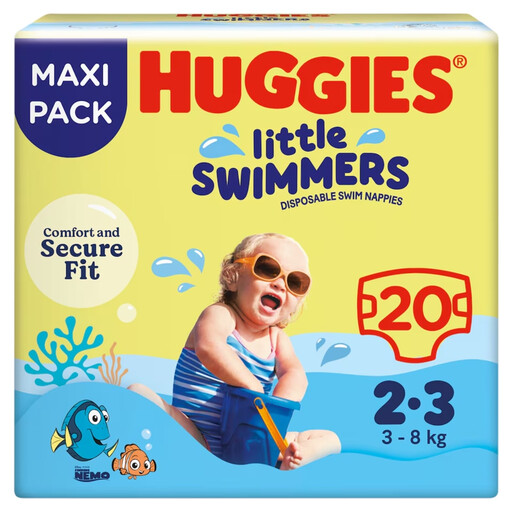
Why This Fits Their Persona: Designed specifically for pool visits and water play, this pack suits families who need a separate swim nappy rather than an everyday option.
It clearly states that it is for swimming, helping prevent the common mistake of using absorbent daily nappies in water where they can become heavy and swollen.
The listed design includes water-resistant material, leak guards, stretch side panels and adjustable tabs for babies weighing 3–8 kg.
We have compiled a complete, real-time list of products that fully satisfy these strict selection criteria and UK safety regulations.
Many newborns use several nappies daily, while the number often decreases as children grow. The exact amount depends on feeding, age, bowel habits and how promptly changes are made. Calculate the pack’s cost per nappy using your household’s typical daily use before choosing a bulk pack.
Consider moving up when the current nappy leaves persistent marks, fastens tightly, leaks despite correct positioning or no longer covers the bottom securely. Check the next size’s weight range before switching. A larger nappy is not always the solution if leaks are caused by tucked-in cuffs or an incorrectly positioned waistband.
No. Swim nappies are made for water activities and are designed to limit swelling in water. They do not provide the same absorbency as ordinary disposable baby nappies. Use a fresh swim nappy for each pool visit, remove it after swimming and dispose of it hygienically.