
24/7 Customer Support

Free returns

Same-day & Next-day Delivery

Quality Guaranteed

Unlock Your Welcome Offers: FREE Delivery | Up to 80% OFF | Free 30-day JoyPlus trial
Download the APP
For babies learning to roll, crawl and sit, a play mat can create a more comfortable area than a bare floor. For toddlers, it can define a play zone, support floor-based activities and make cleaning up easier. However, product photographs and phrases such as “extra soft” do not always tell you whether a mat suits your room, storage space or child’s age.
Before buying baby play mats, watch for three common pitfalls:
The right choice depends on how and where the mat will be used. A foldable baby play mat may suit a flat or small home, while interlocking foam floor mats can cover a custom-shaped playroom or exercise area.
Measure the intended floor area, including space around furniture and access to doors. A larger surface can be more useful for crawling and shared play, but it needs somewhere to go when the room is used for another purpose.
The AIYAPLAY reversible mats measure 177 x 146cm, cover 2.57m² and have 1.5cm cushioning. Their foldable format is designed for storage or transport, making them suitable for homes where a permanent toddler playroom flooring area is not practical.
For a smaller or irregular space, a foam tile system offers more flexibility. Six 12 x 12-inch tiles cover a smaller area, while an 18-pack provides broader coverage. Check the assembled dimensions rather than judging coverage by the number of pieces alone.
Common options include XPE foam, EVA foam and fabric. A non-toxic EVA foam mat may be listed for playrooms, yoga or exercise, but buyers should still read the supplier’s material details, warnings and care instructions. Avoid assuming that “non-toxic” means every part of the product has identical properties.
A waterproof crawling mat or water-resistant surface is useful for milk spills, food and everyday mess. The AIYAPLAY mats are described as having a water-resistant coating, so their surface can be wiped after use. Foam tiles are also described as easy to clean, although the joins may require extra attention if crumbs or liquid collect between pieces.
Look for both the approved age and the recommended age. The AIYAPLAY mats state approved age: 0+ and recommended age: 0.5–6 years. Always follow the supplied manual and supervise young children, particularly when a child is mobile or using toys on the mat.
An educational musical play mat is a different purchase from a cushioned crawling surface. The listed piano and drum mat is for children aged three years and above, requires batteries that are not included and should be used under direct adult supervision. It is intended for interactive music play rather than as a full-size baby floor mat.
Before use, place any mat on a clean, level surface. Check that fold lines lie flat, interlocking edges are properly connected and no loose or damaged sections are accessible to a child. Keep mats away from heaters, naked flames and areas where water can pool.
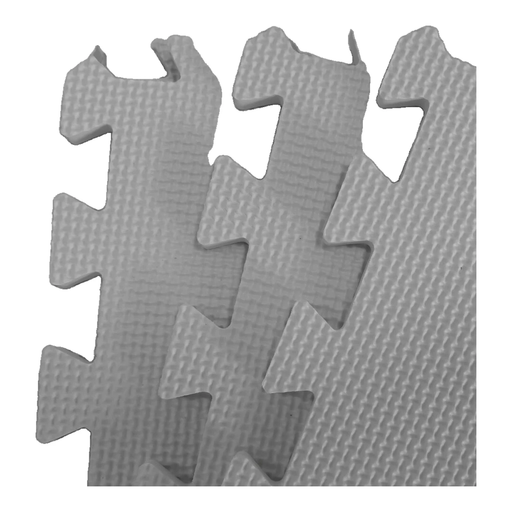
Why This Fits Their Persona: A practical starting point for a compact flat, nursery corner or small play area where a neutral colour is preferred.
The six-piece format makes the coverage easier to plan before purchase, rather than relying on a product photograph to judge size.
Light grey solid-colour finish; interlocking EVA foam tiles with edge pieces included.
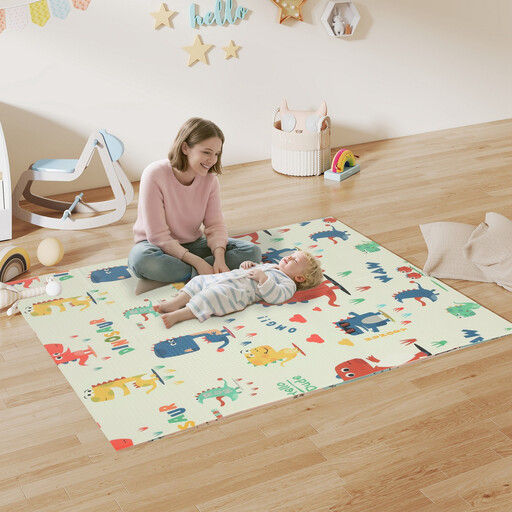
Why This Fits Their Persona: Suitable for families wanting a large, illustrated surface that can be folded after play and carried to a garden or picnic area.
Its stated dimensions and 2.57m² coverage give a clearer basis for comparing usable floor space, while the wipe-clean surface addresses everyday mess.
1.5cm XPE foam; reversible dinosaur prints; foldable design; water-resistant coating.
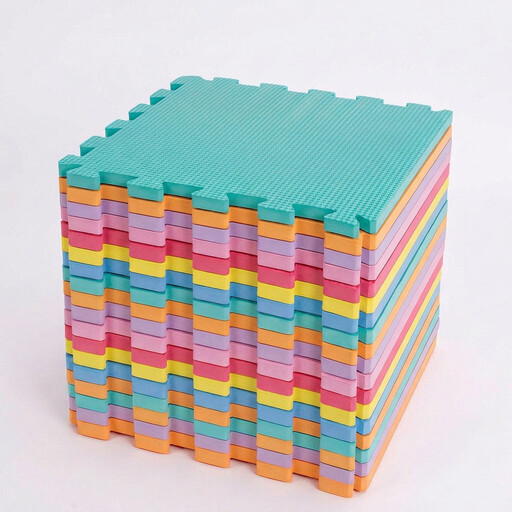
Why This Fits Their Persona: A flexible option for nurseries, playgroups, home gyms or larger activity zones that need modular coverage.
Interlocking pieces can be assembled, separated and extended according to the available area, reducing the limitation of a single fixed-size mat.
18 12 x 12-inch squares; 27 edge pieces; listed EVA foam construction; suitable for play and fitness areas.
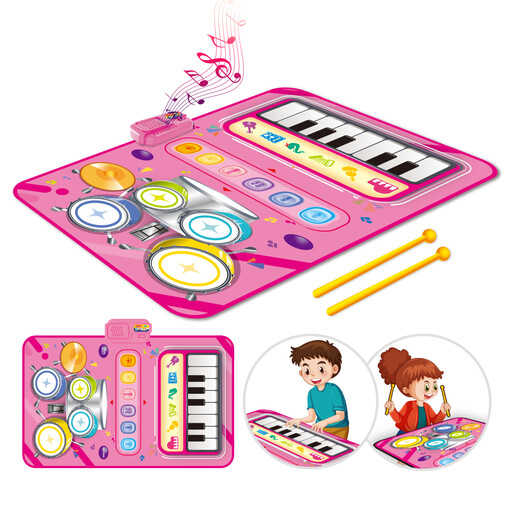
Why This Fits Their Persona: Designed for children aged three and above who enjoy active, sound-based play with a parent or sibling.
The age warning, direct-supervision requirement and battery information are clearly stated, helping buyers avoid confusing it with a baby crawling mat.
13 piano keys and six drum functions; adjustable volume; foldable non-woven fabric; batteries not included.
We have compiled a complete, real-time list of products that fully satisfy these strict selection criteria and UK safety regulations.
Use the mat on a dry, level floor and follow the cleaning instructions supplied with the product. Avoid harsh chemicals unless the manufacturer confirms they are suitable. For interlocking tiles, lift and clean beneath the mat periodically, especially in rooms where food or drink is used.
Inspect the surface, corners, joins and fold points regularly. Replace a mat if it develops tears, exposed foam, loose sections or persistent odour. A mat marketed for indoor and outdoor play should still be stored dry after outdoor use, as dampness can affect the floor beneath it.
Some products list an approved age of 0+, but age guidance varies. Use the individual product’s instructions, supervise babies during floor play and keep small accessories or detachable pieces away from them.
There is no single thickness suitable for every room or activity. Consider the floor underneath, the child’s age and how easily the mat needs to fold or store. The featured AIYAPLAY mats provide 1.5cm padding, while tiled mats allow coverage to be built from individual pieces.
They are generally straightforward to wipe, but dirt can gather around the joins. Separate the tiles when needed, clean them according to the care instructions and allow every piece and the floor beneath to dry fully before reassembly.