
24/7 Customer Support

Free returns

Same-day & Next-day Delivery

Quality Guaranteed

Unlock Your Welcome Offers: FREE Delivery | Up to 80% OFF | Free 30-day JoyPlus trial
Download the APP
Choosing baby wipes involves more than comparing pack prices. The right option needs to suit your baby’s skin, your everyday routine and your approach to materials and waste. Newborns, infants and children with delicate skin may need a simpler formula, while busy households often prioritise bulk baby wipes, resealable packaging or larger sheets for demanding nappy changes.
Below, the Joybuy Product Recommendation Officer filters the most useful product information and highlights the details that can prevent wasted money.
Words such as “soft”, “natural” or “gentle” do not always tell you whether a product contains perfume. If your child’s skin is sensitive, check the ingredient list and look specifically for fragrance-free or unscented baby wipes. A lightly scented formula may smell pleasant but is not automatically the right choice for every child.
A large box may appear economical, but the total wipe count, sheet size and thickness all affect value. A thin wipe may require several sheets during a particularly messy nappy change. Conversely, a smaller travel pack can be more practical for a changing bag, even if its price per wipe is higher.
Calculate:
Plastic-free, plant-based and biodegradable baby wipes are not the same as flushable wipes. Used wipes should go into household waste unless your local authority and the specific packaging clearly state otherwise. Even biodegradable materials can contribute to blockages when flushed.
For newborn baby wipes or sensitive skin baby wipes, look for a clear ingredient list and avoid making assumptions based only on front-of-pack wording. Fragrance-free options may be preferable for families trying to reduce unnecessary ingredients. Some products use mostly purified water, while others include moisturising agents, aloe vera or mild cleansing ingredients.
A product labelled hypoallergenic describes the manufacturer’s formulation approach; it does not guarantee that every child will tolerate it. Always monitor the skin, particularly when introducing a new wipe. Stop using the product if redness, itching or discomfort develops.
The term plant-based refers to the source of the fibre, but the exact composition matters. Product descriptions may specify 100% plastic-free, regenerated cellulose or plant-based non-woven fabric. Certifications can provide additional information about sourcing:
Check whether a claim applies to the wipe itself, the outer packaging or both.
An XL sheet can be useful for nappy changes, post-meal cleaning and head-to-toe use, as it may provide broader coverage. Thicker wipes can also feel more substantial when cleaning heavier messes. However, these features may increase pack dimensions, so consider where you will store them.
For everyday use, multipacks such as 12 or 24 individual packs can be convenient for nurseries, changing stations and travel. Keep opened packs tightly sealed and store them away from direct sunlight and heat to reduce drying.
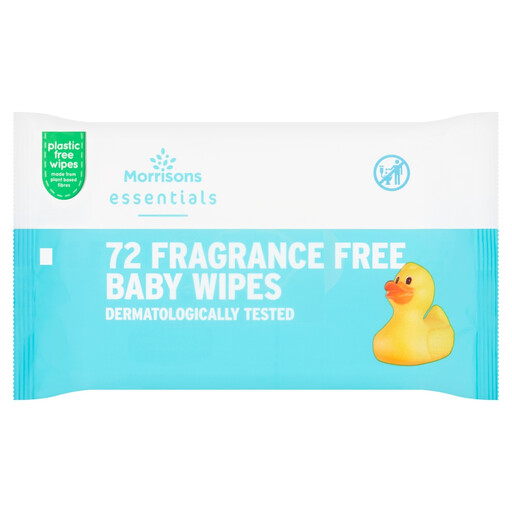
Why This Fits Their Persona: A straightforward 72-wipe pack for families starting a new nappy-changing routine or wanting a smaller supply before buying in bulk. It is suitable for children aged 0+.
The product description clearly states that it is fragrance-free and dermatologically tested, rather than relying only on broad “gentle” wording.
Fragrance-free formula; PEFC-certified fibre sourcing; resealable label.

Why This Fits Their Persona: Suitable for shoppers who prioritise a short ingredient list and want three 60-wipe packs for home, nursery or outings.
The listed formula contains 99.9% purified water and 0.1% grapefruit seed extract, with no added fragrance or alcohol stated in the description.
Two-ingredient formula as listed; plastic-free wipe material made from regenerated cellulose; Skin Health Alliance approval is stated by the product information.
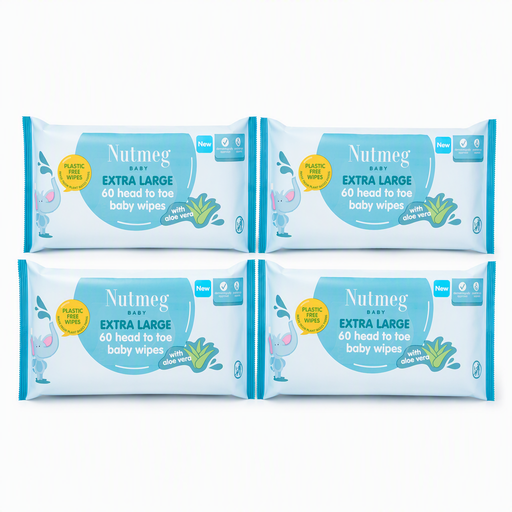
Why This Fits Their Persona: Designed for families who use wipes for nappy changes, hands, faces and larger clean-ups, with four packs and 240 XL sheets in total.
The XL format addresses the coverage problem, while the listed fragrance-free formula avoids relying on scent to signal cleanliness.
100% plastic-free, plant-based fibres; aloe vera listed; PEFC certification and Cruelty-Free International recognition stated.

Why This Fits Their Persona: A 960-wipe supply suits households that want to reduce repeat orders and keep packs across several rooms, changing bags or childcare locations.
The total count is clearly specified, and each pack contains 80 wipes. The product information also identifies the material as plastic-free plant fibre rather than leaving the construction vague.
Unscented formula; listed 99% purified water; three-times-thicker specification; OEKO-TEX certification reference provided.
We have compiled a complete, real-time list of products that fully satisfy these strict selection criteria and UK safety regulations.
Many products are labelled as suitable from birth or 0+ months, including several options listed above. However, “fragrance-free” alone does not guarantee suitability for every newborn. Read the ingredients, follow the packaging instructions and observe your baby’s skin when changing products.
There is no universal lifespan because it depends on the formulation, packaging and storage conditions. Resealable lids and labels help retain moisture, but an opened pack should be used according to the manufacturer’s guidance. If wipes become dry, discoloured or develop an unusual smell, discard them.
Plastic-free baby wipes avoid plastic in the wipe material, which may be useful for shoppers reducing single-use plastic. The overall environmental impact also depends on fibre sourcing, manufacturing, packaging and disposal. Look for specific information such as PEFC certification, plant-based fibre details and packaging recycling instructions rather than relying on “eco” wording alone.