
24/7 Customer Support

Free returns

Same-day & Next-day Delivery

Quality Guaranteed

Unlock Your Welcome Offers: FREE Delivery | Up to 80% OFF | Free 30-day JoyPlus trial
Download the APP
The right backpack should make daily carrying easier, not leave you with aching shoulders, a soaked laptop or a chaotic main compartment. Whether you need a laptop backpack for commuting, a travel backpack for weekends or a hiking backpack for multi-day routes, the product title alone rarely tells the full story.
Three common buying traps are worth checking before you order:
For everyday UK commuting, university or school, a 15–20-litre backpack often accommodates a laptop, documents, lunch and small personal items without excessive bulk. A multi-compartment backpack is useful when you regularly carry chargers, stationery, keys and water bottles.
For overnight trips, a 25–35-litre travel backpack offers more flexibility. An expandable backpack can be compact on ordinary days and provide additional room when carrying clothing or shopping. For camping or multi-day hiking, capacity around 40 litres gives more space for clothing, food and equipment, although the packed weight must also be considered.
Capacity is not the only measurement to check. Compare the stated dimensions with your laptop and the items you already carry. A slim work rucksack may suit an office commute better than a large outdoor design, even if both claim similar capacity.
A laptop compartment should be checked against the actual device dimensions rather than screen size alone. A 15.6-inch laptop backpack may not fit every 15.6-inch model if the computer has a wide bezel or protective case.
Look for:
Some backpacks include an external USB charging port. This is a pass-through feature, not a built-in power source, so you still need a compatible power bank and charging cable inside the bag.
For everyday rain, high-density nylon, polyester or Oxford fabric with a water-repellent coating can be practical. However, water-resistant, anti-splash and splashproof are not the same as fully waterproof construction. Seams, zips and openings can still allow moisture through.
For regular cycling or wet-weather commuting, assess the whole design:
Material weight also affects comfort. A lightweight backpack is easier to carry when your load is modest, while an alloy-framed hiking backpack may be more appropriate for heavier equipment because it helps transfer weight towards the hips.
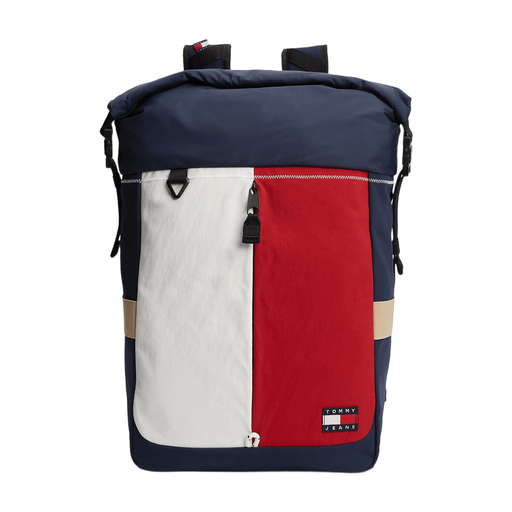
Why This Fits Their Persona: Its 16L capacity and 46.5cm height suit everyday commuting, study and light travel when you want a straightforward unisex backpack rather than a technical outdoor pack.
The listed 100% nylon construction and stated dimensions provide clearer information than relying on vague “large capacity” wording.
100% nylon textile; flap closure with fast-release clips; front easy-access zip pocket; adjustable shoulder straps.
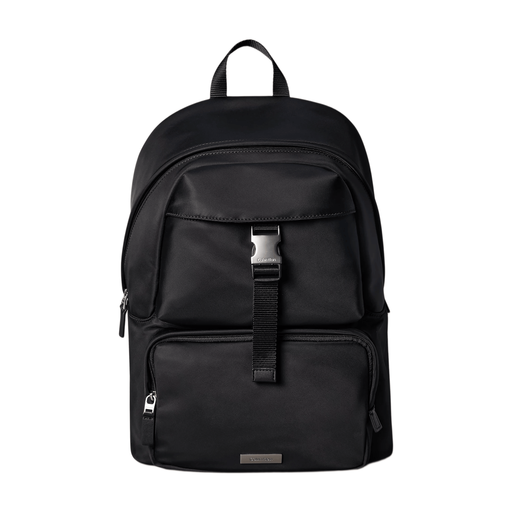
Why This Fits Their Persona: This compact black backpack fits an urban wardrobe and offers organised storage for daily essentials, office items and a laptop-sized device.
The product information specifies dimensions of 43 × 30 × 14cm and identifies the material as 100% recycled nylon, helping shoppers judge size and construction.
420gsm recycled nylon; full-zip main compartment; internal pockets; padded back panel and adjustable ergonomic shoulder straps.
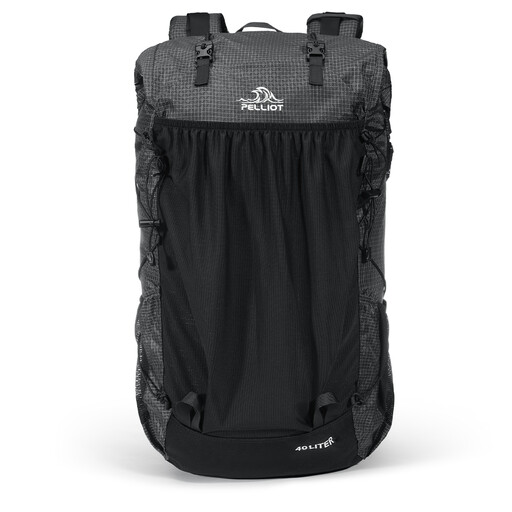
Why This Fits Their Persona: The 40L format is designed for camping and approximately two- to three-day treks, making it more suitable for outdoor equipment than a compact commuter backpack.
Its stated approximate 1.06kg weight and 11kg load range give useful guidance for assessing packed weight rather than judging capacity alone.
Built-in alloy support frame; adjustable S/M and L/XL torso sizing; hipbelt pockets; trekking pole loops and sleeping-pad straps.
A commuter backpack or work rucksack should prioritise laptop protection, quick access and a manageable profile. For cycling, consider a roll-top backpack with splash-resistant fabric and secure adjustment. A school backpack needs enough separation for books and technology without becoming unnecessarily heavy.
For travel, a carry-on backpack should be checked against the airline’s current cabin-bag dimensions before departure. Expandable designs such as the Beneunder LC183 expandable backpack can provide 10L of regular storage and up to 13L when expanded, while remaining compact for everyday use.
A roll-top option such as the Inateck 25L–30L backpack offers two access routes, a padded compartment for laptops up to 17 inches and space for an iPad, bottle and umbrella. Check the fit carefully before carrying a large laptop daily.
We have compiled a complete, real-time list of products that fully satisfy these strict selection criteria and UK safety regulations.
They can be suitable for light showers and short journeys, but water-resistant or splashproof fabric is not automatically waterproof. Keep sensitive electronics in an internal sleeve or separate protective pouch, particularly during prolonged rain.
A 15–20-litre backpack often works for a laptop, lunch and everyday items. If you carry gym clothing, shoes or work equipment, consider 25–30 litres, preferably with separate compartments to prevent the bag becoming difficult to organise.
Adjust both shoulder straps evenly, keep heavier items close to your back and avoid overloading. For hiking backpacks, measure torso length and adjust the waist belt so part of the load is supported around the hips rather than resting entirely on the shoulders.