Regular bagel-break users
If you usually toast cut bagel halves, check that the openings fit their thickness. A one-side bagel setting is relevant if you prefer more browning on the cut face than on the crust.


Choose slots that fit the thickness of your usual bagel halves; choose long slots as well if you regularly toast elongated bread. A dedicated one-side bagel setting matters more than length if you want to brown the cut face differently from the crust, while independent four-slot controls are worth considering when several people toast at once.
If you usually toast cut bagel halves, check that the openings fit their thickness. A one-side bagel setting is relevant if you prefer more browning on the cut face than on the crust.
If bagels share the toaster with sourdough or other long slices, check slot length as well as width. Which? notes that unusually shaped bread may not fit ordinary toaster slots.
If several people prepare snacks together, four slots can accommodate more portions. Independent controls let each pair of slots use a different browning setting on models that provide them.
Check the size of the bread you actually toast before deciding between long and conventional slots. Then consider whether one-side bagel browning or separate controls would change how you use the toaster.
| Concern | Buying check | Who this matters to |
|---|---|---|
| Bagel fit and browning | Check slot width against your bagel halves and look for an explicitly described one-side bagel setting if you want it. | If bagels are my usual afternoon snack, I want thick halves to fit without forcing them and the cut face browned to my liking. Around 42% of consumers put bagel fit and browning first. |
| Other bread shapes | Compare the length and thickness of your usual bread with published slot dimensions where available; slice count alone does not establish fit. | When I alternate bagels with long bakery slices, I need the bread to sit within the heated slot rather than protrude. For around 33% of consumers, fitting varied bread shapes is the primary concern. |
| Shared use | Check the number of slots and whether each pair has independent browning controls. | If several of us toast during the same break, I want enough room for the portions and separate shade choices. Shared capacity and control come first for around 25% of consumers. |
Two- and four-slice descriptions tell you capacity, not the length or width of each opening. Which? notes that longer or wider bread can be a poor fit for ordinary slots.
Compare your usual bagels and bread with stated slot dimensions. Where dimensions are unavailable, check which bread types the manufacturer explicitly describes as suitable.
Slot length and a bagel programme address different needs: fitting the food does not establish how its two faces will brown.
If cut-face browning matters to you, look for a programme that the manufacturer explicitly describes as browning one side.
A slot can be long enough for a bagel half but too narrow for comfortable insertion or removal. Smeg publishes a 36 mm slot width for the TSF02, while Russell Hobbs describes the Attentiv openings as wider.
Check width separately from length rather than forcing a thick half into a narrow opening.
Bagel crumbs need routine attention. Electrical Safety First advises cleaning a toaster regularly while it is unplugged and checking for a UK three-pin plug and fuse.
Check for an accessible crumb tray and confirm the supplied plug arrangement before buying; unplug the toaster before cleaning it.
The Luna and Attentiv illustrate different ways to accommodate non-standard bread.
The TSF02 combines two long compartments with a published slot width and a bagel programme.
The Distinta X is a four-slot option for preparing portions with different shade preferences.
These choices include long-slot models for bagels and longer bread, alongside four-slice models worth considering for shared breaks. Check the fit of your usual bagels and whether a one-side bagel setting is offered before choosing; a wide-slot description alone does not establish either point.
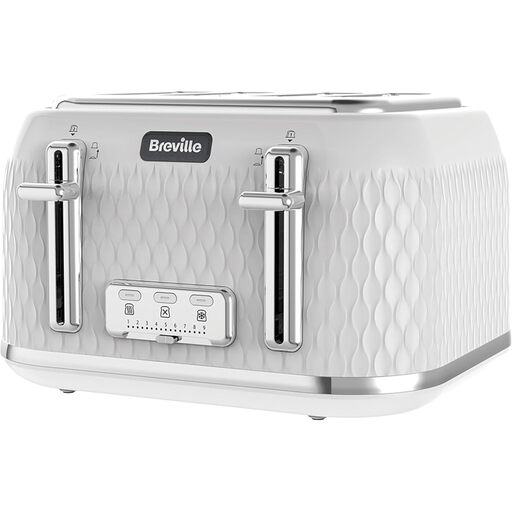 No image available
Consider this four-slice model if you prepare several bagel halves during a shared break.
The product title identifies wide slots and a high-lift feature. Check the slot dimensions against your bagels, and confirm whether it has the one-side setting you want and a suitable UK plug and fuse.
 No image available
This long-slot option is relevant if you toast bagels as well as longer slices of bread.
Its title specifies extra-wide slots, five bread types, a stainless-steel housing and 1450 W input power. Check the actual opening dimensions, the available bagel settings and the supplied UK plug and fuse.
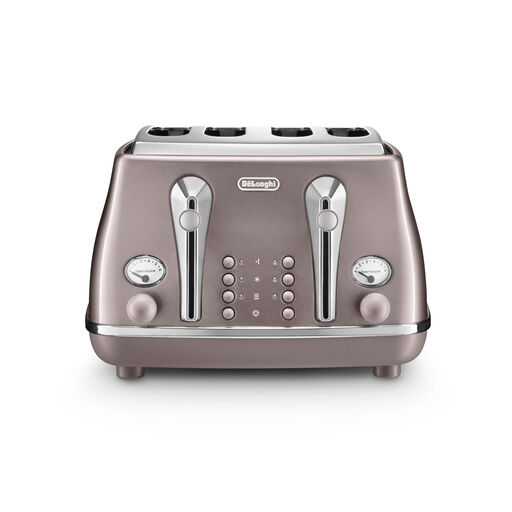 No image available
Consider this four-slice model for a shared break, provided its openings fit the bagel halves you use.
Do not rely on slice count to establish slot length or width. Check those dimensions, any one-side bagel setting and the supplied UK plug and fuse.
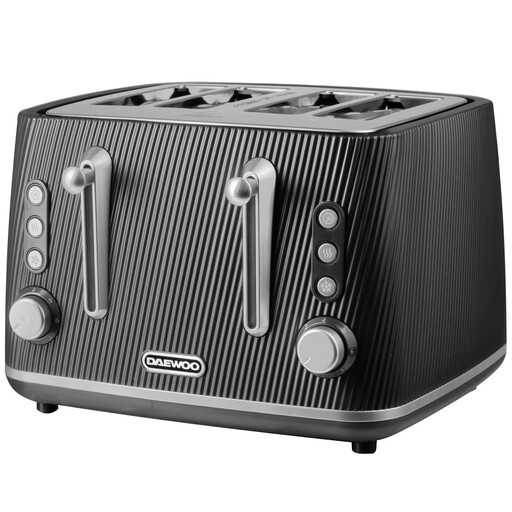 No image available
The wide-slot description makes this a model to check if thicker bagel halves are your main concern.
Its title also specifies four-slice capacity. If you toast long bakery bread, check slot length separately; confirm the bagel settings and supplied UK plug and fuse too.
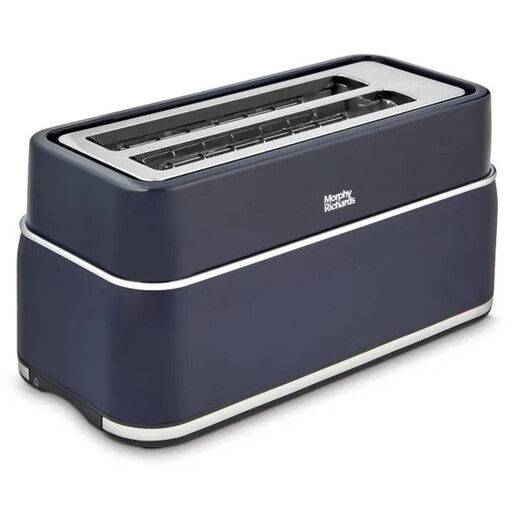 No image available
Consider this model if longer slices are part of your afternoon-break routine alongside bagels.
Its title specifies long slots and variable browning control. Check slot width for thick bagel halves, whether a one-side bagel setting is offered and the supplied UK plug and fuse.
No. Length helps accommodate longer bread or two halves placed side by side, but thick bagels also need enough slot width. If you want the cut face browned differently from the crust, check for an explicitly described one-side bagel setting.
Two long slots are worth considering when you regularly toast elongated bread; four slots with independent controls suit simultaneous portions with different shade preferences. Four-slot capacity alone does not establish that long bread will fit, so compare dimensions where available.
Unplug the toaster before cleaning it and empty its crumb tray regularly. Electrical Safety First advises regular cleaning while the appliance is unplugged; follow the model’s instructions and do not put water or cleaner inside it.
Check the plug supplied with the toaster. Electrical Safety First advises choosing a toaster with a UK three-pin plug and fuse; confirm the product’s plug arrangement rather than assuming it from the listing’s appearance.