Parents planning several holiday lunches
A four-pack keeps full-size cans sealed for separate meals. If beans are already part of several planned lunches, a pack with more cans may be practical if it fits your cupboard.


A four-pack of roughly 410–420g cans gives you separate full-size cans for lunches planned one at a time. Consider a larger multipack if beans will feature regularly and you have cupboard space; for smaller portions, check the individual can size so you need not open more than a lunch requires. Compare the nutrition panel and ingredients on the exact recipe if sugar, salt or sweeteners affect your choice.
A four-pack keeps full-size cans sealed for separate meals. If beans are already part of several planned lunches, a pack with more cans may be practical if it fits your cupboard.
A reduced-sugar or no-added-sugar name describes one aspect of a recipe. Check the stated serving size, nutrition panel and ingredients on the pack you intend to use.
One lunch may need only a small portion while another serves several people. The size of each can matters as well as the number of cans in the pack.
Start with how many lunches will include beans, then choose a can size and recipe that fit those meals.
| Priority | What to check | Your needs |
|---|---|---|
| Pack count | Count the separately sealed cans and the lunches you expect to use them for. Four-can packs and larger six-, eight- and twelve-can formats appear in the listed ranges. | Our lunch plans vary, so four unopened cans give us meals to use on different days. If beans are on the menu more often, I can consider storing a larger pack. |
| Can size | Check the weight of each can, not just the total pack weight. Full-size four-packs in the listed ranges contain cans of around 410–420g. | Some lunches are for one person and others are shared. I want a can size that suits what we are likely to serve at one meal. |
| Recipe | Compare nutrition using the same basis, such as per 100g, and check the pack’s stated serving size. Read the ingredients when sweeteners or allergens matter. | For a lower-sugar or lower-salt recipe, I need to compare the exact labels rather than assume those descriptions mean the same thing. |
| Opened cans | Read the pack’s instructions for storing opened contents. The Food Standards Agency’s Kitchen Life 2 literature review cites guidance to refrigerate leftovers within two hours. | If a full-size can leaves beans after lunch, we need to be able to refrigerate them promptly and follow that product’s storage instructions. |
Recipes can differ in salt, sugar and sweeteners, even when their front-of-pack descriptions sound similar.
Compare the nutrition panel on the same serving basis and read the ingredients list on the exact pack, particularly if an allergy or a preference about sweeteners affects your choice.
An unopened can and leftover beans have different storage requirements. The Food Standards Agency’s Kitchen Life 2 literature review cites guidance to refrigerate leftovers within two hours.
Choose a can size that suits the lunch where possible. If beans remain, follow the pack’s instructions for covering, refrigerating and using the opened contents.
These ranges illustrate different can counts and recipes; check the particular pack rather than treating every product under a brand as interchangeable.
Heinz appears in the listed four-, six-, eight- and twelve-can formats, including No Added Sugar options.
Tesco’s own-label range includes a Reduced Sugar & Salt 4 x 420g pack.
Sainsbury’s lists Heinz 4 x 415g and Branston 4 x 410g baked-bean packs.
Asda lists its own Reduced Salt & No Added Sugar 4 x 410g pack alongside branded four-packs.
M&S lists baked beans in a 1.6kg Only 7 Ingredients format and a 390g No Added Sugar format.
Waitrose & Partners lists Heinz 4 x 415g and Heinz No Added Sugar 6 x 415g packs.
These Joybuy options include full-size four-can packs and a six-can pack for lunches spread across the school holidays, with standard and reduced-sugar-and-salt recipes.
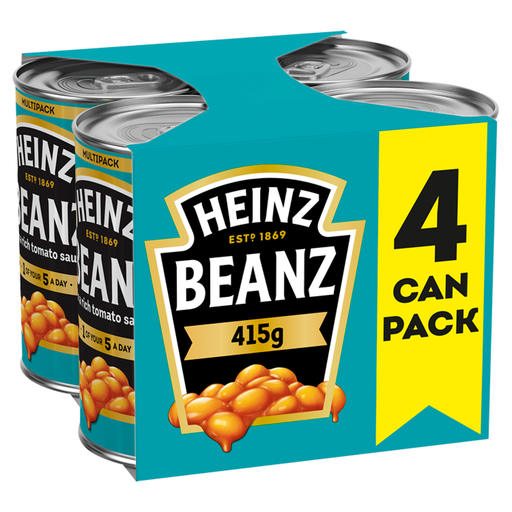 No image available
Four separate 415g cans suit lunches planned meal by meal. Compare the ingredients and nutrition panel if the standard tomato-sauce recipe needs to meet a particular household preference.
 No image available
Six separate 410g cans are an option when beans feature in several planned lunches and there is cupboard space for the larger pack. Check the ingredients and nutrition panel for this recipe.
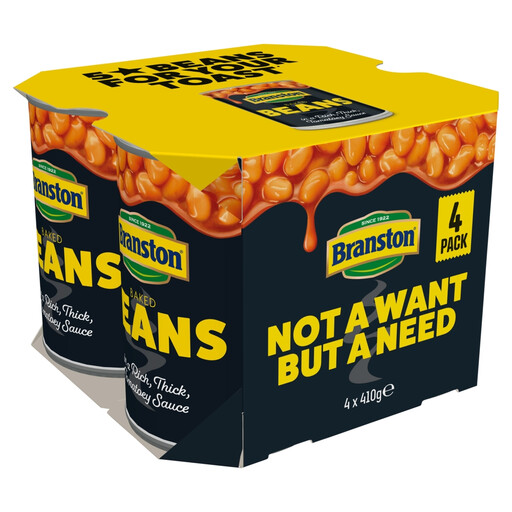 No image available
Four separate 410g cans let you keep the remaining cans sealed when holiday lunch plans change. Use the exact pack’s ingredients and nutrition information when comparing recipes.
 No image available
This reduced-sugar-and-salt recipe comes in four separate 410g cans. Its listed ingredients include steviol glycosides, so check the exact label if your household avoids sweeteners.
Choose four separately sealed cans if lunch plans are uncertain; consider a larger pack if you expect to use beans regularly and have room to store it. Check each can’s size too, because pack count alone does not tell you how much you will open for one lunch.
No. It does not describe the pack’s salt content or full ingredients list. Compare nutrition on the same stated basis and check the ingredients if sweeteners matter to your household.
Use figures given on the same basis, such as per 100g, then check how much the pack calls a serving. A half-can figure and a per-100g figure do not describe the same quantity of food.
Read the ingredients list on the exact pack, especially when changing product or recipe. GOV.UK’s guidance on prepacked foods says the label must show the food’s name and ingredients list.
Follow the pack’s instructions for opened contents and refrigerate leftovers promptly in a suitable covered container. The Food Standards Agency’s Kitchen Life 2 literature review cites guidance to refrigerate leftovers within two hours; check the product label for how long its opened contents may be kept.