Solo desk-lunch shoppers
A compact tin can avoid a second serving to store. Sainsbury's labels its 215g tin as serving one, while M&S describes its 220g tin as a small single-serve format.


For a solo desk lunch, a 200–220g tin is a practical starting point if you do not want leftovers. A 400–420g tin makes more sense when you can share it or follow its instructions for storing the remainder. If sugar or salt matters to your choice, compare the nutrition panels on the same quantity basis and check the ingredients of the exact recipe.
The useful distinction for a desk lunch is whether one opened tin needs to cover one meal or more.
A compact tin can avoid a second serving to store. Sainsbury's labels its 215g tin as serving one, while M&S describes its 220g tin as a small single-serve format.
A standard tin or multipack may suit you if you can share each tin or store an opened portion as its label directs. Check the serving count rather than treating the whole tin as one lunch.
If sugar, salt or sweeteners affect your choice, compare the nutrition and ingredients panels of the exact tins. A reduced-sugar or no-added-sugar description does not replace those checks.
Choose a portion you can use, check how you will prepare it at work, then compare recipes using the same nutrition basis.
| Priority | What to check | Your needs |
|---|---|---|
| Portion size | Read the tin weight and stated serving count. Sainsbury's lists its 215g tin as serving one; ASDA Groceries suggests two servings for its 410g reduced-salt recipe. | I am eating alone and do not want to store an opened portion, so a compact tin may fit this lunch better. |
| Preparation | Check the exact tin's heating instructions against the facilities and permitted methods at work. Plan what, if anything, you will serve alongside it. | Can I prepare the beans with the equipment available during my break? |
| Sugar and salt | Compare values per 100g or for equivalent portions, not just recipe names. ASDA Groceries lists 3.1g sugars and 0.70g salt per half-can for its 410g reduced-salt, no-added-sugar tin; its Heinz 415g listing gives 8.9g sugars and 1.3g salt per half-can. Those labelled half-cans differ slightly in weight. | If these values matter to me, I want to compare the amount I expect to eat and check whether the recipe contains a sweetener. |
| Opened-tin storage | Read the product's instructions for refrigerating and using opened contents. An unopened tin's cupboard-storage instructions do not cover the remainder after opening. | I can use a larger tin if I have a way to handle the second portion as its label directs. |
| Ingredients | Read the current ingredients and nutrition panel on the tin you receive. Recipes and allergen information can change, as Tesco Groceries and M&S advise on their product pages. | I want to know what is in this particular recipe, rather than relying on the range name or an earlier listing. |
ASDA Groceries presents its 410g reduced-salt tin as two servings, whereas Sainsbury's labels its 215g tin as serving one.
Choose a compact tin when you want one portion, or check how you will share and store the rest of a larger tin.
An opened portion needs storage that follows the tin's instructions; otherwise, it may go unused.
Standard and reduced-sugar-and-salt recipes can carry different labelled values. A no-added-sugar description also does not, by itself, answer whether a recipe contains sweeteners.
Compare nutrition on an equivalent quantity basis and read the ingredients of the exact tin.
Ingredients, nutrition and allergen information can change. Tesco Groceries also marked its cited 220g reduced-sugar-and-salt beans out of stock when listed.
Check the current listing when shopping and read the label on the product you receive.
These retailer-listed examples show the formats and recipes you may encounter; check the exact product rather than applying one tin's details to a whole brand.
ASDA Groceries lists Heinz baked beans in both 200g and 415g tins.
Tesco Groceries lists own-label baked beans alongside other brands, including a 220g reduced-sugar-and-salt recipe.
Sainsbury's lists a 215g tin labelled as serving one and a four-pack of 400g tins.
ASDA Groceries lists standard 410g beans and a 410g reduced-salt, no-added-sugar recipe.
M&S describes its Only 7 Ingredients baked beans in a 220g small single-serve tin.
Waitrose & Partners lists 420g Essential standard beans and a 420g Essential reduced-salt-and-sugar recipe.
These options include a compact tin, larger tins and multipacks, and a reduced-sugar-and-salt recipe. Match the tin size to your lunch plans and check the instructions for preparing and storing the exact product.
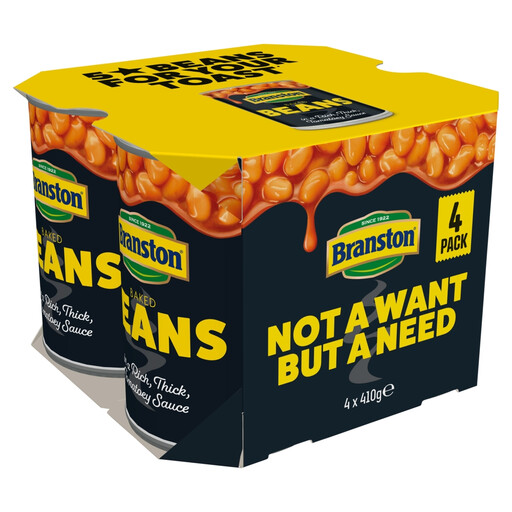 No image available
Four 410g tins suit lunches where you can share a tin or plan for the remainder. Check the on-pack heating and opened-tin storage instructions before preparing a desk lunch.
 No image available
The 220g tin is a compact option to consider for one lunch, though its size alone does not establish a stated serving count. Check its preparation instructions against the facilities at work.
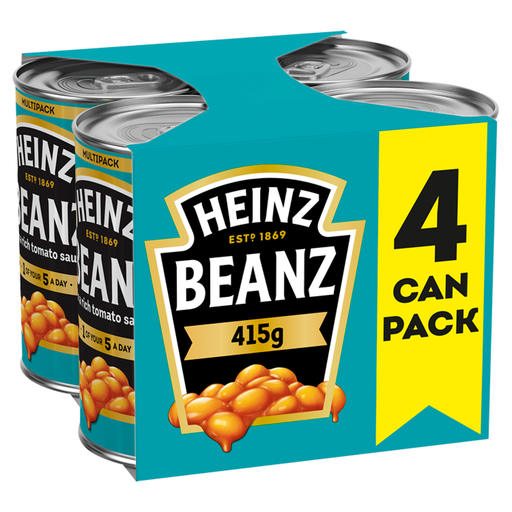 No image available
This pack contains four 415g tins, so plan how you will use each opened tin. Follow its preparation directions and instructions for transferring and refrigerating any remainder.
 No image available
This reduced-sugar-and-salt recipe comes in four 410g tins. Compare its current nutrition and ingredients panels with any alternative you are considering, and check how you will prepare and store an opened tin.
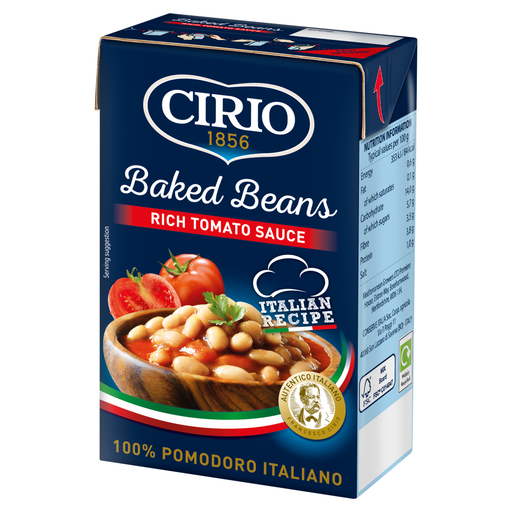 No image available
The 500g tin calls for a portion plan if you are eating alone; its weight does not establish a single-lunch serving. Check the preparation instructions and how to store any remainder before taking it to work.
It can work if you plan for the remainder, but do not assume the whole tin is one serving. ASDA Groceries suggests two servings for its cited 410g tin; if you cannot share or store an opened portion as directed, consider a compact tin instead.
No. Check the ingredients panel of the particular recipe if sweeteners matter to you; the phrase describes added sugar, not every ingredient that can affect flavour.
Follow that product's instructions for storing opened contents and using them within its stated period. Do not apply the unopened tin's cupboard-storage directions to leftovers.
Use it to compare products while shopping, then read the tin you receive. Tesco Groceries and M&S advise that product ingredients, nutrition and allergen information can change.
Check the portion, preparation method and what you want to serve with the beans. The NHS Eatwell Guide identifies pulses such as beans as sources of fibre and protein, but the nutrition values for your lunch depend on the exact tin and anything you add.