What should you check?
Decide how much of a tin you can use at lunch, then compare recipes and work out how you will prepare and store the beans.
| Priority |
What to check |
Your needs |
| Tin size |
Compare the tin weight with its stated servings. For a larger tin, plan how you will use or refrigerate any remainder. |
A smaller tin suits me if I am eating alone and cannot keep an opened portion after lunch. If I can share or store the remainder, a full-size tin is practical. |
| Lunch plan |
Check the stated portion before choosing what else to pack. Consider whether you can carry and prepare any accompanying food. |
I want beans as part of a lunch with toast, a jacket potato, rice or vegetables, rather than assuming a tin is the whole meal. |
| Recipe |
Compare sugars and salt using the same serving basis, then read the ingredients. ASDA lists 3.1g sugars and 0.70g salt per half-can for its reduced-salt-and-no-added-sugar 410g beans, against 8.6g and 0.96g for its standard 410g beans; the reduced recipe lists steviol glycosides. |
If the recipe matters to me, I will compare the actual labels. I would not assume that two standard or reduced tins have identical ingredients. |
| Preparation |
Read the tin’s heating instructions and check that suitable equipment and cookware will be available. Follow the label’s directions for any opened remainder. |
My lunch needs to fit the time and facilities I have between lectures, including somewhere suitable to keep leftovers if I buy a larger tin. |
Brand and range references
Ranges include different tin sizes and recipes, so use the specific product label—not the brand name alone—to make a comparison.
Tesco / Stockwell & Co
Tesco lists a 420g Stockwell & Co baked-bean tin alongside its own baked-bean products.
- The 420g Stockwell & Co format is relevant if you can use a full-size tin.
- Tesco advises checking the current physical label because ingredients, nutrition and allergens can change.
Sainsbury’s
Sainsbury’s lists its own-label baked beans in a 4 × 400g pack.
- Its listed nutrition panel uses a half-can serving, which helps with portion comparisons.
- The listed salt value is 1.16g per half-can; check the label rather than treating it as equivalent to a reduced-salt recipe.
ASDA / Just Essentials
ASDA lists 410g Just Essentials and standard baked beans, as well as a 410g reduced-salt-and-no-added-sugar recipe.
- The standard and reduced-recipe listings give per-half-can figures that can be compared on the same basis.
- The reduced recipe lists steviol glycosides; check the ingredients if that difference matters to you.
M&S
M&S lists standard baked beans and an Only 7 Ingredients baked-bean recipe.
- M&S lists the seven ingredients as haricot beans, tomatoes, water, agave syrup, cornflour, salt and paprika.
- Check the particular tin’s weight, serving information and current label before choosing it for lunch.
Waitrose / Essential
Waitrose lists Essential baked beans in both 220g and 420g tins.
- The two listed sizes offer different ways to plan a one-person lunch or a lunch with a remainder.
- Check the serving guidance for the size you choose; tin weight alone does not set your portion.
Heinz
Heinz is a branded baked-bean option; Waitrose lists a 200g single-serve tin.
- The listed 200g format may suit a lunch where carrying a smaller tin matters.
- Compare the exact recipe, ingredients and serving guidance rather than assuming every Heinz format is the same.
Joybuy baked-bean options
These options cover full-size multipacks, a smaller tin and a reduced-sugar-and-salt recipe for planning a lecture lunch. Check each product’s serving and preparation information against your facilities.
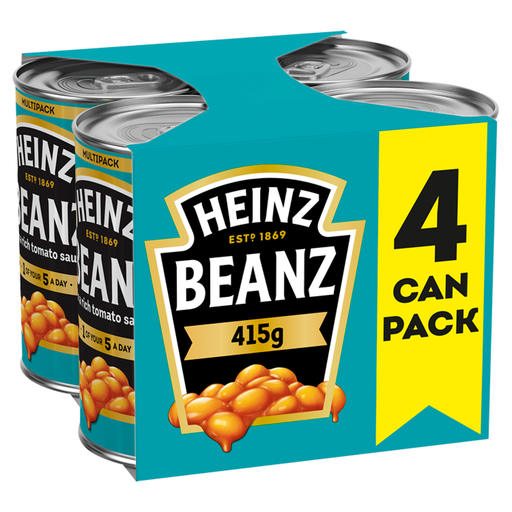 Image unavailable
HEINZ Baked Beans in Tomato Sauce 4 × 415g
Four full-size tins suit lunches planned across several days or shared portions. The product information includes hob and microwave preparation guidance; plan how to store any unused beans from an opened 415g tin.
View on Joybuy
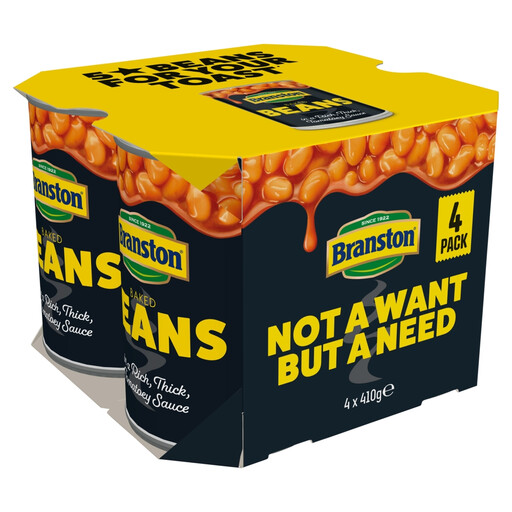 Image unavailable
Branston Baked Beans 4 × 410g
This four-tin pack fits planned lunches when you can prepare and portion a 410g tin. Its product information includes hob and microwave instructions and advises refrigerating opened leftovers and using them within two days.
View on Joybuy
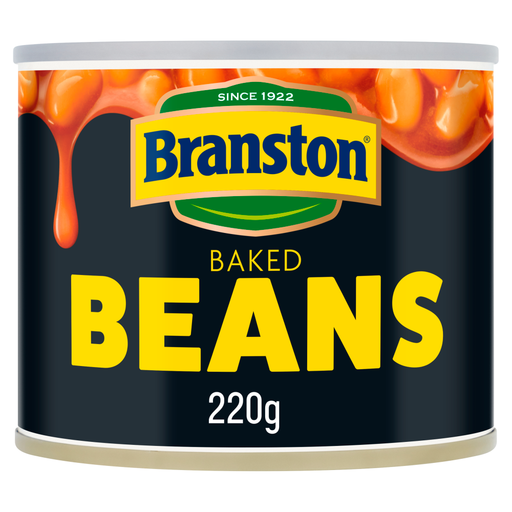 Image unavailable
Branston Baked Beans in Tomato Sauce 220g
The 220g tin is an option when a smaller pack is easier to carry or portion between lectures. Check its label for the serving guidance and heating method you intend to use.
View on Joybuy
 Image unavailable
Branston Reduced Sugar & Salt Baked Beans 4 × 410g
This four-tin pack is for comparing a reduced-sugar-and-salt recipe with standard beans. Its product information gives nutrition per half-can and lists steviol glycosides; check the label’s preparation and opened-tin storage directions.
View on Joybuy
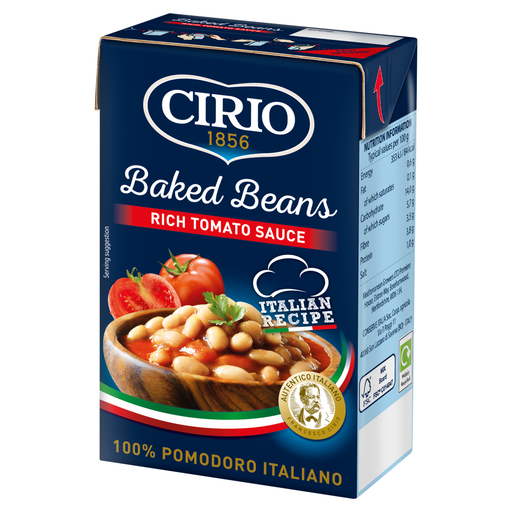 Image unavailable
Cirio Baked Beans 500g
The 500g tin is an option when you can share the beans or keep a remainder for another meal. Check the serving, heating and storage directions before fitting it around a lecture timetable.
View on Joybuy
Questions about lecture lunches
Is a 400g–420g tin one lunch portion?
Not necessarily: the cited ASDA 410g tins and Sainsbury’s 400g tins state two servings per tin, with nutrition shown per half-can. Use the particular tin’s serving guidance, and choose a smaller format or plan storage for the remainder if you will not use the whole tin.
Should I choose a reduced-sugar-and-salt recipe?
Choose it if you prefer that recipe after comparing the labels on the same serving basis. ASDA lists 3.1g sugars and 0.70g salt per half-can for its reduced-salt-and-no-added-sugar 410g tin, compared with 8.6g sugars and 0.96g for its standard 410g tin; the reduced recipe also lists steviol glycosides.
Can I use an online listing to check ingredients and allergens?
Use it to compare products while shopping, but read the physical label before eating. Tesco advises that formulations may change, including ingredients, nutrition and allergens.
What else can I pack with baked beans?
Toast, a jacket potato, rice or vegetables are options if you can carry and prepare them between lectures. Check the bean tin’s stated portion and heating instructions so the meal fits the equipment and time you have.


