Two-person households sharing a tin
A 400g–420g tin may fit a meal for two. Check the pack’s suggested servings against how much you actually put on each plate.


For two people sharing baked beans, a 400g–420g tin is a practical starting point if you will use it all; a 220g tin may leave less to store after a solo meal. Compare the declared salt, sugars and ingredients if considering a reduced recipe, and choose a multipack for planned repeat use rather than assuming it solves leftovers from an opened tin.
A 400g–420g tin may fit a meal for two. Check the pack’s suggested servings against how much you actually put on each plate.
A 200g–220g tin offers a smaller amount to open at once. It is worth considering when you regularly leave part of a larger tin unused.
If salt, sugars or particular ingredients matter to you, compare the figures and ingredient lists on the exact tins you are choosing between.
Start with the amount you will use in one meal, then compare recipes and plan for any remainder before choosing a multipack.
| Priority | What to check | Your needs |
|---|---|---|
| Tin size | Compare net weight and suggested servings. Check whether an opened remainder fits the pack’s storage instructions. | If we share a tin, a 400g–420g format may suit one meal. On my own, I would consider a smaller tin if I seldom use leftovers. |
| Salt and sugars | Compare the same measure, such as per 100g or per serving, and read what a reduced claim is compared with. Sainsbury’s describes its reduced recipe as 30% lower in both sugar and salt than its standard baked beans; Asda describes its reduced-salt, no-added-sugar recipe as having 60% less sugar and 30% less salt than a standard equivalent. | I want to compare the amount I would actually eat, rather than treating a reduced claim as meaning the tin contains no salt. |
| Other nutrition | Compare fibre and protein on the same per-100g or per-serving basis. Figures can differ between recipes. | If beans are part of my meal, I want the nutrition figures for the particular tin I will serve. |
| Ingredients | Read the current pack’s ingredients, allergen information and any dietary statement. Check a reduced recipe’s ingredient list for sweeteners if that affects your choice. | For a dietary requirement, I need to check this pack rather than assume another baked-bean recipe has the same ingredients. |
| Multipacks | Check the number and size of individual tins, cupboard space and the dates on the pack. Follow the storage instructions once a tin is opened. | Several unopened tins suit me only if I use beans regularly; buying more tins does not change what happens to leftovers from one can. |
A reduced claim compares one recipe with another; the reduced baked-bean recipes described by Sainsbury’s and Asda still contain salt.
Compare salt per 100g and for the portion you expect to eat, and read the ingredient list alongside the front-of-pack wording.
Unused beans need to be stored according to the pack’s after-opening directions. Tesco’s baked-bean listing says to transfer them to a non-metallic container, cover, refrigerate and consume within two days.
Plan another use before opening the tin, and follow the directions printed on your pack.
Standard and reduced recipes, as well as products from different brands, need to be checked separately for ingredients and allergen information.
Read the physical pack when choosing for an allergy or another dietary requirement, including after a recipe or pack-size change.
A branded baked-bean option; the Waitrose listing identifies a 415g standard tin.
Tesco lists a 420g no-added-sugar baked-bean tin.
Its own-label range includes a standard 400g tin and a reduced-sugar-and-salt recipe.
Asda lists 410g Just Essentials, standard and reduced-salt, no-added-sugar baked-bean tins.
The Only 7 Ingredients baked beans come in a 220g small tin.
The Essential range includes a 420g standard tin and a reduced-salt-and-sugar recipe.
These tins cover reduced-recipe and standard multipacks for repeat use, alongside a smaller 220g can for meals that call for less at once.
 No image available
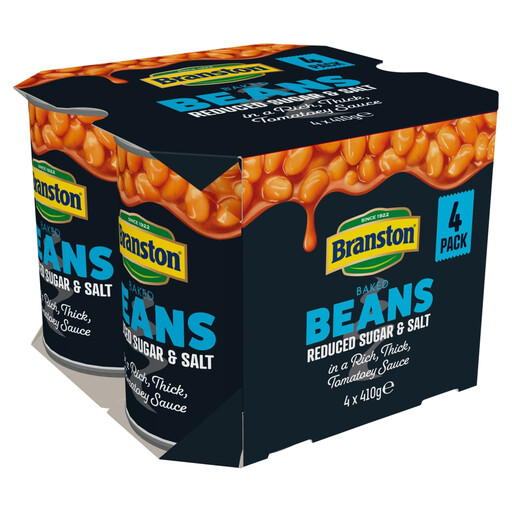
Four separate tins suit planned repeat meals. Branston describes this recipe as reduced in sugar and salt compared with its standard beans; check the ingredient list if sweeteners matter to you, and follow the pack’s directions for any opened remainder.
 No image available
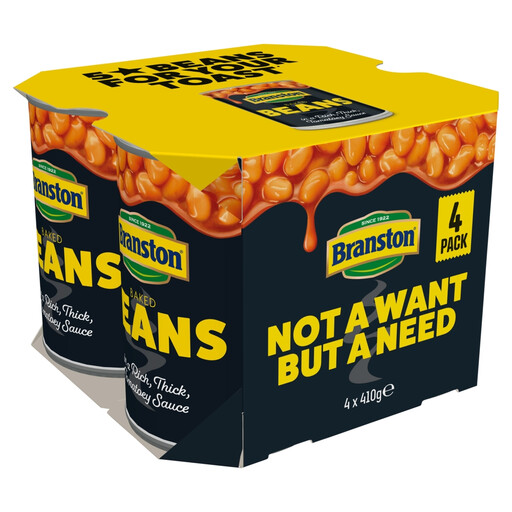
Four individual 410g tins can be opened across separate meals. For leftovers from an opened tin, the product directions say to transfer the beans to a container, refrigerate and use within two days.
 No image available
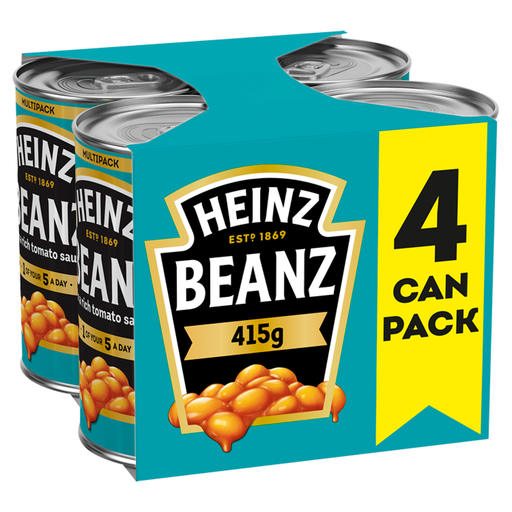
Four separate 415g tins suit households planning several baked-bean meals. The pack format does not remove the need to store any beans left after opening a tin according to its directions.
 No image available
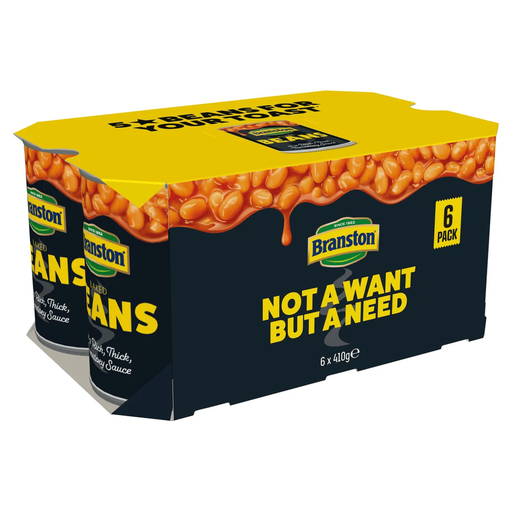
Six individual tins allow for repeat meals when the cupboard space and intended use fit. Each opened 410g tin still needs its own leftover plan; follow the storage directions on the pack.
 No image available
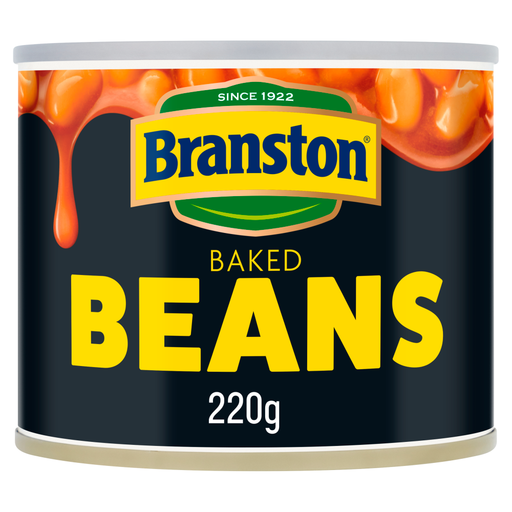
The 220g tin offers less to open than the 410g–415g formats here, which may suit a smaller meal. It is not necessarily one serving; store any remainder according to the pack’s after-opening directions.
It can be: the checked Asda and Sainsbury’s standard tins suggest two servings. Compare that suggestion with whether beans will be a side dish or a larger part of your meal.
Follow the directions on that pack. Tesco’s no-added-sugar baked-bean listing says to move unused contents to a non-metallic container, cover and refrigerate them, then consume them within two days.
No. A reduced claim describes a comparison with another recipe, not the absence of salt. Read the salt figure per 100g and for the portion you intend to eat.
No. Check the current physical pack’s ingredients, allergen information and dietary statements for the exact product, particularly when switching recipes or pack sizes.
No. GOV.UK explains that a use-by date relates to food safety, while a best-before date relates to quality. Check which date appears on the pack and follow its storage instructions, including those for after opening.