Following a one-tin recipe
If a bake specifies a 400g tin, you need to keep the amount of beans and sauce close to that measure. A Marks & Spencer baked-bean bake, for example, uses one 400g tin for four servings.


For a bake calling for one 400g tin, start with a 400g tin of baked beans in tomato sauce; a 410–420g tin is close in quantity, but check the sauce and seasoning before it goes into the dish. A 220g tin suits a smaller batch or a recipe you plan to scale, rather than a straight swap for the full tin.
If a bake specifies a 400g tin, you need to keep the amount of beans and sauce close to that measure. A Marks & Spencer baked-bean bake, for example, uses one 400g tin for four servings.
A small tin may suit a topping or a deliberately scaled-down bake. Marks & Spencer describes its 220g tin as a small single-serve format, not the same quantity as a 400g recipe tin.
If the dish already contains salty or sweet ingredients, or will be shared with someone who has dietary restrictions, compare the exact tin’s ingredients, nutrition panel and allergen statement before mixing it in.
Match the recipe quantity first, then consider the sauce, the people eating the dish and any beans left after opening.
| Priority | What to check | Your needs |
|---|---|---|
| Tin size | Compare the tin’s net weight with the recipe amount. Marks & Spencer’s four-serving baked-bean bake specifies one 400g tin; its small single-serve beans come in a 220g tin. | I’m following a one-tin bake, so I need enough beans and sauce for the stated recipe rather than a smaller portion. |
| Sauce and seasoning | Read the ingredient list and compare sugar and salt per 100g on the tins you are considering. Tesco Groceries describes Branston’s reduced sugar-and-salt version as containing 30% less of both than its standard beans; that comparison does not establish that every other ingredient is identical. | If the bake already includes strongly flavoured ingredients, I want to choose the bean sauce with those ingredients in mind. |
| Dietary suitability | Check the exact pack’s dietary and allergen statements, not just a range name. Recheck them when buying for someone with an allergy. | Before the beans go into a dish for other people, I need to know whether that particular tin suits everyone eating it. |
| Leftovers | Follow the opened-pack instructions. Sainsbury’s directs customers to transfer its 400g beans to a non-metallic container, refrigerate them and use them within two days. | When I use only part of a tin, I want a plan for the remainder rather than leaving it in the opened can. |
A 220g small tin provides much less mixture than the 400g tin specified in Marks & Spencer’s four-serving bake, so the recipe quantity changes.
For a 400g one-tin recipe, use a tin close to that size or deliberately scale the other ingredients for a smaller batch.
A similar weight does not tell you whether the ingredient list or seasoning matches the sauce you had in mind.
Read the exact tin’s ingredients and nutrition panel, especially when the bake also contains salty or sweet additions.
Tesco Groceries states that Branston’s reduced sugar-and-salt beans contain 30% less sugar and salt than its standard beans. That statement alone does not describe the rest of the formulation.
Compare the two ingredient lists before substituting one for the other, and assess the seasoning of the whole dish.
Sainsbury’s instructions for its 400g beans call for refrigeration after opening and use within two days.
Transfer any remainder to a suitable container and follow the storage instruction on the tin you bought.
These examples show how single-tin sizes and formulations differ; check the current pack for the product you choose.
Waitrose & Partners lists Heinz Baked Beans in a 415g tin.
Sainsbury’s lists a 400g tin of baked beans in tomato sauce.
Waitrose & Partners lists essential baked beans in tomato sauce in a 420g tin containing two servings.
Marks & Spencer describes its 220g baked beans as a small single-serve tin.
Tesco Groceries lists Branston baked beans in tomato sauce in a 410g tin, alongside a reduced sugar-and-salt version.
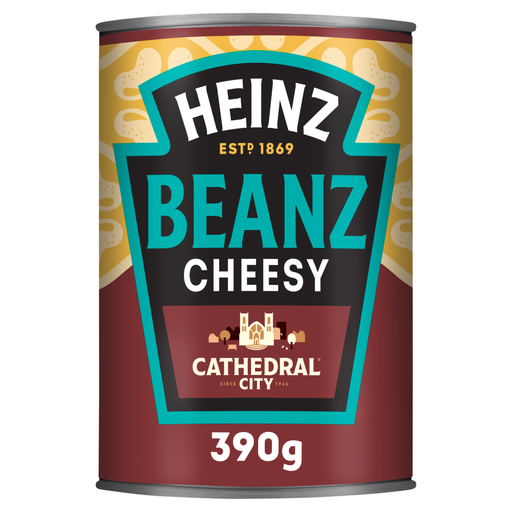
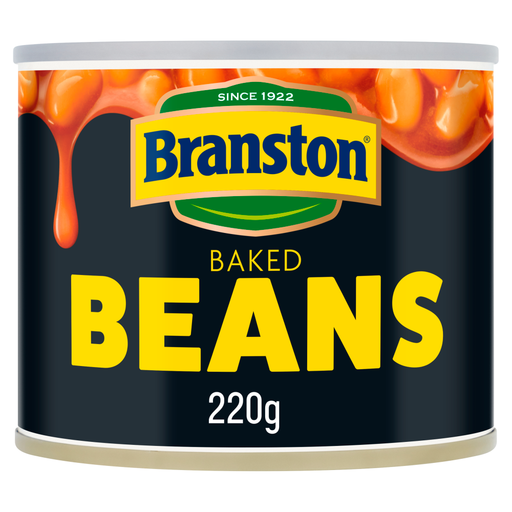
These two single tins serve different baking plans: a 390g Cheezy variation for a near-400g recipe, and a 220g tomato-sauce tin for a smaller batch.
 No image available
For a bake where the Cheezy variation fits the other ingredients, this 390g tin is close in quantity to a 400g recipe measure. Check its ingredient and allergen label before using it in a shared dish.
 No image available
This 220g tin suits a smaller bake or a recipe you intend to scale down. It is not a like-for-like quantity replacement when the recipe calls for a 400g tin.
For a flexible bake, those tins are close in weight to the 400g tin used in Marks & Spencer’s four-serving baked-bean bake. Check the dish’s moisture and seasoning before baking; do not assume the substitution works unchanged in a recipe with precise liquid ratios.
Not as an equal-quantity swap. Marks & Spencer calls its 220g beans a small single-serve tin; if a recipe specifies 400g, scale the other ingredients for a smaller bake or choose a tin closer to the stated amount.
Do not assume so. Tesco Groceries says Branston’s reduced version has 30% less sugar and salt than its standard beans, but that comparison does not establish that the remaining ingredients are identical. Check the exact labels before changing the recipe.
Follow that product’s opened-pack instructions. Sainsbury’s directs customers to transfer unused beans from its 400g tin to a non-metallic container, refrigerate them and use them within two days.