For a bake-sale recipe calling for one conventional tin, start with a 400g to 420g tin of baked beans in tomato sauce and check the quantity the recipe specifies. A 200g to 220g tin suits a smaller recipe or test bake, but needs recipe adjustment; choose a reduced sugar and salt version only if that change fits the recipe, and check the actual tin’s ingredients and allergen information before baking.
Who is choosing the tin?
Organisers following a batch recipe
If baked beans are an ingredient rather than a dish to serve on their own, match the recipe’s quantity before choosing a tin. Keep its ingredient information available for anyone helping to prepare or serve the bakes.
Organisers making a test bake
A 200g to 220g tin can suit a deliberately smaller batch. Check the other ingredient quantities too: a small tin does not replace the amount in a recipe written for a conventional full tin.
Organisers checking ingredients and allergens
Sugar, salt and ingredient lists differ between the cited products. Check the can used for the bake, including its allergen and precautionary information, rather than relying on a brand name or a general description.
What should you check?
Start with the recipe quantity, then check the particular tin’s label and how any opened contents will be handled.
| Priority | What to check | Your needs |
|---|
| Tin size |
Check the recipe’s required weight against the tin’s net weight. Cited standard tins range from 400g to 420g; smaller examples are 200g and 220g. |
For a batch recipe calling for one conventional tin, I want enough beans and sauce without guessing what “one tin” means. For a test bake, a smaller amount may be appropriate if I scale the recipe. |
| Ingredients and allergens |
Read the actual can’s ingredients, allergen statement and precautionary wording. Keep that information for bake-sale helpers; Anaphylaxis UK also advises collecting allergen details from people preparing bakes. |
Anyone answering questions about my bake needs to know which ingredients I actually used. I cannot treat a short ingredient list or a vegan description as an allergy clearance. |
| Sugar and salt |
Compare nutrition figures on the same per-100g basis and check what a reduced claim is compared with. Waitrose describes its essential reduced sugar and salt beans as containing 30% less of each than its regular essential version. |
If the recipe or school’s plan calls for that specific change, I can compare the reduced version with the regular one without assuming every sauce has the same flavour. |
| Opened contents |
Read the can’s storage and use-within instructions. The cited Waitrose 420g and Joybuy-listed Heinz 200g products instruct users to move unused contents to a suitable container, refrigerate them and use them within two days. |
If my recipe uses only part of a tin, I need a plan for the remainder that follows the label on the product I bought. |
Mistakes to avoid
-
Assuming “one tin” means the same amount in every size
A 200g or 220g tin contains substantially less than the cited 400g to 420g conventional tins, so an unadjusted swap changes the amount added to the bake.
Check the recipe’s weight or intended tin size. Scale the recipe if you choose a smaller tin.
-
Treating a vegan or short ingredient list as an allergy clearance
The cited M&S 400g seven-ingredient product says it is not suitable for people with milk or egg allergy. Its ingredient-list description does not override that statement.
Read the current can’s allergen and precautionary information, and retain it for helpers answering questions at the sale.
-
Using a product page instead of the can when preparing the bake
Ingredients and allergen information can change, while the can identifies the product going into this batch.
Before baking, check its ingredients, allergen information, best-before date and storage directions.
-
Keeping opened beans by a different product’s instructions
Use-within directions are product-specific; the cited products do not all state the same period.
If beans remain, transfer and refrigerate them as directed on that tin, and follow its stated time limit.
Brand and retailer references
These examples show why the format and the individual product label matter more than the brand name alone.
Heinz
Tesco lists Heinz Beanz in a 415g tin, while Joybuy identifies a separate Heinz 200g single pack.
- The 415g and 200g formats offer different quantities for a full recipe and a smaller batch.
- Check which size the recipe calls for; the 200g pack is not a one-for-one full-tin substitute.
Sainsbury's
Its cited baked beans in tomato sauce come in a 400g tin labelled as two servings.
- The listing identifies the ingredients, giving organisers a starting point for recipe planning.
- Check the can’s current ingredients and allergen information before preparing the bake.
Tesco
Tesco’s baked-bean category lists a 420g organic own-label product.
- Its stated weight falls within the conventional full-tin size range discussed here.
- Use the particular can’s label for ingredients, nutrition and allergen checks.
M&S
M&S lists seven-ingredient baked beans in 400g and 220g formats.
- The two stated sizes let organisers distinguish a conventional tin from a smaller recipe quantity.
- The cited 400g product says it is not suitable for people with milk or egg allergy; check the label of the exact tin used.
Waitrose essential
Waitrose lists regular 420g and smaller 220g tins, as well as a reduced sugar and salt 420g version.
- Waitrose states that the reduced 420g version contains 30% less sugar and 30% less salt than its regular essential baked beans.
- That comparison is with Waitrose’s named regular product, not with every baked-bean tin or every recipe.
Single-tin examples
These cited product examples are ordered by fit for a conventional full-tin recipe, followed by a reduced sugar and salt option and two smaller-batch formats. The order reflects those recipe conditions, not a taste, quality or market-wide ranking.
| Order | Tin | Main details | When it fits | Supplier |
|---|
| 1 |
Sainsbury's Baked Beans in Tomato Sauce 400g |
Sainsbury's labels the 400g tin as two servings. |
A recipe calls for roughly one conventional tin; check its stated weight before measuring. |
Sainsbury's |
| 2 |
Waitrose essential Reduced Salt & Sugar Baked Beans in Tomato Sauce 420g |
Waitrose states 30% less sugar and 30% less salt than its regular essential baked beans. |
A full-tin recipe needs a specifically reduced sugar and salt option; check whether its sauce suits the recipe. |
Waitrose |
| 3 |
M&S Only 7 Ingredients Baked Beans 220g |
M&S describes a 220g small single-serve tin. |
A small recipe or test bake calls for this quantity, rather than an unadjusted conventional tin. |
M&S |
| 4 |
Heinz Baked Beans 200g |
Joybuy describes a 200g single pack and gives a two-day instruction for refrigerated unused contents. |
A recipe or test batch calls for about 200g; check the product details and current can before use. |
Joybuy |
Joybuy product options
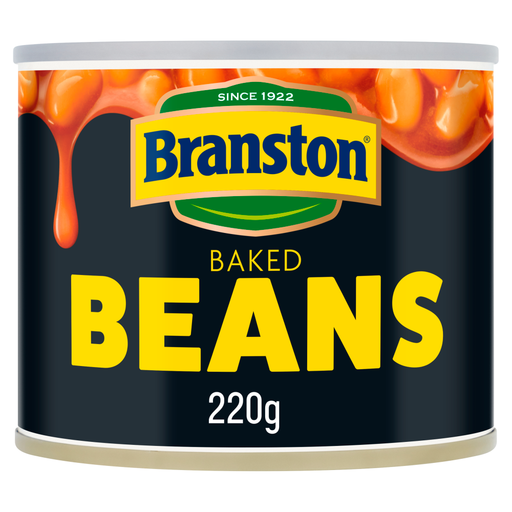
The product below is a small-tin option for a recipe requiring around 220g or for a scaled test bake.
 No image available
Branston Baked Beans in Tomato Sauce 220g
The stated 220g tin fits a recipe scaled to a smaller quantity, not one calling for a conventional 400g to 420g tin. Check the physical can’s current ingredients, allergen information and storage instructions before using it for a bake sale.
View on Joybuy
Questions about using one tin
Is a 400g to 420g tin the right size for a bake-sale recipe?
It fits when the recipe means one conventional tin, but use the recipe’s specified weight if it gives one. Sainsbury's labels its cited 400g product as two servings, and Waitrose does the same for its cited 420g product; their net weights are still different.
Can I use a 200g or 220g tin instead?
Yes, for a recipe scaled to that quantity or for a smaller test bake. Do not substitute it unchanged for a recipe requiring a 400g to 420g tin; check and adjust the other ingredient quantities.
What allergen information should bake-sale helpers have?
Keep the current tin’s ingredient and allergen information with the details of the finished bake, including its other ingredients. Anaphylaxis UK advises asking bakers for allergen information and labelling items; also follow the school’s arrangements for preparing and serving food.
How should unused baked beans be stored?
Follow the instructions on the tin used. The cited Waitrose 420g and Joybuy-listed Heinz 200g products instruct users to transfer unused contents to a suitable container, refrigerate them and use them within two days; do not apply that period to a different product without checking its label.


