Households stocking a school-term cupboard
If beans are part of several planned breakfasts, lunches or evening meals, consider how many tins you will use and whether everyone wants the same recipe.


For a school-term cupboard, choose a standard or reduced-sugar-and-salt recipe according to the ingredients and flavour your household prefers, then match the tin size or multipack to the meals you expect to make. A smaller tin can help with a single lunch; a multipack makes more sense when you have a plan for using every tin.
If beans are part of several planned breakfasts, lunches or evening meals, consider how many tins you will use and whether everyone wants the same recipe.
If sugar, salt, ingredients or flavour influence your choice, compare the labels of the exact tins rather than assuming every reduced recipe is alike.
A 220g tin may fit a smaller planned portion, while a 400g to 420g tin may suit a shared meal or meals with planned leftovers.
Start with the meals and portions you expect to serve, then check the recipe and the pack label before stocking up.
| Priority | What to check | Your needs |
|---|---|---|
| Portion and pack size | Compare a 220g tin with 400g to 420g tins. For multipacks, count the tins you expect to use. | For a lunch for one, I may prefer a smaller tin. For repeated meals, I can plan when each tin in a larger pack will be opened. |
| Recipe | Read the per-100g sugars and salt figures and the ingredients. Sainsbury’s describes its 400g reduced recipe as having 30% less sugar and 30% less salt than its own standard baked beans; its ingredients include a sweetener. | If I prefer a reduced recipe, I want to know what it is being compared with and whether its ingredients suit our tastes. |
| Meal planning | Check the serving information against the amount you intend to serve, and plan which other foods will be part of the meal. | Beans may be one part of breakfast, lunch or an evening meal; I do not need every meal to use the same portion. |
| Allergens and leftovers | Read the exact can’s allergen and storage instructions. Follow its directions for transferring, refrigerating and using opened contents. | If I am cooking for someone with an allergy, or expect leftovers, I need the instructions for that particular tin. |
Sainsbury’s says its reduced-sugar-and-salt beans contain a sweetener. Its stated reduction is against Sainsbury’s own standard recipe, not every standard tin.
Compare the ingredients and per-100g nutrition panels on the exact recipes you are considering, particularly before buying several tins.
A multipack may leave you with tins you did not intend to use, even when each unopened tin can be kept in the cupboard.
Count the planned meals and check the storage space available before choosing a four- or six-tin pack.
Any opened leftovers also need to be stored and used according to that can’s instructions.
Ingredients and product-specific allergy advice can differ between recipes. M&S advises shoppers to check the pack because product information can change.
Before serving, read the physical can’s ingredients, allergen statement, best-before date and opened-can storage directions.
These ranges illustrate recipe and portion choices; their inclusion does not indicate which products are available on Joybuy.
Tesco lists 420g standard and reduced-sugar-and-salt baked beans in tomato sauce.
Sainsbury’s lists a 400g reduced-sugar-and-salt baked-bean tin.
The Essential range lists standard and reduced-salt-and-sugar baked beans in 420g tins.
Heinz baked beans appear in individual-tin and multipack formats.
M&S lists a 400g baked-bean tin and a 220g Only 7 Ingredients tin.
These Joybuy listings cover a smaller Branston tin and Heinz and Branston multipacks, including a reduced-sugar-and-salt Branston recipe. Choose the format against your planned portions and check the current product label before serving.
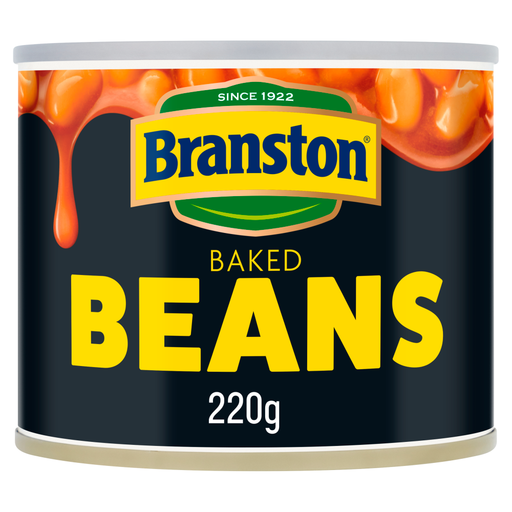 Image unavailable
The 220g tin is a smaller format to consider for a planned lunch. Check the can’s ingredients, allergens and directions for storing any leftovers.
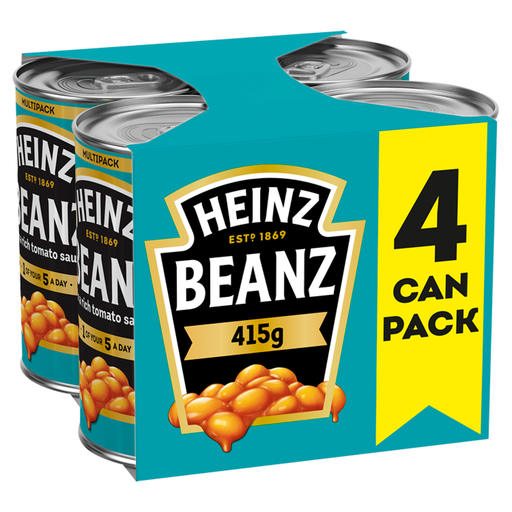 Image unavailable
Four 415g tins provide a format for several planned meals. Consider whether you will use all four, and follow the label’s ingredient, allergen and opened-can storage instructions.
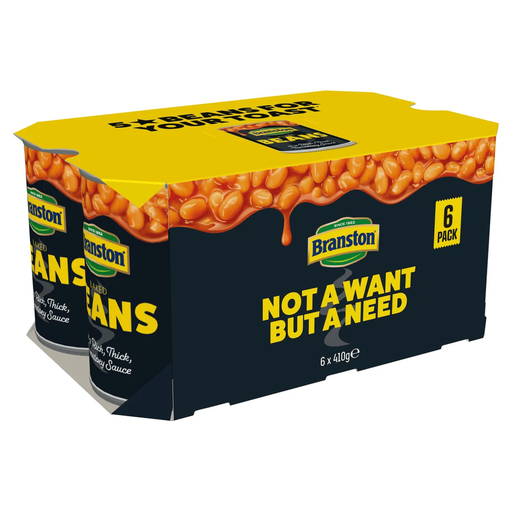 Image unavailable
Six 410g tins suit a plan involving repeated bean-based meals if the quantity fits your household’s use and storage space. Read each can’s label for ingredients, allergens and leftover instructions.
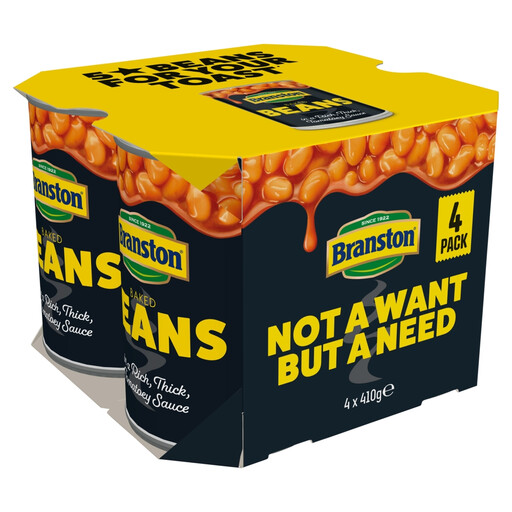 Image unavailable
Four 410g tins provide another format for planned repeat meals. For this product, Joybuy’s storage directions say to transfer opened contents to a container, refrigerate and use within two days; check the can before serving.
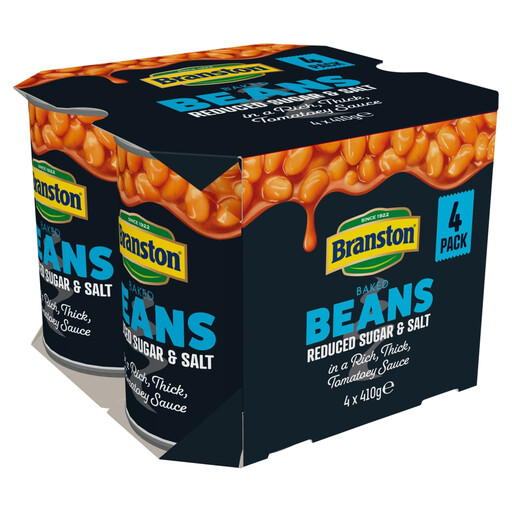 Image unavailable
This four-pack is an option if you want a reduced-sugar-and-salt Branston recipe across several planned meals. Check the exact can’s nutrition panel, sweetener declaration and allergen information before choosing it over a standard recipe.
No. Choose a pack size you expect to use: a smaller tin may fit a single lunch, while several tins can suit meals already in your plan. Compare the recipes as well as the quantities, particularly if your household prefers standard or reduced-sugar-and-salt beans.
No. A reduction refers to a particular comparison recipe. Sainsbury’s says its reduced beans have 30% less sugar and 30% less salt than its own standard beans and include a sweetener, so check the exact tin’s per-100g panel and ingredients.
Follow that tin’s storage instructions, including the container, refrigeration and use-by period after opening. The product directions supplied by M&S and Joybuy differ, so do not apply one brand’s period to another can.
Plan beans as one part of the meal rather than treating a tin as the whole day’s food. The NHS Eatwell Guide considers the balance of foods across a day or week, so consider what else is being served.
No. Check the allergen statement on the exact can. M&S states that its 220g Only 7 Ingredients baked beans are not suitable for people with a milk or egg allergy.