Bakers using an ordinary cake recipe
A tin of baked beans in tomato sauce is not a general replacement for the ingredients in a sweet cake. Check what the recipe actually requires before treating a cupboard staple as a substitute.


For an ordinary cake, do not buy baked beans in tomato sauce as a substitute for a baking ingredient. If you are following a recipe that specifically calls for black beans, choose the named bean type and follow that recipe’s quantities and method; a reduced-sugar or reduced-salt tomato-sauce product is still a different ingredient.
The useful distinction is between an ordinary cake and a recipe that names black beans as an ingredient.
A tin of baked beans in tomato sauce is not a general replacement for the ingredients in a sweet cake. Check what the recipe actually requires before treating a cupboard staple as a substitute.
Good Food’s chilli chocolate and black bean brownie recipe uses black beans in place of flour. For that kind of bake, buy the specified beans and follow the recipe rather than swapping in prepared baked beans.
If ingredients, allergens or leftovers affect your choice, read the current pack before use. The ingredients list and instructions for an opened tin matter more than an older retailer description.
Start with the recipe’s bean type, then check the pack for its sauce or liquid, ingredients and storage instructions.
| Priority | What to check | Your needs |
|---|---|---|
| Recipe-compatible beans | Check whether the recipe specifies black beans and how much it needs. Good Food’s black-bean brownie recipe uses them in place of flour; that does not make them interchangeable with beans in tomato sauce. | I’m following a bean-brownie recipe, so I need the bean type it names, not simply any tin labelled beans. |
| Sauce and seasoning | Read the product name and ingredients. Waitrose describes its Essential baked beans as being in tomato sauce, while its Essential black beans in water list black beans and water as principal ingredients. | For a sweet bake calling for black beans, I want to avoid adding a prepared tomato-sauce product by mistake. |
| Reduced-sugar or reduced-salt labels | Check what the claim compares and whether the product remains in tomato sauce. Sainsbury’s describes its reduced sugar and salt baked beans as lower in both than its standard baked beans, but still lists haricot beans and tomatoes. | A reduced-sugar or reduced-salt label might guide my choice for a savoury meal; it does not answer whether the beans match my baking recipe. |
| Current pack details | Check the ingredients and allergen declaration on the tin. If using only part of it, follow that product’s instructions for storing the remainder; Food Standards Scotland advises checking food labels for storage directions. | I need to check the pack that I will actually use, especially when an allergen matters or some beans will be left over. |
Good Food’s bean-brownie recipe specifies black beans. Baked beans sold in tomato sauce bring a prepared sauce into a recipe that does not call for it.
Buy the bean type named in your recipe; for that brownie route, look for black beans rather than tomato-sauce baked beans.
Sainsbury’s reduced sugar and salt baked beans remain a haricot-bean product in tomato sauce. A comparison with its standard baked beans does not establish compatibility with a black-bean recipe.
Use the recipe’s ingredient list, not the reduced-sugar or reduced-salt claim, to decide which beans to buy.
An online description is not the pack you will use. Ingredients and allergen declarations are particularly important when someone eating the bake has an allergy or intolerance.
Read the current tin before baking. GOV.UK says regulated allergens present in prepacked food must be clearly labelled within its ingredients list.
A recipe may use less than a full tin, leaving contents to store after opening. Storage directions should be checked for that particular product.
Read and follow the pack’s instructions for the remainder rather than assuming every tin has the same open-life.
These ranges illustrate why the product label matters: a retailer may list both prepared baked beans and other tinned beans, but they serve different recipes.
Heinz Beanz are sold as baked beans in tomato sauce, including a no-added-sugar variant.
Tesco lists baked beans in tomato sauce, including reduced sugar and salt and organic products.
Sainsbury’s lists standard and reduced sugar and salt baked beans in tomato sauce.
M&S lists both baked beans and black beans among its tinned beans; it describes its baked beans as being in rich tomato sauce.
Waitrose & Partners describes Essential baked beans as being in tomato sauce and lists Essential black beans in water separately.
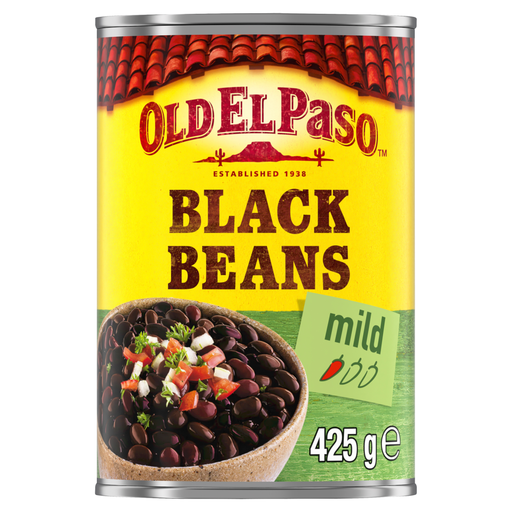
This product is relevant to a bake that explicitly calls for black beans. It is not a suggested substitute for the ingredients in an ordinary cake or a recommendation to use tomato-sauce baked beans in sweet baking.
 No image available
Consider this 425g black-bean product only if your recipe calls for black beans. Check the quantity and preparation method in the recipe, and read the current pack’s ingredients and allergen information before use.
Do not treat baked beans in tomato sauce as a general cake ingredient. If a cake recipe expressly calls for them, follow that recipe; otherwise, buy the ingredients your chosen recipe specifies.
Buy black beans when your brownie recipe specifies them. Good Food’s chilli chocolate and black bean brownie recipe uses black beans in place of flour; follow the quantities and preparation instructions in the recipe you are making.
A reduced-sugar claim does not make baked beans equivalent to black beans. Sainsbury’s reduced sugar and salt baked beans are still described as haricot beans in tomato sauce, so use the bean type specified by the bake.
Read the current ingredients and allergen declaration on the pack you intend to use. GOV.UK says any of the 14 regulated allergens present in prepacked food must be clearly labelled within the ingredients list.
Follow the instructions on the particular tin after opening it. Food Standards Scotland advises checking food labels for the right storage method; do not assume the directions for one bean product apply to another.