Solo tent campers without reliable refrigeration
A 200g–220g tin is worth considering when it matches one meal. If you cannot finish it, you still need to follow the label’s instructions for leftovers.


For a solo camping meal without reliable refrigeration, a 200g–220g tin makes sense if you expect to finish it. A 400g–420g can or multipack suits shared meals, but any leftovers need the storage and refrigeration specified on that product’s label; choose a reduced-sugar or reduced-salt recipe separately if its ingredients suit your group.
The useful distinction is whether a tin can be finished at one meal or its leftovers can be refrigerated.
A 200g–220g tin is worth considering when it matches one meal. If you cannot finish it, you still need to follow the label’s instructions for leftovers.
A 400g–420g can may suit a meal shared between several people. Multipacks give a group separate cans to open as needed, provided the quantity is practical to carry.
Standard, reduced-sugar or reduced-salt, and vegan-labelled beans are distinct choices. Check the exact tin’s ingredients and allergen declaration against the group’s requirements.
Decide how many people will eat each opened tin, then check the recipe and how you will store or heat it at camp.
| Priority | What to check | Your needs |
|---|---|---|
| Portion size | Compare 200g–220g tins with 400g–420g cans. Check whether everyone eating can finish an opened can at that meal. | Camping alone, I want a tin that matches my meal rather than leaving beans I cannot refrigerate. |
| Leftover storage | Read the exact product’s instructions for transferring, refrigerating and using leftovers. The cited Waitrose Essential 420g and Sainsbury’s 400g products specify refrigeration and use within two days after opening. | If we will open a large can, I need a suitable container and reliable refrigeration for anything left over. |
| Recipe and labels | Compare the ingredient list, nutrition panel and any reduced-sugar, reduced-salt or vegan wording on the exact variant. Check allergens separately from vegan labelling. | Someone in our group may need a particular recipe, so I want to check the tin we will actually pack. |
| Carrying and cooking | Count the cans in a multipack against your planned meals and carrying space. If using a fuel-burning stove, follow Mid and West Wales Fire and Rescue Service advice not to use it inside a tent. | For a shared trip, I can pack several cans, but I need a safe place outside the tent to use the stove. |
An unopened storecupboard tin and an opened tin have different storage needs. The cited Waitrose Essential and Sainsbury’s products instruct you to transfer leftovers to another container and refrigerate them.
For a solo meal without refrigeration, consider a smaller tin you expect to finish; otherwise, share the larger can when it is opened.
Keeping leftovers means carrying a suitable container and having reliable refrigeration.
The Waitrose listing describes Heinz No Added Sugar beans as containing a sweetener. A recipe label does not replace its ingredient list or nutrition panel.
Check the exact can if sugars, sweeteners or salt content affect your choice.
Mid and West Wales Fire and Rescue Service warns against using fuel-burning devices inside a tent.
Use the stove outside, away from the tent and flammable materials.
These retailer and brand examples show which tin sizes and recipe labels to compare; instructions must be checked on the product you choose.
Waitrose lists Heinz baked beans in 200g and 415g formats, as well as a No Added Sugar variant.
Tesco lists own-label baked beans in 220g and 420g tins, including reduced sugar-and-salt choices.
Sainsbury’s lists an own-label baked-bean multipack of four 400g cans.
Asda lists a 410g Reduced Salt & No Added Sugar baked-bean variant.
M&S lists a smaller baked-bean tin and a 400g product.
Waitrose lists Essential own-label beans in 220g and 420g cans alongside branded sizes.
These options include a smaller tin to consider for one meal and multipacks to consider for shared camping meals. A reduced-sugar-and-salt multipack is also included; choose the recipe and can size separately.
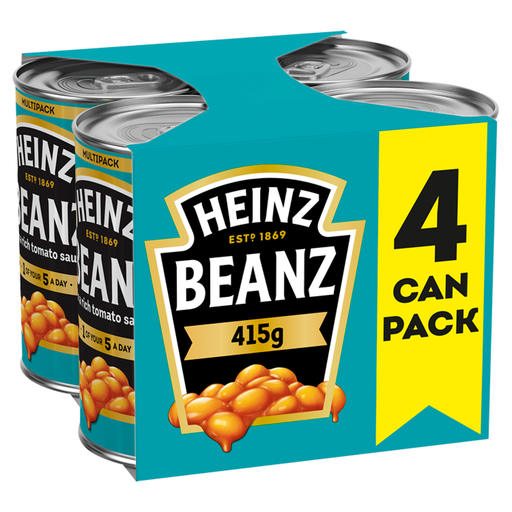 No image available
Four 415g tins are an option for meals where each opened can can be shared. After opening, transfer any leftovers to a non-metallic container, refrigerate and use within two days.
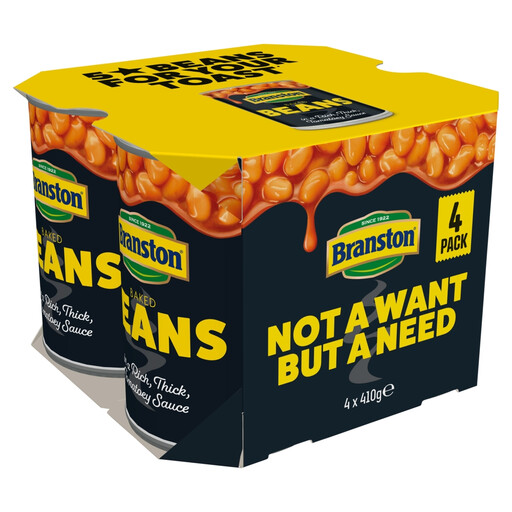 No image available
Four 410g cans can be opened across shared campsite meals. The product information gives hob and microwave preparation directions; transfer any leftovers to a suitable container, refrigerate and use within two days.
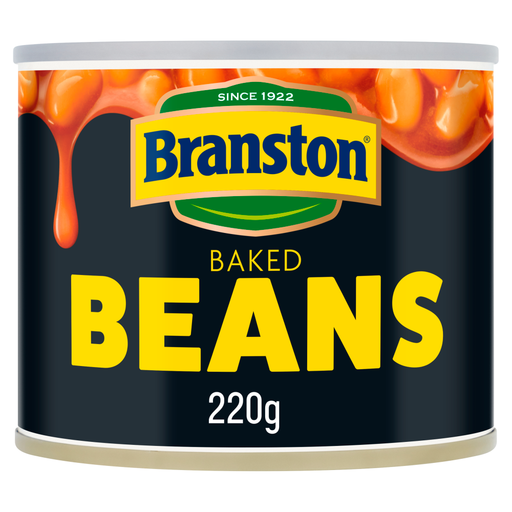 No image available
This 220g tin is a smaller-format option if one person expects to finish it at a meal. Any leftovers need transferring to another container, refrigeration and use within two days; check the pack’s preparation directions if your cooking setup requires a particular method.
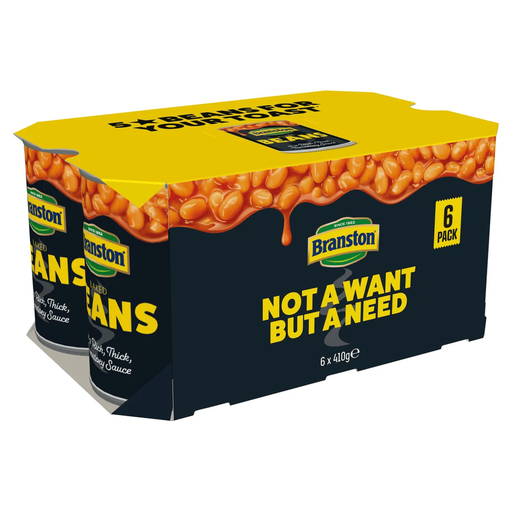 No image available
Six 410g cans are a quantity to consider for group or vehicle-based camping rather than a single meal. After opening a can, transfer leftovers to a covered container, refrigerate and use within two days.
 No image available
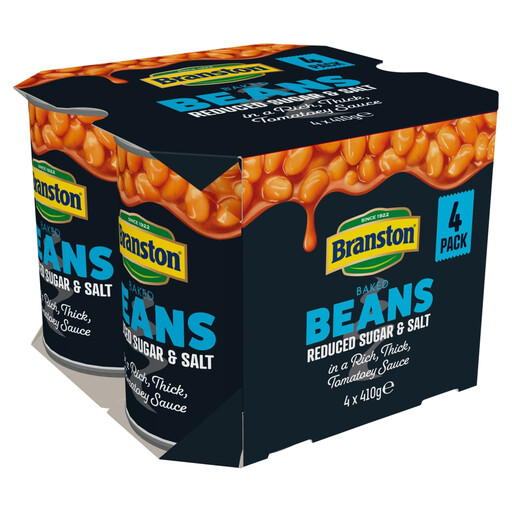
This four-can pack is an option when the group wants to check a reduced-sugar-and-salt recipe as well as a 410g sharing size. The ingredients include steviol glycosides; after opening, transfer leftovers to a container, refrigerate and use within two days.
Pack a 200g–220g tin if you expect to finish it alone and cannot refrigerate leftovers. A 400g–420g can suits a shared meal, or a trip where you can follow its instructions for storing anything left over.
No: Health Well’s tinned-food guidance says not to store food in an opened can. Transfer leftovers to another container, refrigerate them and follow the use-within period on the specific product.
Do not use a fuel-burning stove or barbecue inside a tent. Mid and West Wales Fire and Rescue Service advises keeping fuel-burning devices out of tents; cook outside, away from the tent and flammable materials.