Care-home catering teams planning routine meals
For kitchens choosing cans for communal service, where the number opened at each meal, stock rotation and the handling of leftovers affect pack choice.


Choose can size around the portions a care-home kitchen expects to serve and the product’s instructions for using leftovers, rather than assuming a larger tin will be easier to manage. Consider a reduced-salt-and-sugar pack when it fits residents’ assessed needs; a standard multipack may suit routine service where its label and can size fit the menu. Check the current nutrition and allergen information, and assess the prepared food against any prescribed texture requirements before serving.
For kitchens choosing cans for communal service, where the number opened at each meal, stock rotation and the handling of leftovers affect pack choice.
For teams comparing a product’s current label with individual care plans and preferences, rather than assuming one baked-bean variety suits everyone. The Care Quality Commission’s guidance for regulated care in England calls for nutritional needs and preferences to be taken into account.
For kitchens preparing food to a resident’s prescribed texture level. The International Dysphagia Diet Standardisation Initiative (IDDSI) says texture testing should reflect the conditions in which food will be served, particularly its temperature.
Start with the number of portions needed at each service, then compare the products that fit that volume against residents’ care plans and the current pack labels.
| Priority | What to check | Your needs |
|---|---|---|
| Can size and leftovers | Compare the weight of each can with planned portions, not just the total multipack weight. Read the product-specific instructions for storing and using opened contents. | I need a format that matches the number of meals being prepared without opening more beans than the kitchen can use under the label instructions. |
| Nutrition label | Compare salt and sugars per 100g on current labels, then consider the intended portion and each resident’s care plan. Tesco Groceries lists 0.49g salt per 100g for its standard 4 x 420g beans; its Healthy Living listing states 30% less salt and sugar than that standard product. | If a lower-salt-and-sugar option is relevant to the menu or a resident’s assessed needs, I want to check the actual variant and portion rather than rely on a front-of-pack description. |
| Allergens and ingredients | Check the delivered pack’s ingredient and precautionary allergen statements, including when changing variants. Tesco Groceries’ Healthy Living baked-bean listing states “May Contain: Nuts”. | When someone has an allergy, I need the information for the product being served and a process that controls cross-contact. |
| Prepared texture | For a prescribed IDDSI level, assess the prepared dish under intended serving conditions, especially temperature, as IDDSI specifies. Do not treat the canned product’s description as a texture assessment. | If a resident needs texture-modified food, I need the served beans checked against their plan, including after any heating, blending or added liquid. |
| Individual preferences | Check the current product’s dietary labelling where relevant and consider how the beans fit the complete meal. The Care Quality Commission’s England guidance says providers must take people’s preferences, including religious and cultural backgrounds, into account. | Residents may need or prefer different products, so I want the menu choice to reflect their individual plans rather than the convenience of one multipack. |
One large opened container may not fit a smaller meal service. Tesco Groceries instructs users of its standard 4 x 420g beans to transfer unused contents to a non-metallic container, cover and refrigerate them, and consume them within two days.
Work out expected portions for each meal period and check the chosen product’s own opened-pack instructions before deciding between separate cans and a larger format.
Salt values differ between products: Tesco Groceries lists 0.49g per 100g for its standard 4 x 420g beans, while its Heinz 4 x 415g listing gives 0.6g per 100g. Neither figure alone determines whether a served portion fits a resident’s plan.
Compare current labels on the same per-100g basis, then check the intended portion against the individual care plan.
Preparation and serving conditions matter to a texture assessment. IDDSI specifies testing food as it will be served, particularly at the intended temperature.
Prepare and check the finished dish against the resident’s prescribed IDDSI level and safe-swallow plan, following relevant clinical direction.
A standard and a reduced-salt-and-sugar product should not be treated as having identical allergen statements. Tesco Groceries’ Healthy Living baked-bean listing carries a “May Contain: Nuts” statement.
Check each delivered product and review ingredient records before substituting a variant. Food Standards Agency MyHACCP guidance also calls for control of allergen-containing ingredients and cross-contamination.
These retailer and brand ranges illustrate formats and label differences to check; a range reference does not mean every product is available through Joybuy.
Tesco Groceries lists both standard and Healthy Living baked beans in 4 x 420g packs.
Sainsbury’s Groceries lists standard and Reduced Sugar & Salt baked beans in 4 x 400g packs.
Heinz Baked Beans in Tomato Sauce 4 x 415g is a branded multipack for kitchens considering that specific product.
Marks & Spencer lists Only 7 Ingredients Baked Beans in a 1.6kg format, as well as a separate no-added-sugar product in a smaller tin.
Waitrose & Partners lists Essential standard and Reduced Salt & Sugar baked beans as individual 420g cans.
These options are four- and six-can baked-bean multipacks for planned meal service. Choose between them using can size, the relevant variant’s current label and residents’ individual requirements; this selection does not include a larger single tin.
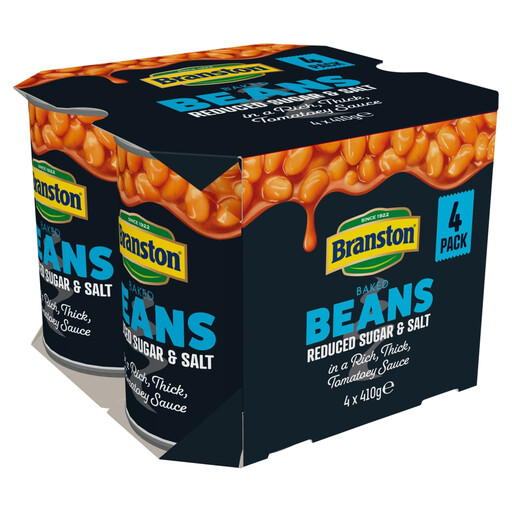 Image unavailable
Four separate 410g cans may fit a service that opens beans across several meals. This is the Reduced Sugar & Salt variant; check the current nutrition and allergen label against the residents’ plans, and follow the pack’s instructions for any opened contents.
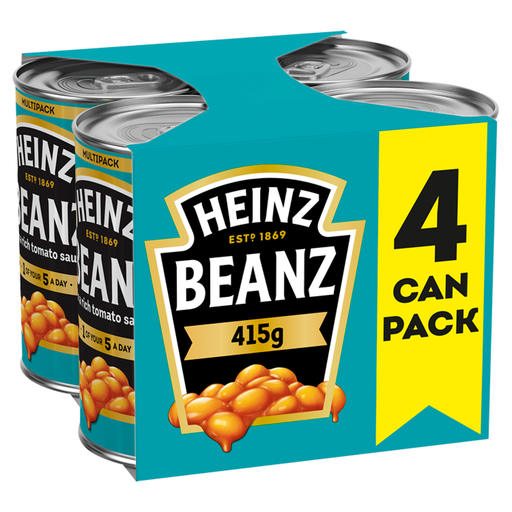 Image unavailable
Four 415g cans offer a branded option for meals planned around separate tins. Tesco Groceries lists 0.6g salt per 100g for this product and identifies it as suitable for vegetarians and vegans; check the current pack and intended portion for each resident.
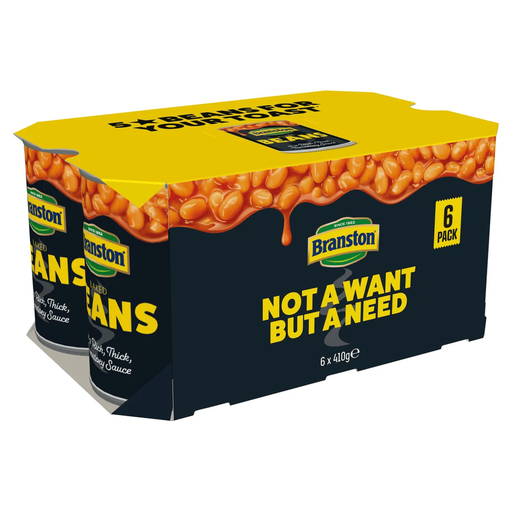 Image unavailable
Six 410g cans suit a plan that calls for more separate tins in one multipack. Compare the current nutrition label and the number of cans needed per meal before choosing it over a four-pack; check storage instructions for any opened can.
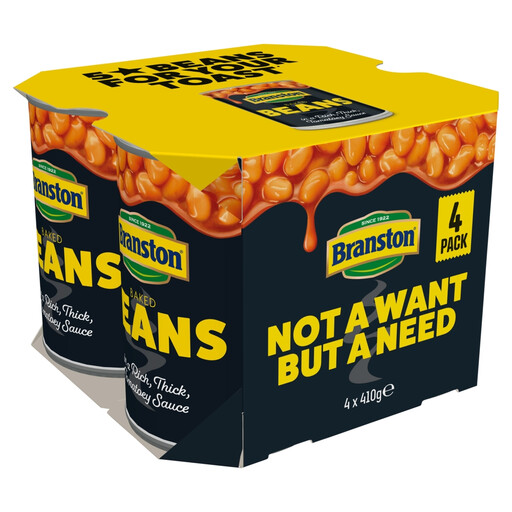 Image unavailable
Four 410g cans provide another pack size to compare with planned portions. Check this standard variant’s current nutrition, dietary and allergen labelling rather than applying details from Branston’s Reduced Sugar & Salt product.
No single baked-bean product should be assumed suitable for every resident. Check the chosen product and served portion against individual care plans, preferences and any relevant dietary restrictions. The Care Quality Commission’s guidance for regulated care in England requires providers to take nutritional needs and preferences into account.
No. Consider that variant when it fits the menu and residents’ assessed needs, then compare its current per-100g label, intended portion and allergen statement with the standard product. A reduced-salt-and-sugar description does not establish suitability for every resident.
Follow the instructions on the specific product. Tesco Groceries’ standard 4 x 420g listing says to transfer unused beans to a non-metallic container, cover and refrigerate them, and consume them within two days. Check another brand or format’s own label rather than applying that period to every tin.
Serve them only if the prepared dish meets the resident’s prescribed texture level and safe-swallow plan. IDDSI says food should be tested under intended serving conditions, especially at the temperature at which it will be eaten; an unopened tin’s description cannot establish the texture of the finished meal.
Check the current delivered pack and keep ingredient information up to date when changing products or variants. Tesco Groceries’ Healthy Living beans, for example, carry a “May Contain: Nuts” statement. Food Standards Agency MyHACCP guidance also calls for control of allergen-containing ingredients and protection against cross-contamination.